
By Munindra
Before the day unfolds, there is a quiet moment, a first sip that carries the weight of stories, heritage, and hands that have nurtured the land long before us.
In Assam, heritage doesn’t echo through marble halls or crumbling forts; it steams from a bati, held in weathered hands at dawn.
My late paternal grandmother, a lifelong tea drinker, would sip hers from an Assamese bell-metal bowl called a bati. Her ritual was quiet but deliberate, each sip measured and unhurried, as if the tea itself held stories she was savoring in silence.
My late mother left me a legacy of tea rituals. She taught me how to brew it with care, instructing me to pour hot water gently in a circular motion over the tea resting in a strainer. My late father, who taught me to drive on a vast field beside a tea estate, imparted another lesson: the link between the land and the people who tend it, and how that relationship manifests in the flavor of the tea.
A Culture Steeped in Tradition
In Assam, tea is woven into the fabric of everyday life. It is more than just a beverage, and much like the tamul paan, it serves as a gesture of welcome and a moment of connection. Whether it’s the quiet ritual of a morning cup, the pause at midday, or the gathering at dusk, tea sets the rhythm of the day in ways that go far beyond refreshment. Offering tea is an act that transcends formality, symbolizing warmth, respect, and an invitation to connect. In Assamese homes, when offered a second cup of tea, it is not a matter of thirst. It is a sign of belonging, an invitation to linger.
The beauty of Assam’s tea culture lies in its simplicity. It is often served with milk and sugar, but can just as easily be enjoyed in its purest form. As a guest, you are always welcome to inform the host if you prefer your tea black or if you don’t take sugar. The term for black tea is phika sah or rongah sah, both of which mean plain, unsweetened tea. Tea is accompanied by biscuits (cookies) or other sweet treats, offering a light, complementary snack.
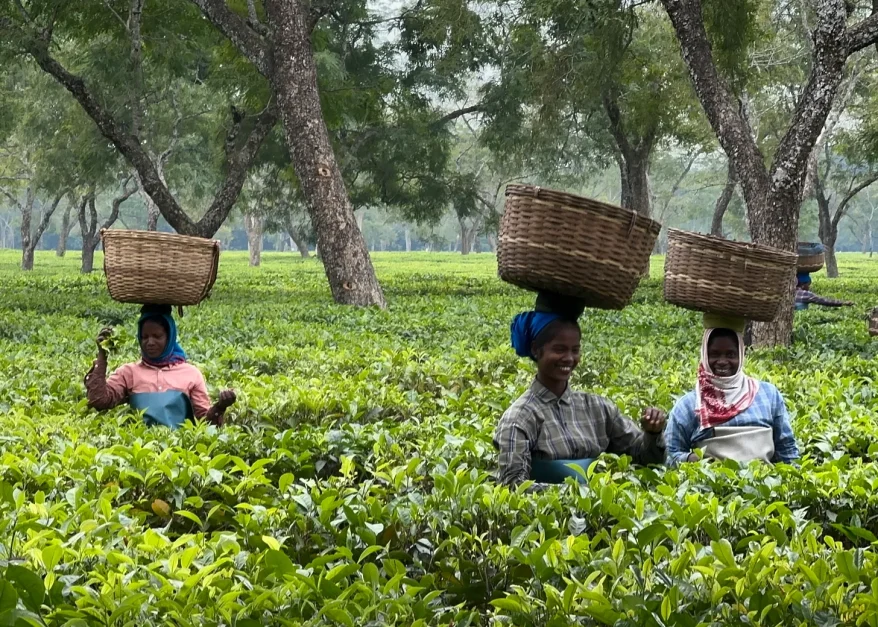
The significance of tea extends beyond the home and into the fields of Assam, where the work of harvesting is a choreography of hands and voices. In the early morning light, workers rhythmically pluck the delicate top leaves, which will eventually shape the tea’s distinctive flavor. The land itself, the fertile valley of the Brahmaputra River, nourished by mineral-rich soil and abundant rainfall, provides the perfect stage for one of the world’s most renowned tea regions.
The Land That Grows It
Assam’s tea cultivation spans more than 771,000 acres, and its climate plays a defining role in the tea’s distinct character. The region experiences long, humid summers and cool, misty winters, creating a natural cycle that supports the growth and renewal of the tea bushes. After a period of winter dormancy, the plants reawaken in spring, bringing the year’s first harvest. This seasonal rhythm is as integral to the tea’s quality as the soil itself.
While British colonists industrialized Assam’s production in the 19th century, the region’s connection to the plant stretches much further back. The indigenous Singpho tribe was harvesting tea long before the British arrived, using ancestral methods to nurture the leaves that thrive in this unique environment.
The distinctiveness of Assam’s tea has earned it a Geographical Indication (GI) status, much like Champagne or Parmigiano-Reggiano. The combination of climate, soil, and cultivation methods cannot be replicated elsewhere, making Assam’s tea as much a product of place as it is of people.
Plucked by Hand, Measured by Season
The process of harvesting in Assam is an art form in itself. Tea workers, often in small teams, carefully pluck tender top shoots of the plant, two leaves and a bud, creating what is known as the “golden flush.”
The first flush, harvested in early spring, is known for its full-bodied character. The second flush, which occurs in late spring and early summer, is prized for its rich malt and fruit notes. The Rain Flush, harvested in the monsoon months, offers a lighter, more abundant tea, while the Autumn Flush, often used for green and white teas, provides a mellow, sweet cup.
Each flush has its own character. What remains constant is the care with which each leaf is plucked by hand. This is essential, as oxidation begins immediately after plucking, and proximity to processing factories allows the tea to be carefully processed at the optimal time.

From Leaf to Cup: The Process
There are two primary methods of tea processing in Assam: Orthodox and CTC. Orthodox tea leaves are carefully rolled, preserving the natural shape and structure of the leaf. In contrast, CTC (Crush, Tear, Curl) tea is processed into smaller, granulated leaves that brew quickly and are commonly used in tea bags. Both have their place. Both carry the land inside them.
On some tea estates, tea is processed on-site to maintain better control over flavor and quality. Skilled harvesting is crucial to ensuring only the best leaves are used, preserving their integrity before processing begins. The skill of the workers ensures that the final product captures the essence of Assam.
Entering a tea factory is like stepping into a finely tuned orchestra, where nature and craftsmanship perform in harmony. Freshly plucked leaves wither under controlled warmth and airflow before moving to the rolling stage. Each roll, whether by hand or machine, bruises the leaves and releases enzymes that trigger oxidation. This critical phase is carefully managed, with temperature and humidity balanced to coax Assam’s signature maltiness without scorching the leaves. Workers move with practiced rhythm, tending each stage — wither, roll, oxidize, dry, sort — like musicians following a shared score. In this choreography of craft and machine, every motion contributes to the symphony that becomes your final cup.
The scent of tea factories, rich with warmth and the essence of the earth, is a memory I carry with me, a sensory reminder of my deep connection to Assam: the soil, the skies, the rains, the tea bushes, and the cherished memories that remain within it all.

Mastering Assam Tea: From Selection to Savoring
It is important to remember that when we refer to “tea,” we are talking about leaves from the Camellia sinensis plant. Infusions like peppermint, chamomile, and apple spice tea are not technically “tea” but herbal or flavored infusions made from herbs, flowers, or spices.
To fully appreciate Assam tea, start by selecting high-quality loose-leaf tea from reputable sellers. I prefer Orthodox Assam, sourced from Upper Assam tea estates where the leaves are processed on-site to preserve their distinctive flavor. Tea, like wine, reflects its terroir. The higher the grade, the more nuanced the flavor. Golden Tip, the delicate bud of the plant, offers the most refined taste, while the robust FTGFOP1 (Finest Tippy Golden Flowery Orange Pekoe, Grade 1) provides a satisfying cup with layers of complexity.
The tea’s grade, from whole leaf to fannings and dust, determines its strength and character. Whole leaf teas offer clarity and complexity, while fannings and dust brew quickly but lack the nuances of their whole leaf counterparts.
For storage, keep your tea in an airtight container, away from moisture, light, and strong odors. Tea is a living entity and its flavor evolves over time. Brewing it at its freshest ensures you are experiencing the tea at its best.
To brew, bring water to a rolling boil, using one cup of water for every teaspoon of tea. Steep Orthodox Assam for 2 minutes to allow the leaves to unfurl and release their full character. For CTC tea, steep for 1.5 to 2 minutes. Remember, the best method is the one that suits your personal taste, time, and place.
When it comes to adding milk or sugar, it’s important to remember that these ingredients can alter the tea’s flavor profile. For CTC Assam, the robust nature of the tea can handle milk, sugar, or spices like cardamom or cinnamon, creating a rich, comforting brew. However, for Orthodox Assam, the delicate flavors are best enjoyed without any additions. Drinking it black allows the subtle notes to shine through, giving you a fuller appreciation of its unique character.
Tea is more than a drink; it’s an experience. Smell the dry leaves, and you’re transported to the earth they came: the soil, the rain, and the hands that harvested them. When brewed, the tea’s color can remind you of the golden hue of early morning light or the deep amber of a sunset. Taste is even more complex: malty or bold, with subtle depth at times. The texture can be smooth, light, or slightly astringent.
As you sip, notice how the tea coats your mouth. The interplay between tannins and saponins creates a bittersweet harmony that reflects the unique terroir of Assam. Whether it’s a full-bodied Assam tea with chocolate notes or one with a more malty profile, the key is to savor each sip and appreciate the depth of flavor.
Note: For more detailed guidance on selecting and enjoying Assam tea, be sure to check out the “Tea Buying Guides and Tips” section near the end.
A Second Life for the Tea Bush
When I look at tea bushes, I don’t just see plants. I see a connection to history, to the people who have cultivated them, and to the cultural traditions of Assam. The tea plant symbolizes resilience, thriving through cycles of harvest and regrowth. As it transforms with the seasons, so does our relationship with it, linking us to the past and reminding us of the deeper currents that shape our lives.
Tea’s imprint on life in Assam goes beyond what we drink. It also resides in what we create and the memories we cherish.
Decades ago, after a tea bush was cut back from its productive years, it found a new life in our hands and home. My late parents, a cousin, and I turned it upside down and shaped it into a side table, a living reminder of the land that gave us so much. We trimmed its branches, stripped the bark, sanded it smooth, and varnished it until the grain shone. From its smaller limbs, my mother and I carved two simple figures, turning the remnants of a once-thriving plant into symbols of our shared care and creativity.
At the time, I was more focused on the task than its meaning. Now, these pieces sit quietly in our homes, reminders of the bush’s past and of the quiet continuity of care. Long after its harvests ended, the tea bush still holds what we once shared: a rhythm of life that endures, even as those who shaped it have passed on, and perhaps even beyond those who remember why it mattered.
This was first published by Munindra on Substack. Reproduced with his permission. Read the original piece here which has additional details including how to buy good tea in US stores. It is a must-read for all tea lovers.





നിങ്ങളുടെ അഭിപ്രായങ്ങൾ രേഖപ്പെടുത്തുക