
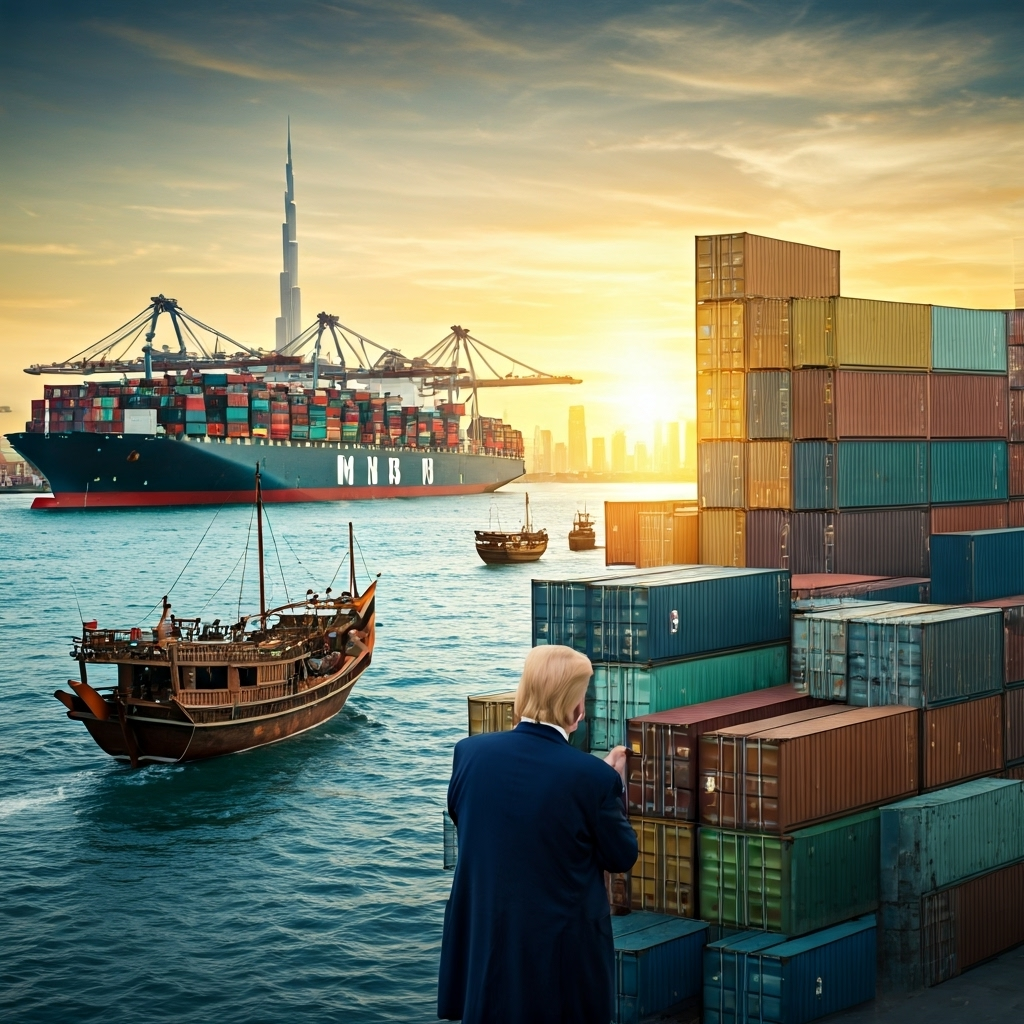
The United States’ sweeping tariff revision in April 2025, which imposed a 10% blanket import duty on most trading partners, is reshaping global food and beverage trade routes.
The United Arab Emirates is positioning itself to capitalize on this disruption, leveraging its strategic location and sophisticated logistics infrastructure to emerge as a key processing and re-export hub.
Under the latest US tariff regime, China faces a baseline 30% tariff – though temporarily reduced to 10% under a 90-day agreement starting May 2025. Other Asian exporters, including Vietnam, are subject to the standard 10% baseline tariff.
These measures have triggered significant supply chain reorganization, especially in the seafood and processed foods sectors where both nations have traditionally held strong market positions.
Trade data reveals the UAE’s existing, albeit modest, food export relationship with the US. In 2023, specific sectors showed promising growth, with cocoa preparations rising 33% and processed foods increasing by over 20%. However, the country’s total food exports to the US remain limited, with significant declines in seafood (69.3%) and dairy products (51.6%).
The shifting trade landscape presents strategic opportunities for the UAE’s food processing and logistics sectors. The emirate’s free zones, including Dubai Industrial City, KIZAD’s AgTech Zone, and Sharjah Food Park, offer sophisticated value-addition capabilities. These facilities provide essential services such as repackaging, Halal certification, and regulatory compliance processing – critical functions for manufacturers seeking to navigate the new tariff environment.
Global freight patterns are already showing signs of adjustment. Maritime routes from Asia to the US East Coast are experiencing cost increases of 15-25%, primarily due to tariff-driven rerouting and port congestion. This disruption makes UAE’s ports – notably Jebel Ali and Khalifa – increasingly attractive as intermediate processing and distribution points.
The emirate’s advantage lies in its established position as a trade facilitator with advanced digital customs systems and extensive free zone infrastructure. Recent investments in food processing capabilities and cold chain facilities have enhanced its ability to handle temperature-sensitive food products, particularly relevant for seafood and dairy processing.

Market data indicates particular vulnerabilities in US import channels for seafood, processed snacks, and spices – categories heavily sourced from nations now facing elevated tariffs. The UAE’s processing zones are positioned to offer alternative supply chain solutions, particularly in:
- Halal-certified repackaging
- Private-label manufacturing
- Regulatory compliance processing
- Origin certification management
The UAE government’s strategic focus on food security and trade facilitation has resulted in significant investments in logistics automation and digital trade documentation. These capabilities become increasingly valuable as global traders seek efficient, compliant routes to major markets.
However, challenges remain. Global inflation continues to pressure shipping costs, and scrutiny of origin documentation is intensifying. The UAE’s success in capitalizing on these opportunities will depend on maintaining strict compliance with US origin requirements while offering cost-effective processing solutions.
The trade realignment is already visible in specific sectors. Vietnam’s seafood exports, now subject to the 10% baseline tariff, face increased competition, creating opportunities for UAE-based processors to add value through transformation and certification services. Similarly, Chinese processed food manufacturers, dealing with fluctuating tariff rates, may find the UAE’s neutral platform increasingly attractive for reaching US markets.
Looking ahead, the UAE’s role in global food trade appears set to expand, particularly in:
- Processing and certification of Asian-origin seafood
- Value-addition services for processed foods
- Regulatory compliance facilitation
- Strategic storage and distribution
This evolution aligns with broader trends in the UAE’s food and beverage sector, where digital transformation and sustainability initiatives are reshaping operational models. The country’s emphasis on food security and regulatory excellence positions it well to serve as a trusted intermediate processing hub.
The realignment of global food trade routes represents a significant opportunity for the UAE to strengthen its position in international supply chains. Success will require continued investment in processing capabilities, regulatory frameworks, and logistics infrastructure, while maintaining strict compliance with international trade requirements.



നിങ്ങളുടെ അഭിപ്രായങ്ങൾ രേഖപ്പെടുത്തുക