
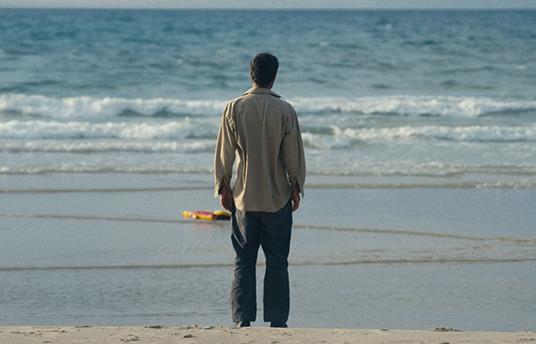
In Gaza Bride 17, a searing psychological drama from Palestine, director Waseem Khair crafts an unflinching exploration of trauma, loss, and the devastating ripple effects of conflict.
Through the masterful performance of Saleh Bakri (The Present, The Teacher), we witness a father’s descent into the labyrinth of post-traumatic stress disorder after witnessing the unthinkable – the death of his son during what should have been a peaceful fishing expedition.
The film opens with a visceral scene: a man running frantically toward the beach, his arms flailing against the backdrop of warning sirens – always, a harbinger of imminent violence in Gaza.
This powerful opening sets the tone for what follows: a raw, intense journey that blurs the lines between reality and hallucination, between memory and nightmare.
Bakri’s portrayal of Saleh is extraordinary. Stripped of theatrical artifice, he captures the essence of a man unraveling at the seams. How he navigates between moments of apparent lucidity and complete dissociation is masterfully executed, particularly in scenes where he interacts with a woman he believes to be alive – a powerful metaphor for his inability to accept the brutal reality that surrounds him.
The film’s strength lies in its rich symbolism and its ability to capture the psychological aftermath of trauma.
The fishing boat, once a symbol of father-son bonding and peaceful existence, transforms into a vessel of horror. The sea, traditionally representing life and sustenance for coastal communities, becomes a silent witness to senseless violence.
These elements weave together to create a canvas of loss that extends far beyond the personal tragedy at the film’s center.
What makes this short film particularly powerful is its focus on the unseen victims of conflict – those who survive to bear witness.
Through Saleh’s psychological journey, we glimpse the countless untold stories of trauma, loss, and the struggle to maintain sanity in the face of senseless violence.
The film masterfully captures the moment when innocence is shattered, illustrated poignantly in the scene where father and son share laughter mere moments before tragedy strikes.
The director’s decision to structure the narrative as a psychological maze serves the story well.
Time becomes fluid, reality bends, and we experience the world through Saleh’s fractured consciousness.
This approach allows viewers to view how trauma reshapes one’s perception of reality – and very much relating to what the film’s end credits say – ‘For all those unseen.’
Death looms large throughout the film, not just as an event but as an ever-present reality that colors every frame.
Yet, amid this darkness, the film manages to speak volumes about human resilience and the cost of survival. It forces us to confront uncomfortable truths about conflict and its impact on Palestinians and civil populations, particularly those whose stories often go untold.
hrough its brief runtime, it delivers a powerful message about the ripple effects of conflict and the invisible scars carried by survivors.




നിങ്ങളുടെ അഭിപ്രായങ്ങൾ രേഖപ്പെടുത്തുക