
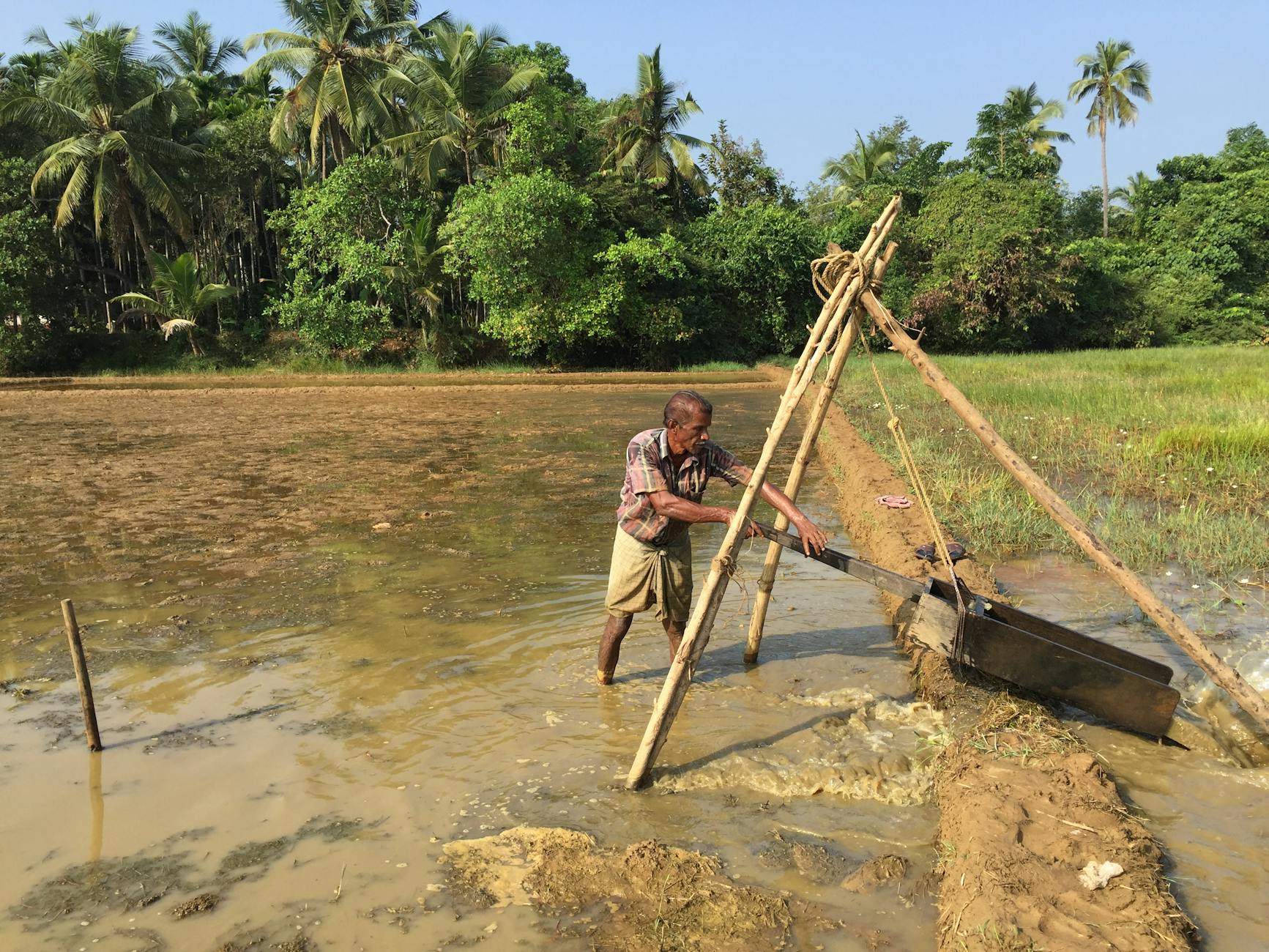
In a move that could reshape agriculture across South Asia, Kerala has launched an ambitious low-emission rice farming initiative that promises to cut greenhouse gas emissions by up to 70% while boosting farmer incomes. The groundbreaking partnership between the state government and the International Rice Research Institute (IRRI), signed July 2, 2025, represents a fundamental shift from traditional production-focused policies to climate-aligned farming.
The initiative, part of the World Bank-funded Kerala Climate Resilient Agri-Value Chain Modernization (KERA) Project, will transform 22,000 hectares of paddy fields across Palakkad and Thrissur districts, directly benefiting over 45,000 farming families. With total funding of ₹2,365.5 crore, including a $200 million World Bank loan, the project positions Kerala as what officials call a “living laboratory for climate innovation in agriculture.”
Revolutionary farming techniques
At the heart of the transformation are two scientifically-proven technologies: Alternate Wetting and Drying (AWD) and Direct-Seeded Rice (DSR). AWD replaces the traditional practice of keeping paddies continuously flooded, instead introducing controlled drying phases that dramatically reduce methane emissions—a potent greenhouse gas produced by anaerobic soil conditions.
“This represents a fundamental shift from conventional rice production to farming systems that are climate-aligned and economically sustainable,” said a senior KERA project official.
DSR eliminates the labor-intensive process of transplanting seedlings, instead sowing seeds directly into fields. The technique could potentially reduce labor costs by 12-35% and water consumption by up to 30%, while often producing higher yields than traditional methods.
Economic game-changer
The project’s economic model shows promising returns for farmers. Analysis suggests net profit increases of over ₹28,000 per hectare through reduced input costs and maintained or improved yields. Case studies from other regions show DSR farmers achieving profits of ₹45,825 per hectare compared to ₹20,721 for conventional farmers.
But the revolutionary component is carbon finance. The project will pioneer a system allowing farmers to earn money for reducing greenhouse gas emissions—potentially $25 per tonne of CO2 equivalent reduced. This transforms farmers from mere food producers into paid environmental stewards.

Breaking the carbon market barrier
Traditionally, small farmers have been locked out of carbon markets due to expensive monitoring and verification requirements. The Kerala initiative addresses this through cutting-edge technology developed by IRRI, using artificial intelligence and satellite data to track sustainable practices and quantify emission reductions.
“These advanced digital monitoring systems are estimated to be up to 20 times more cost-effective than traditional methods,” said an expert. “This could democratize access to carbon finance for millions of smallholder farmers across South Asia.”
Strategic Implementation
The project deliberately targets different agro-ecological zones to test scalability. Palakkad, known as Kerala’s “rice bowl,” offers ideal conditions for piloting the new practices in canal-irrigated systems. Thrissur presents a greater challenge with its unique kole wetlands—low-lying paddy fields that are significant methane emission sources.
Success requires coordination between multiple state departments. The project formally integrates the Departments of Agriculture, Irrigation, and Soil Conservation, acknowledging that transforming rice cultivation is a systems problem requiring precise water management and soil health expertise.

Regional context and global implications
Kerala’s initiative follows similar efforts across Asia. Vietnam’s “One Must Do, Five Reductions” program and Thailand’s Rice NAMA project, now scaled up with Green Climate Fund support, demonstrate successful pathways from pilot projects to large-scale climate action.
The timing is strategic, as many major rice-producing nations have not included quantified mitigation targets for rice in their climate commitments, creating an investment vacuum this project aims to fill.
Challenges ahead
Despite its robust design, the initiative faces significant hurdles. The greatest challenge is convincing tens of thousands of farmers to alter traditional practices. Technical issues include managing severe weed infestations in DSR systems and balancing reduced methane emissions with potentially increased nitrous oxide emissions in AWD.
The project’s five-year timeline is compressed relative to fully developing carbon market mechanisms, creating uncertainty about long-term financial sustainability for farmers.

A model for the future
If successful, Kerala’s approach could become a blueprint for climate-smart agriculture across India and South Asia. The project’s true measure of success won’t just be hectares converted or emissions reduced, but the quality and replicability of the systems it creates.
“By transforming its paddies, Kerala has the potential to help transform agricultural policy for a climate-changed world,” noted agricultural policy experts.
The initiative represents more than an agricultural project—it’s a meticulously designed policy prototype that could influence sustainable farming practices far beyond Kerala’s borders, demonstrating how climate action and economic development can advance together in smallholder agriculture.
Watch the story




നിങ്ങളുടെ അഭിപ്രായങ്ങൾ രേഖപ്പെടുത്തുക