
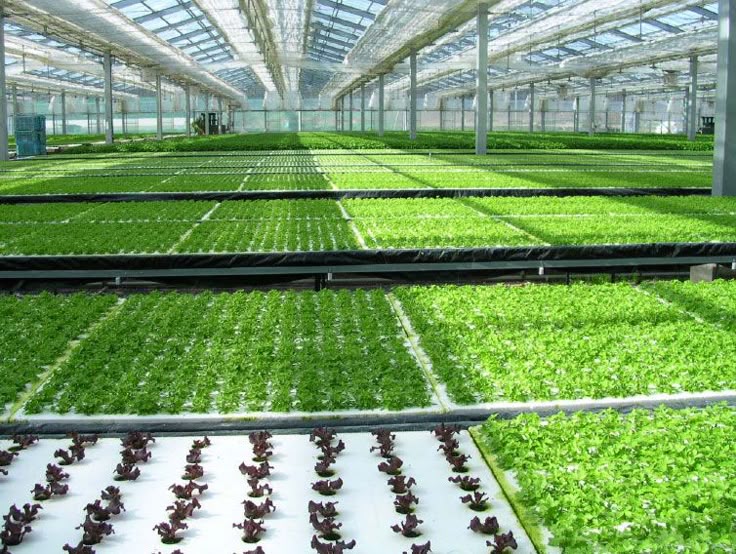
A former diamond industry specialist is betting on vertical farming to revolutionise food production in the water-scarce Gulf, with plans to deploy 20 hydroponic containers and a 2-acre vertical greenhouse across 20,000 acres of allocated land in the Sultanate of Oman.
Al Basateen Al Amrah, founded by Natasja van Der Linde, an entrepreneur with agricultural roots in South Africa and certification from Dubai’s Barakhova Academy, represents an ambitious attempt to address the region’s food security challenges through closed-loop farming systems that use 90 per cent less water than traditional agriculture.
The company, currently incubated with FasterCapital in the pre-funding phase, plans to target both livestock feed production and fresh produce markets with its dual-revenue model. Initial production will focus 60 per cent on fodder feed to reduce import dependency for livestock farms, with 40 per cent dedicated to fresh produce for hospitals, schools and premium retail chains.
“We founded Al Basateen Al Amrah with a compelling mission: to heal the land while nourishing the people,” said Natasja van Der Linde, whose background spans diamond trading and generational agricultural knowledge. “Our inspiration arose from the pressing need to transition away from harmful, water-intensive agricultural practices toward sustainable, closed-loop systems.”
The venture plans to produce approximately 1.5 to 2 tons of fodder feed daily from 20 hydroponic containers, alongside 50 to 60 tons of leafy greens annually from its vertical greenhouse facility. The system will utilise nutrient film technique (NFT) hydroponics and AI-supported environmental controls to maximise production efficiency.
Oman’s challenging climate presents significant technical hurdles, particularly the intense summer heat that strains cooling systems. The company plans to address this through solar-integrated HVAC and evaporative cooling systems, while IoT-controlled fertigation systems will ensure consistent nutrient delivery across vertical growing layers.
The business model aligns with Oman Vision 2040’s sustainability goals and addresses critical regional challenges including water scarcity, limited arable land, and heavy reliance on food imports. Following successful completion of the initial phase, expansion plans include scaling to 300 fodder containers and 30 acres of vertical greenhouse across multiple locations including Salalah, Sohar, and port cities.
“In Oman, where water is scarce and arable land is limited, vertical farming is not merely innovative; it is essential,” Natasja van Der Linde explained, emphasising the spiritual and environmental imperatives driving the venture beyond pure commercial considerations.

Here are excerpts from The Fourth Plate’s exclusive interview with Natasja van Der Linde:
Could you tell us a bit more about yourself, your education and earlier career?
I hold a high school diploma and have received certification from the Barakhova Academy in Dubai, specializing in the diamond industry. This experience instilled in me the values of precision, patience, and an understanding of natural elements. However, my roots run deeper; I was raised with agricultural teachings passed down through generations in South Africa.
My strongest foundation stems from a profound connection with Mother Earth. I have always felt a calling to protect and nurture the land wherever I reside. For me, agriculture transcends mere business; it embodies a sacred responsibility. This intrinsic purpose inspired me to establish Al Basateen Al Amrah, with the aim of fostering healing, regeneration, and innovation within the soil, the community, and the future of food.
What prompted you to establish Al Basateen Al Amrah? What is the overarching vision of the entity?
We founded Al Basateen Al Amrah with a compelling mission: to heal the land while nourishing the people. Our inspiration arose from the pressing need to transition away from harmful, water-intensive agricultural practices toward sustainable, closed-loop systems. Once we secure funding, we will develop a network of vertical greenhouses and fodder feed units that utilize less water and land, and avoid chemicals, all while producing year-round food and feed for both livestock and people. Our vision is to transform the agricultural landscape in Oman and the GCC, promoting self-sufficiency, climate resilience, and a spiritual reconnection to the Earth.


What initially drew you to vertical greenhouse farming in your region, and how did you identify the specific opportunity for combining fresh produce with fodder feed production?
Our interest in vertical greenhouse farming is rooted in its alignment with our values, efficient, clean, and respectful of nature. In Oman, where water is scarce and arable land is limited, vertical farming is not merely innovative; it is essential. Upon securing funding, we will integrate fresh produce production with high-yield hydroponic fodder feed, recognizing the interconnectedness of livestock and vegetable markets, both of which currently suffer from import dependencies. By uniting these sectors within a single integrated system, we aim to enhance both human health and animal welfare while strengthening the agricultural economy.
Given that you’re “incubated with FasterCapital,” what stage is Al Basateen Al Amrah at in its development, and what key milestones convinced investors to back your vertical farming approach? Can you provide a brief overview of the journey?
Currently, we are in the pre-funding, pre-production phase, collaborating closely with FasterCapital to refine our business model and enhance our investor readiness. Through this incubation, we have developed a clear and actionable roadmap for scaling sustainable farming.
Once funded, we will initiate the launch of our first 20 fodder feed containers and a 2-acre vertical greenhouse, utilizing 20,000 acres of allocated land. We have already secured supplier quotes, cost models, and labor plans. Investors are drawn to our dual-revenue model, our alignment with Oman Vision 2040, and our purpose-driven leadership. The journey has only just begun, and with support, we aim to transform our plan into a regenerative movement.

You focus both on hydroponic systems and vertical farming—can you explain your specific growing methodology and how you optimize space efficiency for different crops?
Once funding is secured, we will implement a hybrid system utilizing the hydroponic nutrient film technique (NFT) and vertical stacked trays within controlled-environment structures. Our fresh produce (including assorted vegetables, fruits, herbs, and leafy greens) will be cultivated in vertical greenhouses using smart irrigation and energy-efficient lighting.
Meanwhile, our fodder feed (such as barley and alfalfa) will undergo 7-day growth cycles in modular containers, optimized for continuous harvesting. Every square meter will be maximized using AI-supported environmental controls and zero-soil farming methods, enabling us to produce ten times more food with 90% less water.
What’s your current production capacity, and how do you balance allocation between fresh produce for consumers versus fodder feed for livestock operations?
As we are still in the pre-production phase, our plans are well-defined. Upon securing funding, we will commence with 20 hydroponic fodder feed containers, producing approximately 1.5 to 2 tons daily. Concurrently, our 2-acre vertical greenhouse is projected to yield around 50 to 60 tons of leafy greens annually. We will strategically manage allocation based on market demand, with an initial focus of 60% on fodder feed to support livestock farms and reduce reliance on imported feed, and 40% on fresh produce targeted at hospitals, schools, and premium retail chains.

What are the biggest technical challenges you’ve encountered in vertical greenhouse farming, and how have you solved them?
One significant challenge in Oman is the intense summer heat, which places considerable strain on cooling systems. We plan to mitigate this with solar-integrated HVAC and evaporative cooling systems, balancing sustainability with efficiency. Another challenge is ensuring consistent nutrient delivery across vertical layers; our design incorporates IoT-controlled fertigation systems to maintain uniformity and minimize waste. Additionally, labor and training issues will be addressed by partnering with experienced agritech professionals and implementing on-site training programs to upskill local talent.
You serve both direct consumers (fresh produce) and livestock operations (fodder feed), how do you manage these different customer segments and their varying requirements?
Our business model is designed to cater to both customer segments simultaneously. Once operational, we will establish contract farming agreements with livestock farms to ensure a steady demand for fodder feed. For produce, we will engage directly with retailers, schools, hotels, and exporters that prioritize traceability and freshness. Two dedicated sales teams, one focused on agriculture and the other on consumer products, will provide tailored services for each segment. A centralized digital platform will facilitate inventory management, delivery coordination, and demand forecasting.

What’s your expansion strategy for scaling vertical farming operations, and what factors determine where you’ll establish new facilities?
Following the successful completion of our initial phase, we will employ a modular, location-specific strategy for expansion. Key factors influencing our decisions will include access to water and energy, proximity to livestock farms or urban food markets, and supportive local policies and incentives. In years two to three, we aim to scale from 20 to 300 fodder containers and from 2 to 30 acres of vertical greenhouse, with prospective facilities in Salalah, Sohar, and port cities to bolster export capabilities and enhance national food resilience.
Given the capital-intensive nature of greenhouse infrastructure, what’s your approach to financing expansion while maintaining the sustainable practices that define your brand?
We believe that funding and sustainability must coexist. Our financing strategy combines impact-focused equity investments, green loans, and agricultural subsidies, as well as government co-funding and donor programs aimed at climate-smart agriculture. Each phase of expansion will be financed by reinvesting revenue into infrastructure and innovation. Our systems will remain grounded in low energy and low water usage, alongside local job creation, ensuring both financial viability and ecological sustainability.

How do you see the region’s focus on climate action, and how can your entity contribute towards that?
The region’s commitment to climate action is now a matter of survival. Oman and the GCC are actively seeking practical solutions. Al Basateen Al Amrah will serve as a living example of climate-smart agriculture, demonstrating how we can produce food and feed without polluting or depleting resources. We aim to conserve millions of liters of water, eliminate harmful agrochemicals, reduce carbon-heavy imports, and foster local food systems. We don’t simply align with Oman Vision 2040; we aspire to actively contribute to its realization, in harmony with the Earth.
Watch the story here



നിങ്ങളുടെ അഭിപ്രായങ്ങൾ രേഖപ്പെടുത്തുക