
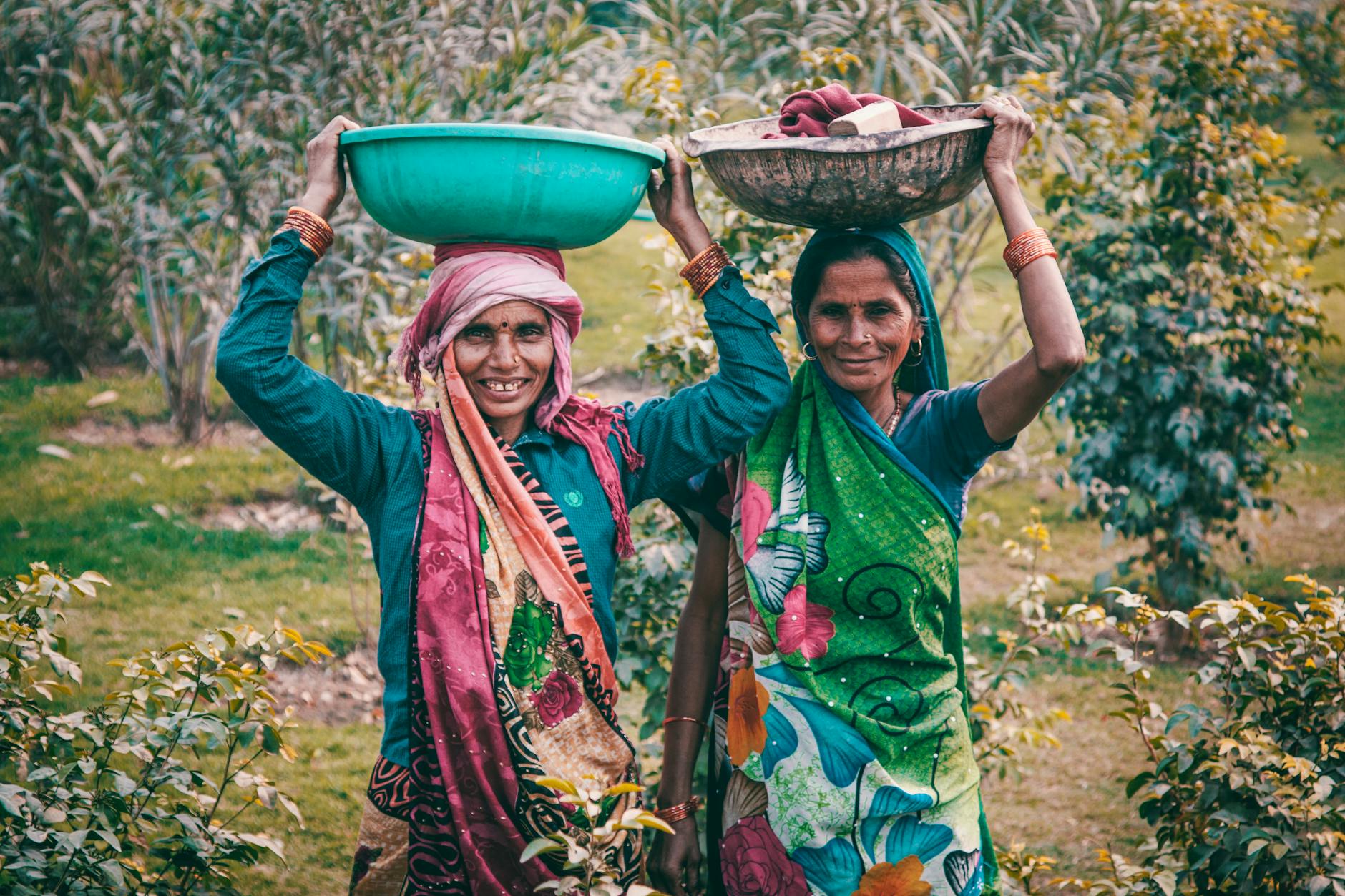
As smallholder farmers across Kenya check their phones for weather alerts and crop disease diagnoses, a critical question emerges: will artificial intelligence finally democratize agricultural technology, or will it deepen the digital divide that has persisted since the internet era?
With over 570 million smallholder farmers worldwide feeding much of the global population, their access to cutting-edge technology will determine not just individual livelihoods but global food security in an era of climate change.
The Internet Era: A Mixed Legacy
The internet era created stark divides in agricultural access. While successful farmers who gained connectivity saw transformative benefits, the majority were excluded by infrastructure and cost barriers. In 2024, only 23% of Africa’s rural population had internet access, compared to 57% in urban areas. The cost barrier remained prohibitive, with 1GB of mobile data costing 8.8% of monthly income in Africa versus global affordability targets of 2%.
The internet didn’t fail African farmers; it succeeded spectacularly for those who could access it. The tragedy was how few could.

The Case for AI Leapfrogging
Today’s AI revolution presents a fundamentally different opportunity. Unlike the early internet, which required computers and fixed-line connections, AI-powered agricultural tools are designed for the smartphones already in farmers’ pockets.
The evidence for leapfrogging is tangible. Hello Tractor’s “Uber for tractors” platform has fitted GPS technology in more than 2,500 tractors and assisted over 500,000 farmers by 2020. In Kenya alone, 41,000 farmers accessed these services by 2020, with tractor access costing just one-third of manual labor while being 40 times more efficient.
The evidence suggests genuine leapfrogging potential. Farmers are jumping straight to AI-powered credit scoring and precision agriculture advice without ever having used a computer.
The technology is solving previously intractable problems. In India’s Khammam district, the Saagu Baagu project helped 7,000 chili farmers achieve remarkable results: net income doubled to $800 per acre in a single crop cycle, yields increased by 21%, pesticide use fell by 9%, and fertilizer use dropped by 5%. The success led the state government to expand the program to 500,000 farmers across 10 districts.
Smartphone apps like Tumaini demonstrate similar potential. Developed by CGIAR researchers, this banana disease detection app has achieved a 90% success rate in identifying pests and diseases across Colombia, Democratic Republic of Congo, India, Benin, China, and Uganda. Unlike existing tools that require detached leaves on plain backgrounds, Tumaini can detect symptoms on any part of the crop and works offline – crucial for smallholder farmers. Now 3,000 farmers are using the app in the field.

The Deepening Divide Argument
However, critics argue that AI could create an even more insurmountable divide than the internet era. The fundamental requirements for AI development such as massive datasets, high-performance computing, and specialized talent are concentrated in the Global North to an unprecedented degree.
If farmers become dependent on AI models they don’t own or understand, developed with data they don’t control, this could create a new form of technological colonialism.
The data dependency is particularly acute. Building effective AI for agriculture requires vast amounts of localized, high-quality data, precisely what the Global South lacks. AI models trained on data from industrialized Northern farms perform poorly when applied to diverse smallholder systems, potentially giving dangerous advice on pest management or fertilizer use.
There’s also a troubling bifurcation emerging. While basic AI advisory services show promise for smallholders, the most powerful agricultural AI such as autonomous tractors, robotic harvesters, and sophisticated farm management systems are designed for large-scale operations. McKinsey’s 2024 survey found that 81% of large farms (over 5,000 acres) are willing to adopt agtech solutions, compared to 76% of medium farms (2,000-5,000 acres) and just 36% of small farms (under 2,000 acres).

The Gender Dimension
The gender implications add another layer of complexity. Women constitute 43% of the agricultural workforce in the Global South but face additional barriers to technology adoption. They’re less likely to own smartphones, may have lower digital literacy rates, and often lack decision-making authority over household technology investments.
Yet when designed inclusively, AI tools can be particularly empowering for women. Voice-based interfaces overcome literacy barriers, while mobile financial services provide secure, confidential access to credit and savings.
Technology is never gender-neutral. The question is whether we design it to reinforce existing inequalities or to challenge them.
The Ecosystem Has Evolved
One crucial difference from the internet era is the maturation of support ecosystems. Kenya’s National AI Strategy, launched in 2025, explicitly prioritizes agriculture and emphasizes local context and indigenous knowledge.
Investment flows are supporting pragmatic solutions. ThriveAgric in Nigeria has provided $100 million in loans to 514,000 farmers and facilitated production of 1.5 million metric tons of grain – contributing 6.5% of Nigeria’s national grain reserves. The company raised $56.4 million in debt financing in 2022 and targets providing $500 million in credit to 10 million farmers by 2027.
Local entrepreneurs are driving innovation.
ThriveAgric’s Agricultural Operating System works entirely offline and has enabled farmers to increase incomes by 25% through premium pricing for commodities including soybeans, rice, maize, and wheat. The company operates over 450 warehouses and is expanding year-round production to break the cycle where 95% of food production happens in just six months.
Morocco’s AgriEdge, created by OCP Group, serves 24,000 farmers across Morocco, Mali, Senegal, Benin, and Togo covering 300,000 hectares. Their precision irrigation reduces water usage by 25%, while their digital nitrogen index (N-Index) allows 21% nitrogen savings while achieving 24% additional grain yield for wheat farmers.
These solutions are built from the ground up for African farming systems, not adapted from Western models.

The Path Forward
The outcome of AI in Global South agriculture is not predetermined. It will be shaped by deliberate choices made today.
Governments must treat rural broadband and digital literacy as essential public services, while developing national AI strategies that prioritize agriculture. The data deficit requires urgent attention as researchers like Dr. Ryan Shi at the University of Pittsburgh note, current agricultural chatbots struggle with low engagement precisely because they lack personalized, localized data. Creating national agricultural data commons could turn a strategic weakness into a competitive advantage.
Development partners should fund the creation of localized, unbiased datasets and support hybrid models that combine digital tools with trusted human networks. Organizations like USAID are already supporting this through co-investment grants, while partnerships between companies like ThriveAgric and Heifer International demonstrate how to reach women farmers and provide crop insurance at scale.
There is a brief window to get this right. The technologies exist, the business models are proving viable, and the ecosystem is more supportive than ever. But without intentional action, we risk recreating the same patterns of exclusion on an even larger scale.
As farmers across the Global South increasingly turn to their phones for agricultural advice, the question isn’t whether AI will transform agriculture but if that transformation will be inclusive. The answer depends on choices being made in government offices, boardrooms and research labs around the world.
The bus is here. Whether everyone gets on board depends on the collective will to ensure no one is left behind.





നിങ്ങളുടെ അഭിപ്രായങ്ങൾ രേഖപ്പെടുത്തുക