
How One Man’s Vigil Could Save South India’s Critically Endangered Vultures
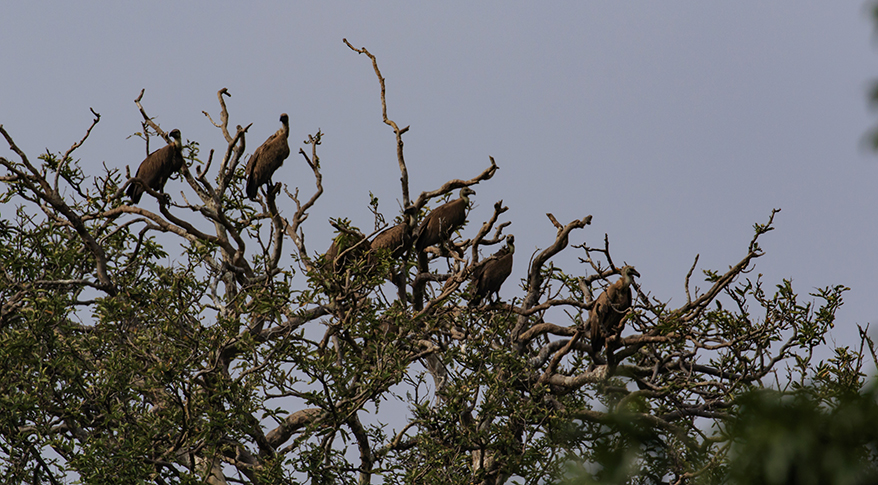
When H. Byju began trekking the rugged cliffs and dry deciduous forests of the Moyar Valley more than a decade ago, vultures were already vanishing from India’s skies. What he encountered on those lonely ridges was not just a rare congregation of long-billed and white-rumped vultures but also the silence that had replaced once-ubiquitous flocks. For Byju, that silence became a calling.
An independent ornithologist, photographer, and conservationist, Byju has dedicated his career to studying and protecting the surviving populations of vultures in southern India.
His work is centred on the Nilgiris Biosphere Reserve—particularly the Mudumalai and Sathyamangalam Tiger Reserves—where four critically endangered species still cling to life: the long-billed, white-rumped, red-headed (king), and Egyptian vultures. For years he has crisscrossed the valley, documenting nest sites, monitoring breeding success, and mapping threats with the persistence of a full-time field biologist, despite working outside the security of formal institutional posts.
Byju trained in zoology and holds a master’s degree in science, but he calls himself an “independent researcher” with pride. The independence, he says, allows him to combine science with storytelling, cultural memory, and advocacy in a way that standard academic positions rarely permit.

His acclaimed book, Valley of Hope—Moyar and Vultures, blends natural history with field notes, photographs, and essays that capture both the fragility and the resilience of these cliff-nesting scavengers. Conservationists across India regard the book as one of the rare extended testimonies from the field in a region where long-term monitoring has been scarce.`
His research has appeared in peer-reviewed outlets such as the Journal of Threatened Taxa, and he has collaborated with colleagues on reports that map the vulture population trends in Tamil Nadu and the Nilgiris. Among his findings is the discovery of more than 30 active nests in the Moyar cliffs—a significant indicator that southern populations are not only surviving but also attempting to recruit the next generation. Such evidence of breeding success contrasts with the near-collapse of populations in northern India, where the introduction of the veterinary drug diclofenac in the 1990s caused catastrophic declines.`
Byju’s fieldwork has also highlighted the multitude of smaller, often overlooked threats. He has documented how illegal resorts and tourist activity near nesting cliffs can disturb breeding pairs, leading to egg abandonment. His surveys have shown that many local veterinarians and pharmacies remain unaware of the toxicity of common painkillers such as diclofenac and ketoprofen, both lethal to vultures when they feed on treated livestock carcasses. He has also observed how vegetation overgrowth, forest fires, and poisoned carcasses disrupt the natural food cycle that vultures depend on.`
What distinguishes Byju’s work is his insistence on integrating traditional knowledge into conservation. Through ethnographic interviews with tribal and pastoral communities, he has recorded oral traditions that describe vultures as landscape guardians, creatures that once defined seasonal rhythms and cultural practices. He argues that “vulture culture matters” not just as folklore but as ecological wisdom that can enrich conservation strategies today. This approach has resulted in influential papers linking indigenous knowledge systems with modern conservation science.

Recognition has followed. Conservation groups across India often invite him to present findings, and he has been featured in national dailies for his warnings about the precarious state of the Moyar populations. His photographs—of vultures wheeling above cliffs, of hatchlings peering from nests, of carcasses stripped clean within hours—have become visual symbols of both hope and alarm in the fight to save India’s last scavengers.
For all the accolades, Byju remains grounded in the field. “Every time I climb a cliff and see a chick stretching its wings, I feel the story is not over yet,” he says. The Moyar Valley, for him, is both laboratory and sanctuary, a place where science meets faith. His mission is simple: to ensure that the next generation of Indians does not grow up under skies emptied of vultures.
As India debates large-scale infrastructure in ecologically sensitive landscapes, Byju’s voice offers a reminder that conservation is not just about numbers. It is about the patient work of watching nests, talking to herders, persuading pharmacies to change their shelves, and carrying a camera and notebook into places most people never venture. He has shown that one committed individual, working independently but in collaboration with local communities, can keep a near-forgotten species in the public eye.
Today, as the population in southern India shows fragile signs of stability—around 300 vultures recorded in the latest surveys—much of the credit goes to researchers like H. Byju. His life’s work is a quiet vigil over the cliffs of Moyar, where survival is never guaranteed, but where hope still hovers on outstretched wings.

Excerpts from an interview:
Q: How would you describe the current status of vulture populations in South India compared to a few decades ago?
Byju: In the 1990s, India witnessed one of the fastest wildlife collapses in history, as vulture populations crashed by more than 95 percent following exposure to the veterinary drug diclofenac. South India, too, was devastated.
Today, however, there are signs of fragile recovery. Recent synchronized surveys carried out jointly by the forest departments of Kerala, Karnataka, and Tamil Nadu, in collaboration with volunteers and independent experts, estimate the surviving population across the southern states at roughly 250–350 individuals. While these numbers remain perilously low, they represent a degree of stability compared to the freefall of earlier decades.
Q: What makes South India’s landscape and ecology particularly important for vultures?
Byju: The diversity of habitats in South India supports multiple species of vultures. The Deccan Plateau and the rocky expanses of Ramanagara and Gadag in Karnataka offer breeding sites for Egyptian Vultures. The sheer cliffs of the Nilgiris Biosphere Reserve provide nesting ledges for the Indian (long-billed) vulture, while the white-rumped vulture relies on large Terminalia arjuna trees growing along perennial rivers. Remarkably, the red-headed or king vulture, once considered virtually absent, has recently been recorded nesting in the Mudumalai Tiger Reserve.
Beyond protected areas, vultures continue to use unprotected cliffs, plateaus, temple complexes, and even human-altered landscapes in parts of south Tamil Nadu and Karnataka—highlighting both their resilience and dependence on cultural habitats.

Q: What are the most pressing threats vultures face in this region today—poisoning, habitat loss, or something else?
Byju: The illegal use of toxic veterinary NSAIDs remains the foremost threat. Diclofenac may have been banned, but other equally dangerous drugs—ketoprofen, aceclofenac, and nimesulide—are still in circulation. Beyond pharmaceuticals, forest fires are increasingly destructive, damaging nesting cliffs and roosting trees. Intentional poisoning of livestock carcasses to target predators such as leopards often claims vultures as unintended victims, but these incidents are under-reported due to difficult terrain and bureaucratic procedures.
Habitat alteration is another concern: check dams and poorly studied water-retention projects are flooding riverbanks and killing off Terminalia trees, depriving white-rumped vultures of essential nesting sites.
Q: The drug diclofenac devastated vulture numbers across India. How far has South India recovered from that crisis, and what new threats are emerging?
Byju: From an estimated 10,000 individuals in the 1980s, populations in South India collapsed to a few hundred by the early 2000s. Recovery has been painfully slow. While current surveys indicate some stabilization, the population remains well below the ecological threshold of 750–800 breeding pairs needed for long-term viability. It may take another decade or more to reach that number—if major new threats are avoided.
Unfortunately, other NSAIDs continue to be widely used, requiring both stricter bans and stronger enforcement. Habitat degradation adds to the pressure: invasive weeds such as lantana, eupatorium, and parthenium form dense undergrowth that hides carcasses from vultures, which rely entirely on sight to locate food.
Q: How do factors like wind energy projects, power lines, and highways affect vulture survival?
Byju: Unlike in Gujarat and Rajasthan, wind turbines have not yet become a major documented hazard for vultures in the south. But highways and expanding infrastructure are encroaching on their restricted ranges. Roadkill near highways can attract vultures into dangerous proximity to speeding vehicles. Electrocution, though rarely reported, is a real risk—one Himalayan griffon was recorded dying of suspected electrocution near Maravakandy Dam in Mudumalai. Confirming such causes is often difficult because carcasses are retrieved late, and post-mortems are not always carried out.

Q: Why are vultures often described as “nature’s clean-up crew”?
Byju: Vultures are uniquely equipped scavengers. By consuming carcasses rapidly, they prevent the spread of deadly pathogens such as anthrax, rabies, and botulism. Their highly acidic stomachs destroy bacteria and viruses that would otherwise linger in the environment, posing a risk to both wildlife and humans. In this way, vultures provide an irreplaceable ecosystem service—keeping landscapes clean, limiting the spread of zoonotic diseases, and reducing pressure on human waste management systems.
Q: Can you explain the cascading ecological consequences if vultures were to disappear completely from South Indian forests?
Byju: The absence of vultures would trigger a cascade of ecological and public health crises. Carcasses would remain in the open, encouraging explosive growth in feral dog populations, which in turn would drive up rabies cases and attacks on wildlife. Ground-nesting birds and small mammals would suffer from this imbalance. Slow carcass decomposition could contaminate soil and water systems—many of which feed reservoirs that supply cities across the Nilgiris. Other scavengers and predators, forced to consume poisoned or pesticide-laced carcasses, would face higher mortality. Governments would then bear enormous costs in disease control, vaccination drives, and waste management.
Q: What recovery measures are currently underway in South India, both governmental and community-led?
Byju: The creation of Vulture Safe Zones (VSZs) in the Nilgiris has emerged as a priority. Regular synchronized surveys are institutionalized across states to monitor numbers. At the policy level, the Drug Controller General of India has banned diclofenac and recently moved against aceclofenac and ketoprofen, though loopholes remain. Tamil Nadu has established a dedicated state-level committee on vultures to map populations, remove unsafe drugs, and create safe carcass-disposal protocols. NGOs and local groups are actively promoting meloxicam and other vulture-safe alternatives among veterinarians. The collaborative approach — linking forest departments, NGOs, and volunteers — has been critical in sustaining momentum.
Q: Are vulture breeding and rescue centres playing a role here, or is wild habitat conservation more critical?
Byju: Captive-breeding centres in northern India are slowly beginning to release birds back into the wild. These efforts are valuable, particularly for species on the brink. But for southern India, maintaining and strengthening wild populations is even more urgent. Ideally, the strategy should be two-pronged: continue to protect and restore wild habitats while also supporting controlled releases from breeding centres where appropriate.
Q: How successful have awareness campaigns been in changing local practices, especially around cattle carcass disposal and toxic veterinary drugs?
Byju: Progress has been uneven. In some areas, awareness campaigns have convinced veterinarians to adopt meloxicam and communities to dispose of carcasses safely. In others, traditional practices, ritual beliefs, and economic constraints keep unsafe habits alive. I would say success is “fifty-fifty” so far. Still, even partial success matters: each shift in practice translates into safer food sources and less risk of poisoning for vultures.
Q: What innovative or lesser-known conservation strategies are showing promise in reviving vulture numbers?
Byju: “Vulture restaurants,” or supplementary feeding stations, are gaining traction in places like Jharkhand, offering safe carcasses to sustain local populations. In the south, community participation in nest monitoring is proving invaluable, helping scientists track breeding success and identify threats. These strategies, though still emerging, reflect the kind of grassroots involvement that can transform conservation outcomes.
Q: What gaps do you see in India’s current vulture action plan when applied to the specific realities of the South?
Byju: The biggest gap is bureaucratic ego and elitism. Local experts and community groups often find themselves sidelined in favor of high-profile NGOs or international projects. Funding and recognition rarely reach those actually walking the cliffs and monitoring nests. This disconnect undermines conservation. A more inclusive approach—sharing credit and resources with grassroots workers—would make the national action plan far more effective in southern landscapes, where data gaps and logistical challenges remain significant.
Q: How big a challenge is balancing infrastructure development with vulture survival in this region?
Byju: Immense. The push for rapid GDP growth and infrastructure expansion often trumps environmental concerns. Roads, dams, and power projects continue to be planned in ecologically sensitive zones with little public debate or rigorous assessment. For vultures, as for many species, the battle is not just ecological but political. For those without influence or position, it’s a Herculean task to alter government policy. The fate of vultures, then, is tied to broader struggles over India’s development model and the shrinking space for wild landscapes.
Q: After all these years of watching over the cliffs of Moyar, what keeps you climbing?
Byju: Hope. Every time I climb a cliff and see a chick stretching its wings, I know the story isn’t over. That moment is everything. I want the next generation of Indians to grow up under skies where vultures still circle. That’s what keeps me going.

K.A. Shaji is an independent journalist from South India, known for his in-depth reporting on rural distress, caste, tribal affairs, environment, and development. Over the past two decades, he has worked with leading publications including The Hindu, The Times of India, The Indian Express, The Hindustan Times, The Telegraph, Dainik Bhaskar, Tehelka, HuffPost India, Open, Outlook, and South First, while also contributing to international outlets such as The Guardian, BBC, Financial Times, and Mongabay. Based in Kerala, he continues to chronicle stories from the ground that connect local struggles with national and global debates on justice, ecology, and governance.
Email: shajiwayanad@gmail.com Tel: 00 91 8921018884
Follow on: LinkedIn




നിങ്ങളുടെ അഭിപ്രായങ്ങൾ രേഖപ്പെടുത്തുക