

He is not a scientist, yet scientists follow his lead. In Kerala’s Silent Valley, a Muduga tribesman named Maari has become the forest’s memory — the living archive of India’s last magnificent rainforest.
In the rain-soaked heart of Kerala’s Silent Valley, where the Kunthipuzha River winds through one of the world’s last untouched rainforests, lives a man who has spent his life listening to the forest breathe. Maari, a Muduga tribesman and forest watcher, has become the living authority of this wilderness, a bridge between ancient wisdom and modern science, between silence and survival.
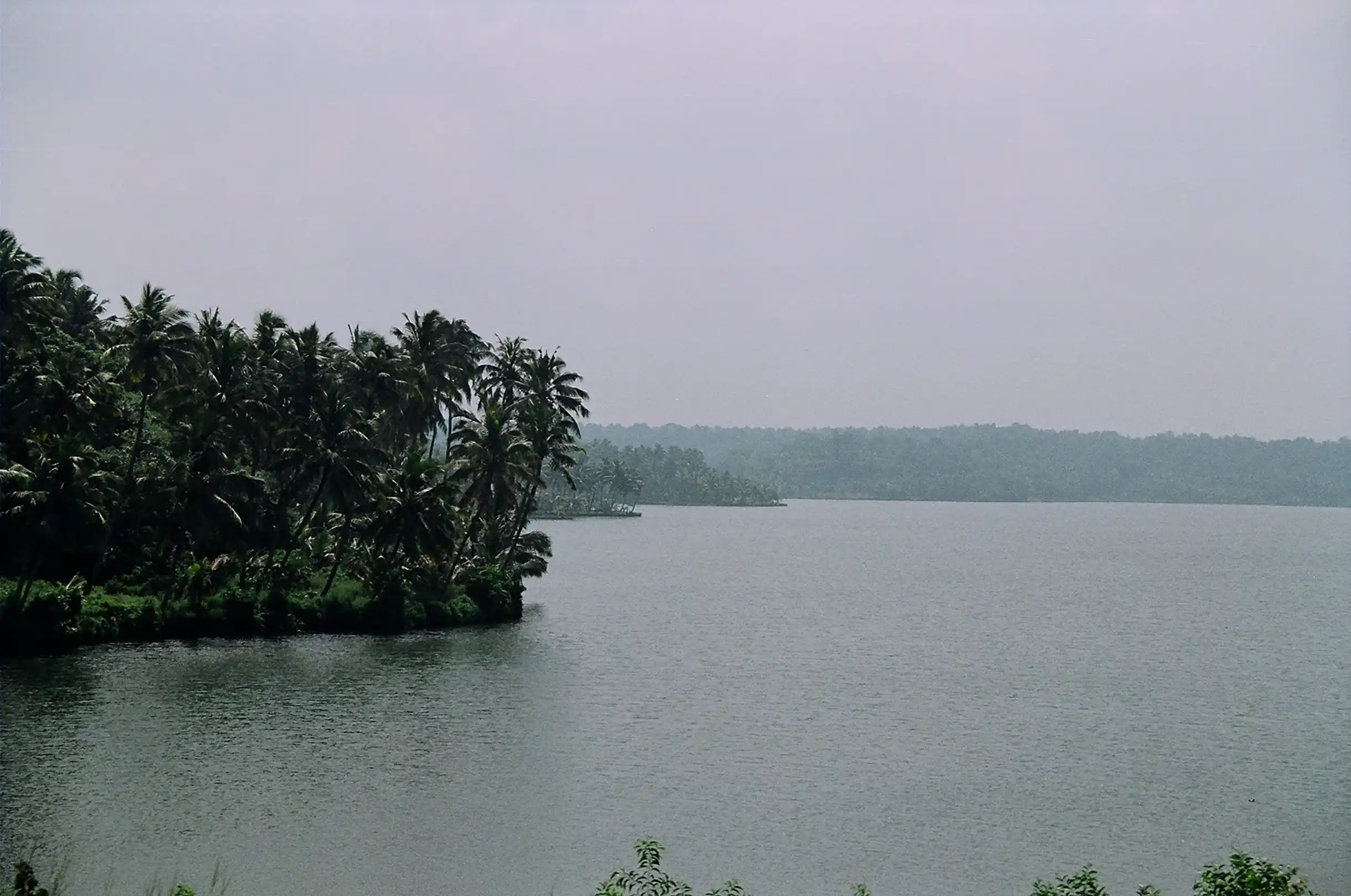
At dawn, Silent Valley wakes without sound. Mist rises from the Kunthipuzha like incense from a temple altar. Shafts of light pierce the green canopy, striking mossed trunks and giant ferns. The forest is not asleep; it is listening. A rhythm older than language hums through it, the slow respiration of a place that has outlived empires, floods, and the ambitions of men.
If you walk the trail with Maari at this hour, the silence becomes articulate. He points to a bent twig, the fresh dung of a gaur, and the bark of a tree that peels differently after rain. To the untrained eye, it is wilderness. To him, it is a living story unfolding in many dialects of birds, wind, and time. His knowledge is not from books but from years of walking, watching, and listening. He is a man shaped by the forest he guards.

A forest almost lost
In the mid-1970s, Kerala’s State Electricity Board planned a 240-megawatt hydroelectric project across the Kunthipuzha River. The idea looked simple on paper: dam the river near Sairandhri, flood the valley, and generate power for a state hungry for electricity. What the planners did not consider was the ancient complexity of the ecosystem — the 530 hectares of undisturbed evergreen canopy and the hidden webs of life sustained by it.
When the plan became public, a quiet rebellion began. Scientists, poets, students, and farmers rose to defend the Silent Valley Forest. The Kerala Sasthra Sahithya Parishad, or KSSP, gave the movement its structure and strength, uniting people across class and ideology under one conviction: that Silent Valley was not a commodity to be traded for power. The campaign introduced new ideas into Kerala’s public life, and they included ecology, biodiversity, and environmental assessment. It also gave birth to a new kind of patriotism: one that saw the protection of a river as an act of national service.
Songs were written, pamphlets printed, and street meetings held across Kerala. The lion-tailed macaque, found only in Silent Valley and very few other patches of the Western Ghats, became the movement’s emblem. When Prime Minister Indira Gandhi took note, history took a different course. She ordered the scrapping of the project in 1980. Four years later, Silent Valley was declared a national park, a victory won not by politicians but by ordinary people who refused to let a forest drown.
Amid the celebrations, few remembered the men who made the forest legible to science—the very few tribal guides who led researchers through rain, leeches, and darkness. One of them was a Muduga man named Letchiappan, then a living legend of the region’s thriving biodiversity.

The boy who followed his father
Letchiappan was not educated in the usual sense, but he could read the forest like scripture. A daily-wage worker with the Forest Department, he became the interpreter between the forest and the scientists who studied it. When teams of biologists arrived in the 1970s to document the valley’s flora and fauna, it was he who guided them to rare orchids, explained the herbs that healed, and described the calls of unseen birds.
Following him quietly through the jungle was his young son, Maari. Barefoot and wide-eyed, he absorbed every gesture of his father. The forest became his classroom; every expedition was a lesson. He learnt which trees bled red sap, which rivers sang differently after rain, and how the smell of the air foretold weather. When Letchiappan died, Maari inherited not his savings but his way of seeing.

The man who never left
At 15, Maari joined the Forest Department as a watcher. Since then, he has lived his life among the trees, patrolling the park’s interior, carrying equipment for scientists, and guarding against poachers. His formal education ended early, but his learning never stopped.
He rarely speaks of hardship, though it has been constant: years of uncertain work, leech bites that left scars, and months of isolation during the monsoon. He has faced wild elephants, floods, and loneliness, yet his words carry no bitterness. “The forest is family,” he says quietly. “It gives and takes in the same breath.”
His memory is a map more precise than any GPS. He knows where the Kunthipuzha narrows into a whisper, where elephants bathe at dawn, and where orchids bloom once in a decade. In 2018, the great floods cut off Silent Valley for days, leaving Maari stranded deep inside. While rivers raged and bridges collapsed, he waited, calm and sure. “The forest knows when to hold you,” he said later. “It kept me safe.”
A living archive
Over the decades, Maari’s knowledge has guided countless researchers. Scientists from the Kerala Forest Research Institute, the Tropical Botanic Garden and Research Institute, and the Institute of Forest Genetics and Tree Breeding have all worked with him. His observations helped track the lion-tailed macaque and document rare plants. Once, he showed a team the exact ridgeline where the macaques crossed between two valleys. Upon later verification with satellite data, they discovered that his accuracy was unparalleled.
“Maari knows Silent Valley better than any of us,” says Samuel Vanlalngheta Pachuau, the park’s wildlife warden. “He has the ability to comprehend the forest as if it were a book.” He is not just a watcher; he is its memory.”
His name has appeared in the acknowledgements of many scientific papers, though rarely on the title page. To scientists, he is a human compass, a living database of patterns and seasons. “Maari understands the forest as a single organism,” says Dr T V Sajeev, a senior ecologist with the Kerala Forest Research Institute. “He connects what we study in fragments.”

Recognition long delayed
It took nearly three decades for official recognition to reach him. In 2017, Maari passed the Kerala Public Service Commission examination and became a permanent tribal watcher under the Kerala Forest Department. Awards soon followed: the P. V. Thampi Environmental Award, the N. Madhavan Pillai Memorial Conservation Prize, and the Kerala Chief Minister’s Forest Medal, usually reserved for senior officers. Recently, he received the G. Prabhakaran Memorial Award, named after the environmental journalist who chronicled the Silent Valley struggle in The Hindu.
At the award ceremony, he stood awkwardly among forest officers and activists. The applause embarrassed him. “The forest is enough,” he said softly.“Whatever I am, it made me.”
“For me, Silent Valley is part of my life,” he told a gathering of students later. “Every tree, every sound, every shadow here has taught me something. Whatever I learnt, I learnt from them.”
Where myth meets science
Silent Valley is more than a national park; it is a myth that lives in scientific form. Locals call it Sairandhri, after Draupadi of the Mahabharata, who is said to have lived here in exile. The Kunthi River is believed to bear her mother’s name. Folklore tells of Pathrakadavu, where Draupadi’s magical vessel, the akshayapatra, was washed clean. The stories endure because they speak of abundance, continuity, and respect for life.
The valley’s biodiversity remains staggering. More than 960 species of flowering plants thrive here, seventeen of them endangered. Over 300 species of fauna have been recorded, including the lion-tailed macaque, Nilgiri langur, Malabar civet, and the Malabar tree nymph butterfly. When British botanist Robert Wright first came here in 1847, it was the stillness that startled him. He named it Silent Valley. But as Maari often reminds visitors, silence is never empty. “You have to stay long enough to hear what it says,” he tells them.

The second life of Silent Valley
Nearly four decades after it was saved, Silent Valley stands at another turning point. The Kerala government, under Forest Minister A. K. Saseendran, is preparing to declare its buffer zone as the Bhavani Wildlife Sanctuary, linking the park with the forests of Mannarkkad and Nilambur. The move will extend protection to 148 square kilometres and create an unbroken wildlife corridor across the Nilgiri landscape.
“The sanctuary will honour the movement that saved Silent Valley,” says Minister Saseendran. “It is both a continuation and a promise.” The proposal reflects the vision once put forward by M. S. Swaminathan in 1979, to create a National Rainforest Biosphere Reserve that protects both biodiversity and the livelihoods of tribal communities who live along the forest fringes.
For Maari, the proposal is not a policy announcement but a renewal of faith. “If the forest lives, we live,” he says. “When the river dries, it is like losing breath.”
The people’s victory
The Silent Valley movement transformed Kerala’s relationship with nature. It taught a generation that protecting forests was not an elite concern but a collective duty. Conservation entered common speech. The campaign became the forerunner of later environmental movements across India, from the Narmada Bachao Andolan to the fight against the Tehri dam.
For Maari and his community, conservation was never an abstract idea. It was a way of being. “The forest breathes through us,” he says. “When it hurts, we feel it.”
Keeper of memory
As evening descends, the forest fills with soft sounds. The macaques call from the canopy, cicadas hum in the ridges, and the Kunthipuzha murmurs through its rocky bed. Mist gathers again over the treetops.
Maari walks back to his post at Poochipara, a rope slung across his shoulder. To a visitor, he may look like a man returning from work. But to Silent Valley, he is something more: its keeper of memory, its living archive, its quiet sentinel.
Once, the valley was saved because people said no to a dam. Its future will depend on saying yes to those who still remember how to listen to its silence.

K.A. Shaji is an independent journalist from South India, known for his in-depth reporting on rural distress, caste, tribal affairs, environment, and development. Over the past two decades, he has worked with leading publications including The Hindu, The Times of India, The Indian Express, The Hindustan Times, The Telegraph, Dainik Bhaskar, Tehelka, HuffPost India, Open, Outlook, and South First, while also contributing to international outlets such as The Guardian, BBC, Financial Times, and Mongabay. Based in Kerala, he continues to chronicle stories from the ground that connect local struggles with national and global debates on justice, ecology, and governance.
Email: shajiwayanad@gmail.com Tel: 00 91 8921018884
Follow on: LinkedIn




നിങ്ങളുടെ അഭിപ്രായങ്ങൾ രേഖപ്പെടുത്തുക