
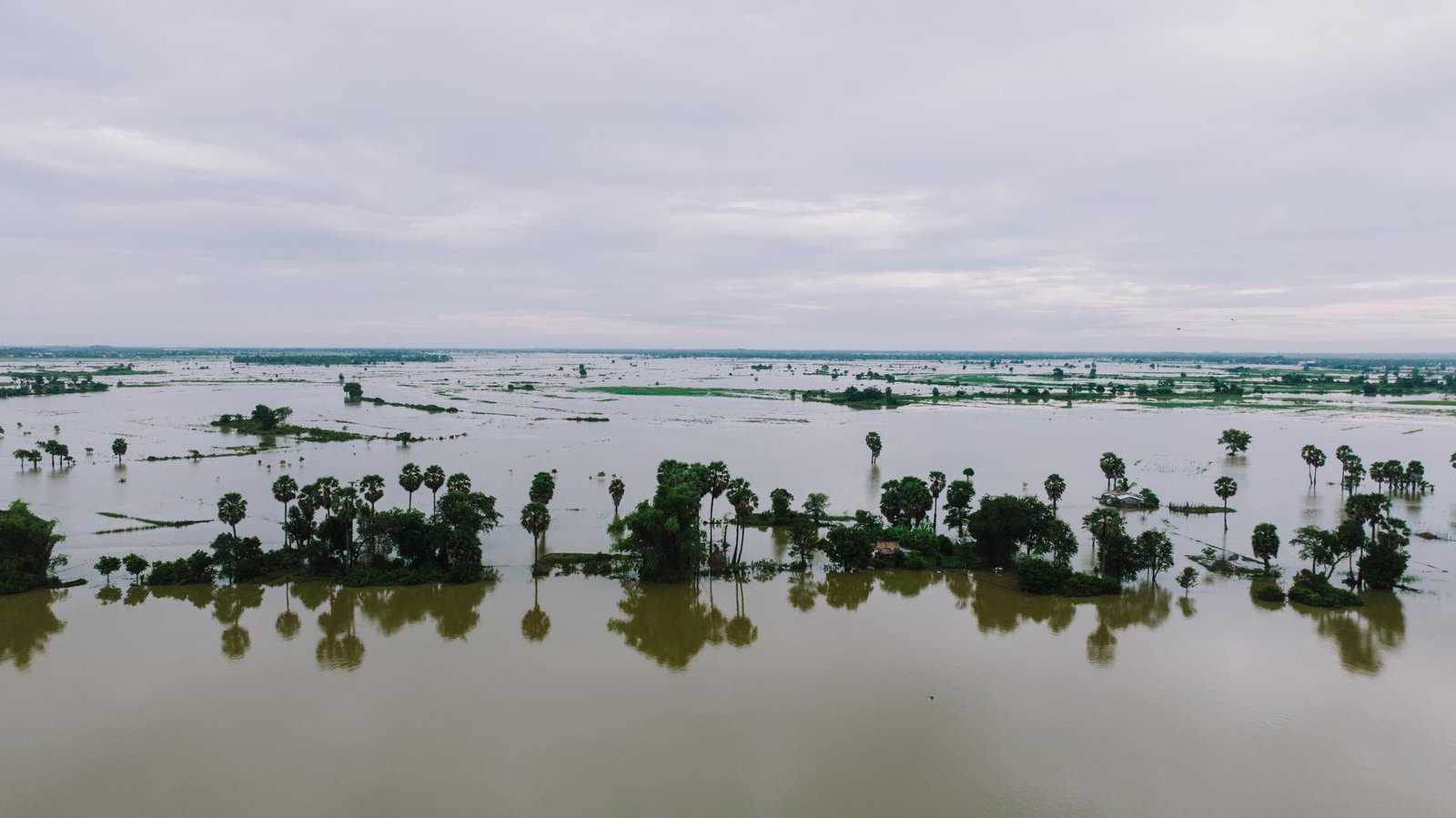
Kerala’s Agriculture Minister told the state assembly this month that farmers across the state suffered crop losses of roughly Rs 127-129 crore during this year’s monsoon floods. That works out to approximately $14.4-14.7 million, at current exchange rates of around Rs 88 to the US dollar. Two separate accounts of the assembly disclosure reported the figures, with only minor variation between outlets. They mark the first official tally of the agricultural toll from flooding that struck the state in August.
The August floods brought heavy rainfall and landslides to several districts. They displaced thousands of residents and damaged standing crops just as the growing season approached harvest for some vegetable and paddy varieties. Wayanad, a district already contending with the aftermath of earlier landslides, was among the areas hit hardest. Farmers there described the flooding as a second consecutive shock to their livelihoods within a short span. It compounded losses from damage that the district had not yet fully repaired.
The state government has since announced a relief package covering both immediate humanitarian needs and a longer-term resilience plan. How much of the reported loss is actually offset will depend on the scale of compensation reaching individual farmers, and how quickly it arrives. Kerala’s farmers have raised similar concerns after previous flood events. They criticised compensation processes then as slow, relative to the immediate cash-flow pressure of a lost harvest.

Farming sector already under pressure
The losses land at a difficult moment for the state’s smallholder-dominated farming sector. It was already navigating rising input costs. As this year’s Onam season showed, vegetable prices also swung sharply, driven partly by supply disruption (see related story). Paddy and vegetable farmers operating on small plots have limited capacity to absorb a bad season without support. They typically lack the savings or insurance buffers that larger commercial operations can draw on.
Kerala’s exposure to increasingly erratic monsoon patterns has become a recurring theme in the state’s agricultural planning. Flooding on a scale once considered exceptional has now recurred often. Agricultural economists and disaster planners increasingly treat it as a structural risk to plan around, rather than a one-off shock. That shift in framing carries practical implications. Agricultural planners increasingly discuss crop insurance uptake, drainage infrastructure and the choice of flood-tolerant crop varieties as core elements of farm planning, rather than optional precautions.
Community seed banks preserve flood-tolerant rice landraces, of the kind documented in a separate report on India’s seed conservation networks (see related story). They offer one part of that adaptation toolkit. Farmers gain options bred over generations to survive submersion that commercial high-yield varieties typically cannot. Whether the relief package brings faster compensation and stronger resilience planning, or simply covers the immediate shortfall before the next monsoon, is not yet clear. That will become clearer as disbursements begin and the next growing season gets under way.

Calls grow for faster payouts
Local body representatives in the worst-affected panchayats have pressed the state government for a clearer timeline on disbursement. They argue that farmers need compensation before the next sowing window, not after it. A delayed payout that arrives once planting season has already passed does little to prevent a second lost harvest. The Agriculture Department has said damage assessments are continuing in some districts. That means verification work could still revise the current loss figure, already significant, as it concludes.
Insurance uptake remains limited among Kerala’s smallholders. Many cultivate plots too small to make standard crop insurance premiums economical. Others grow mixed vegetable plots that fall outside the crop categories most insurance schemes cover. Agricultural economists have pointed to that gap as a structural weakness that repeated flood events keep exposing. Without a broader safety net, each successive flood forces farmers to absorb losses directly. They draw down savings or take on debt in years when compensation is delayed. That cycle becomes harder to break the more frequently flooding recurs.