
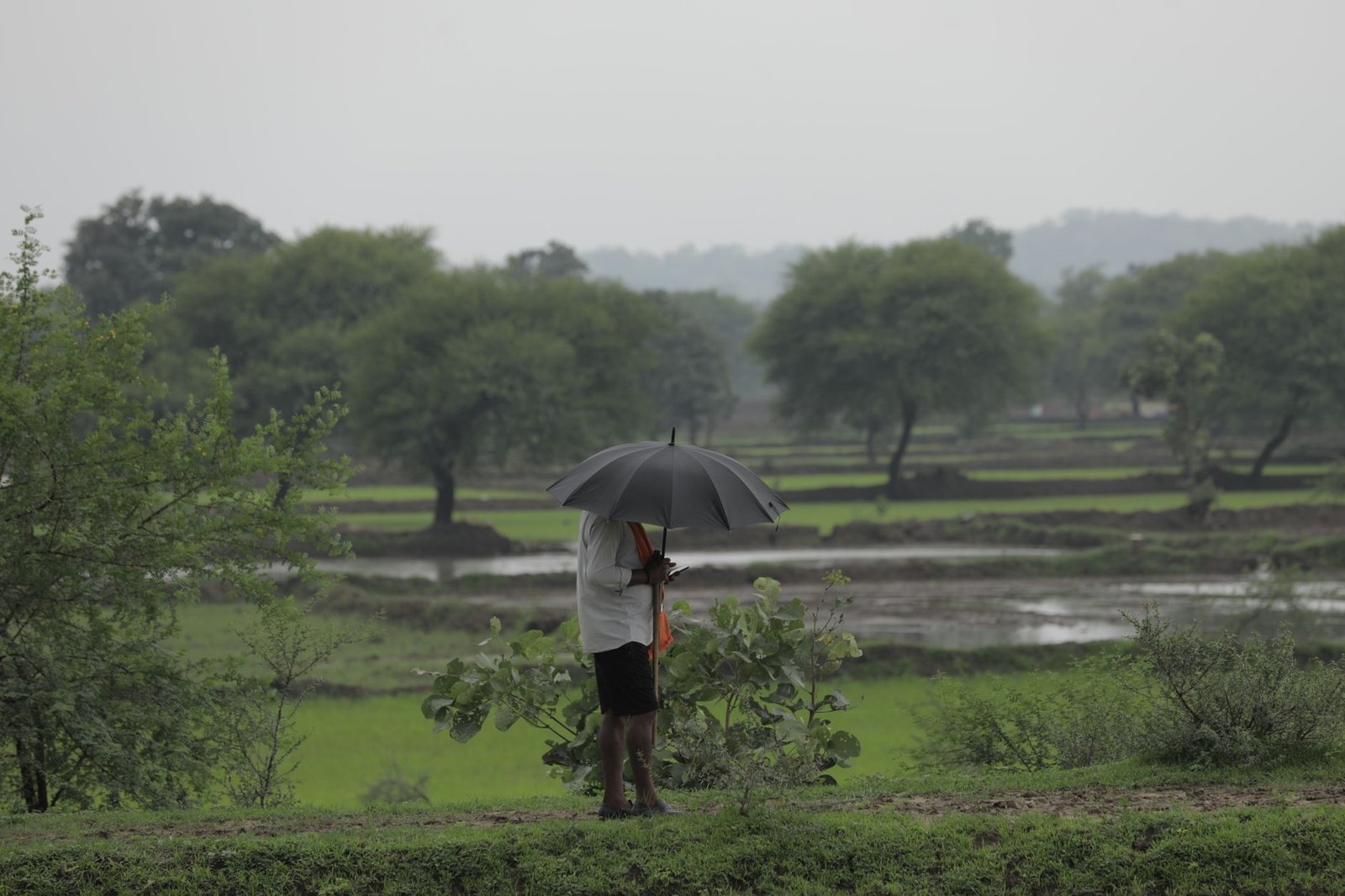
India’s southwest monsoon ended the 2026 season with rainfall 12.6% below the long-period average, the weakest showing since 2015, according to the India Meteorological Department (IMD). The season brought 759.4mm of rain against a normal of 868.6mm, making it the fourth-lowest total since 2001 and the 13th-lowest since 1901.
The shortfall was not even across the country. Southern India received just 76% of its long-period average, a 24% deficit, while eastern India logged 74%, also a 26% deficit. The east and northeast recorded their lowest rainfall since 1901, and the south peninsula logged its fourth-lowest total on record. Karnataka, Maharashtra, Andhra Pradesh, Telangana and Rajasthan emerged as the worst-affected states, IMD data show.
Kharif crops were sown across 110.7 million hectares this year, 1.2% less than the previous season, as farmers in deficit regions held back on water-intensive sowing. Reservoir levels in southern India stood at just 50% of live storage capacity by the end of the season, against a national average of 79%, leaving less water in hand for the rabi crop now being planted.

A season of extremes, not a steady decline
The monsoon’s monthly path explains the unevenness. June brought only 65% of its long-period average, a weak start that stoked early fears of a washout. July rebounded to 101%, briefly easing concern, before August fell back to 84% and September recovered to 92%. IMD Director General Mrutyunjay Mohapatra said the swings reflected shifting weather systems through the season rather than a single sustained dry spell.
The agency’s seasonal forecast came unusually close to the outcome, with a margin of error of 2.6%, against a typical seven-and-a-half percentage points. That accuracy will matter for how farmers and state governments plan the rabi season, which depends on reservoir and groundwater levels built up during the monsoon months.
Agriculture minister Shivraj Singh Chouhan named the worst-hit states and said the central government was reviewing drought relief and crop insurance claims from affected districts. The core monsoon zone, which covers pulses and oilseed-growing regions, still received 94% of its long-period average, a buffer that should limit damage to those crops even as rice and cotton regions in the south and east absorb the bigger losses.
Reservoir levels will decide the rabi season
Monsoon performance shapes food prices, rural incomes and the pace of rabi sowing for months after the rains stop. With southern reservoirs at half their live capacity, irrigation-dependent wheat and pulses sowing in several states is likely to lean more heavily on groundwater this winter, which carries its own long-term costs for aquifers already under stress from years of over-extraction.
Farmers in the worst-hit districts of Karnataka, Maharashtra, Andhra Pradesh and Telangana now face a narrower set of choices for the rabi season: sow a smaller area, switch to less water-intensive crops such as mustard or gram, or draw more heavily on groundwater and risk deeper aquifer depletion next year. Each option carries a cost, either to this season’s income or to the land’s longer-term capacity to support irrigation.
The Union Cabinet’s decision to raise minimum support prices for rabi crops, announced the same week, gives farmers a price cushion heading into a season shaped by an uneven monsoon. Separately, a new FAO assessment of the world’s soil resources has flagged erratic rainfall as one of the drivers of soil degradation across drought-prone farming regions, a pattern this year’s monsoon data illustrate at a national scale.
Whether the deficit translates into higher food prices will depend on how the rabi season performs over the coming months, and on how far reservoir levels recover before the next monsoon arrives in June.