
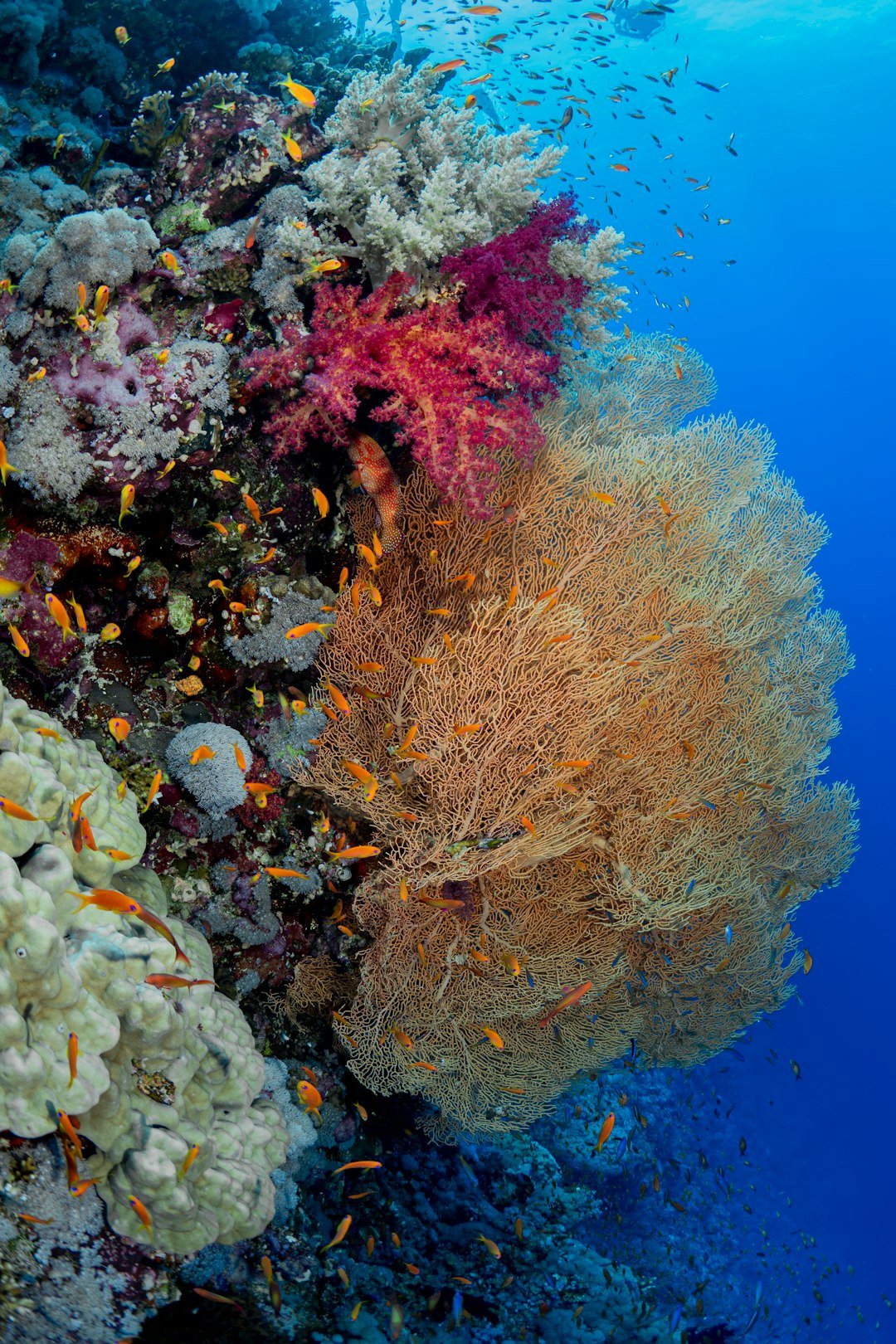
Scientists at the King Abdullah University of Science and Technology (KAUST) in Saudi Arabia have found that treating heat-stressed corals with probiotic bacteria can meaningfully improve their chances of surviving marine heatwaves, offering a potential new tool for reef conservation as ocean temperatures continue to rise. The findings, published in the journal Cell Reports, come from tests on Acropora cf. valida corals in the central Red Sea.
The researchers tested two approaches over a 15-day treatment window: live probiotic mixtures containing beneficial bacteria drawn from healthy Red Sea corals, and postbiotics, which use inactivated microbes or their molecular components rather than live organisms. Both treatments were applied to corals exposed to the kind of sustained heat stress recorded during the 2022 Red Sea heatwave, when seawater temperatures reached between 30.9°C and 31.9°C.
The postbiotic treatment produced the more striking results, triggering metabolic shifts in the coral tissue that included an increase in Cobetia bacteria, a group previously associated with heat tolerance in marine organisms. Researchers assessed coral health through colour retention and photosynthetic efficiency, both standard indicators of whether a coral’s symbiotic algae, which it depends on for energy, remain intact under heat stress.

Why the Red Sea matters as a bleaching laboratory
Coral reefs support at least a quarter of all marine life despite covering a tiny fraction of the ocean floor, making their resilience to warming seas one of the more consequential open questions in marine science. The Red Sea has become a focus for this research partly because its corals already tolerate naturally high baseline temperatures, giving scientists a live population already adapted to conditions other reefs are only now beginning to face.
That makes treatments proven effective in the Red Sea a useful reference point for reefs elsewhere that are warming towards temperatures Red Sea corals have already adapted to over thousands of years. Separately, warming seas have driven other visible changes in the region: anemone bleaching has already caused clownfish populations in parts of the Red Sea to decline sharply, an illustration of how heat stress cascades through a reef’s food web well beyond the corals themselves.
Reef health across the Red Sea carries direct economic weight for Egypt, Saudi Arabia and Jordan, all of which have built significant dive-tourism industries around the region’s reefs, alongside fisheries that coastal communities depend on for both income and protein. Saudi Arabia’s own giga-projects along its Red Sea coast have made reef resilience a planning consideration in their own right, since the tourism model those developments are built around depends on reefs remaining visibly healthy for visitors.
A tool, not yet a fix, for reef managers
Probiotic treatment is not a substitute for cutting the emissions driving ocean warming, and KAUST researchers have been careful to frame the approach as a supplementary intervention rather than a solution that removes the underlying threat. Applying treatments across entire reef systems, rather than the controlled plots used in trials, remains a significant logistical and cost challenge that has not yet been solved for any probiotic coral treatment worldwide.
Still, the results give reef managers in the Gulf and wider Middle East another option to consider alongside existing tools such as shading structures and selective breeding of heat-tolerant coral strains, an approach already being tested on India’s coral reefs in the Gulf of Mannar. For a region where tourism, fisheries and coastal protection all depend on reef health, even an incremental improvement in coral survival odds during heatwaves carries real economic weight.
The researchers say the next step is testing whether probiotic treatments can be scaled beyond laboratory conditions to functioning reef sites, work that will determine whether the approach becomes a practical conservation tool or remains a promising but narrow laboratory finding.