
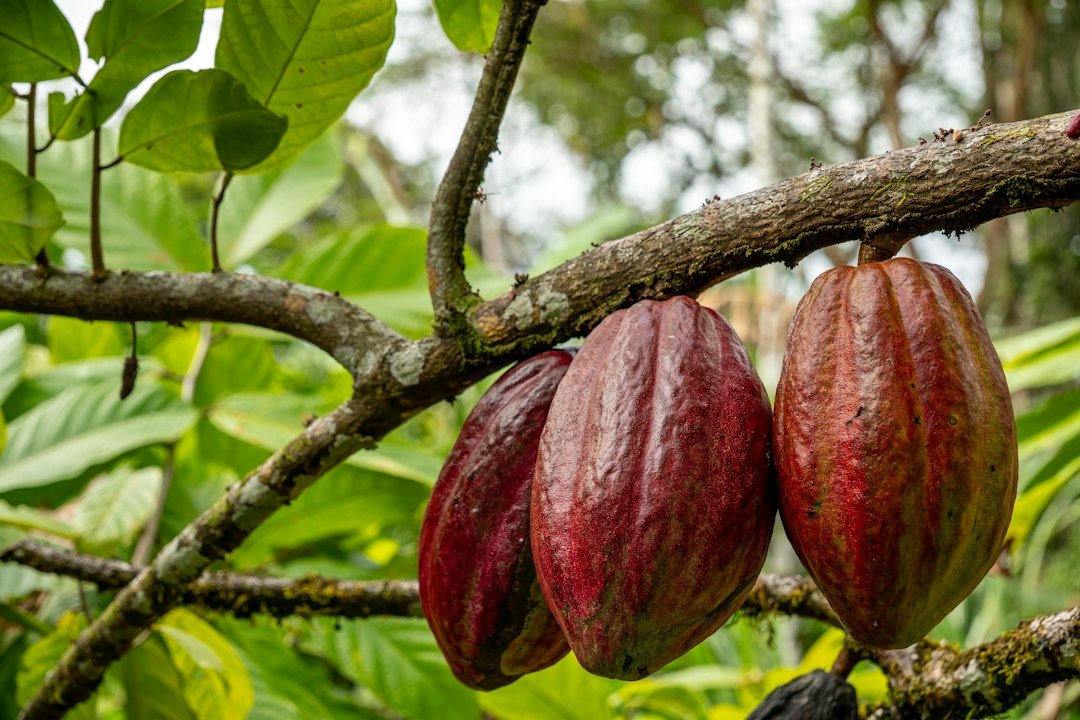
Cocoa futures climbed again in early October. They had already spiked to $6,771 a tonne at the end of August, according to Trading Economics data cited by FoodNavigator. Prices remain well below the record highs of early 2025. Volatility has stayed high through the year regardless. Analysts at ING say the swings reflect a market with little spare supply to absorb a bad harvest.
Ghana and Côte d’Ivoire still account for more than half of global cocoa production. Both countries are struggling with excessive or insufficient rainfall, declining soil moisture, and rising disease pressure on their trees, ING says. Those conditions are expected to cut yields further, raise production costs, and discourage the replanting that the sector badly needs.
“This is a structural rather than temporary threat,” ING said of the pressures facing West African growers. Tight inventories mean the market reacts sharply whenever traders fear a shortfall. That has made prices harder to forecast, for manufacturers and farmers alike.

Other origins are not an easy substitute
Ecuador has emerged as a major growth market for cocoa, while Peru and Colombia have room to expand. Brazil could add significant volume too. Its farmers first want assurance of future returns before investing in new trees, and current price swings do not offer that assurance. Nigeria, Cameroon and Sierra Leone could raise output through farm rehabilitation and stronger support for growers. Even so, none of these origins can replace West Africa’s scale quickly.
Seed and planting-material investment is one lever that could help. That depends on whether it reaches tree crops as well as grain staples. African governments discussed exactly that kind of investment this week in Eswatini, though cocoa was not the summit’s main focus. Disease-resistant varieties and climate-smart farming methods were both mentioned as responses the cocoa sector will need regardless, summit delegates said.
Currency and weather risk are already reshaping other tropical export crops. Costa Rica’s coffee farmers are losing income to a strengthening currency. That is a different pressure, but it produces a similar result. Smallholders end up absorbing costs that are set far beyond their own farms, whether those costs come from a currency desk or a disease outbreak in a cocoa grove.
Chocolate makers are running out of room
Chocolate manufacturers raised prices in 2024 and 2025. Premium brands say they reached their pricing limits in 2026, and higher prices have already cut sales volumes in some markets. Mass-market products may increasingly turn to cocoa extenders, alternative fats, or cocoa-free ingredients to manage costs, industry analysts say.
Cocoa alternatives are expected to grow, but are unlikely to replace traditional cocoa outright, given consumer demand for the real product in confectionery and baking. The industry’s own responses lean on familiar tools: replanting with disease-resistant trees, climate-smart farming practices, and closer sourcing partnerships directly with growers.
None of those fixes work quickly. Trees take years to mature. Farmers need confidence in prices before they commit to new plantings, and that confidence has been in short supply since prices began swinging sharply in 2024. Until it returns, West Africa’s cocoa belt looks likely to keep delivering volatile prices. Smallholders will bear much of that risk in the years before new, disease-resistant trees come into bearing, and before alternative origins can meaningfully add to global supply.