
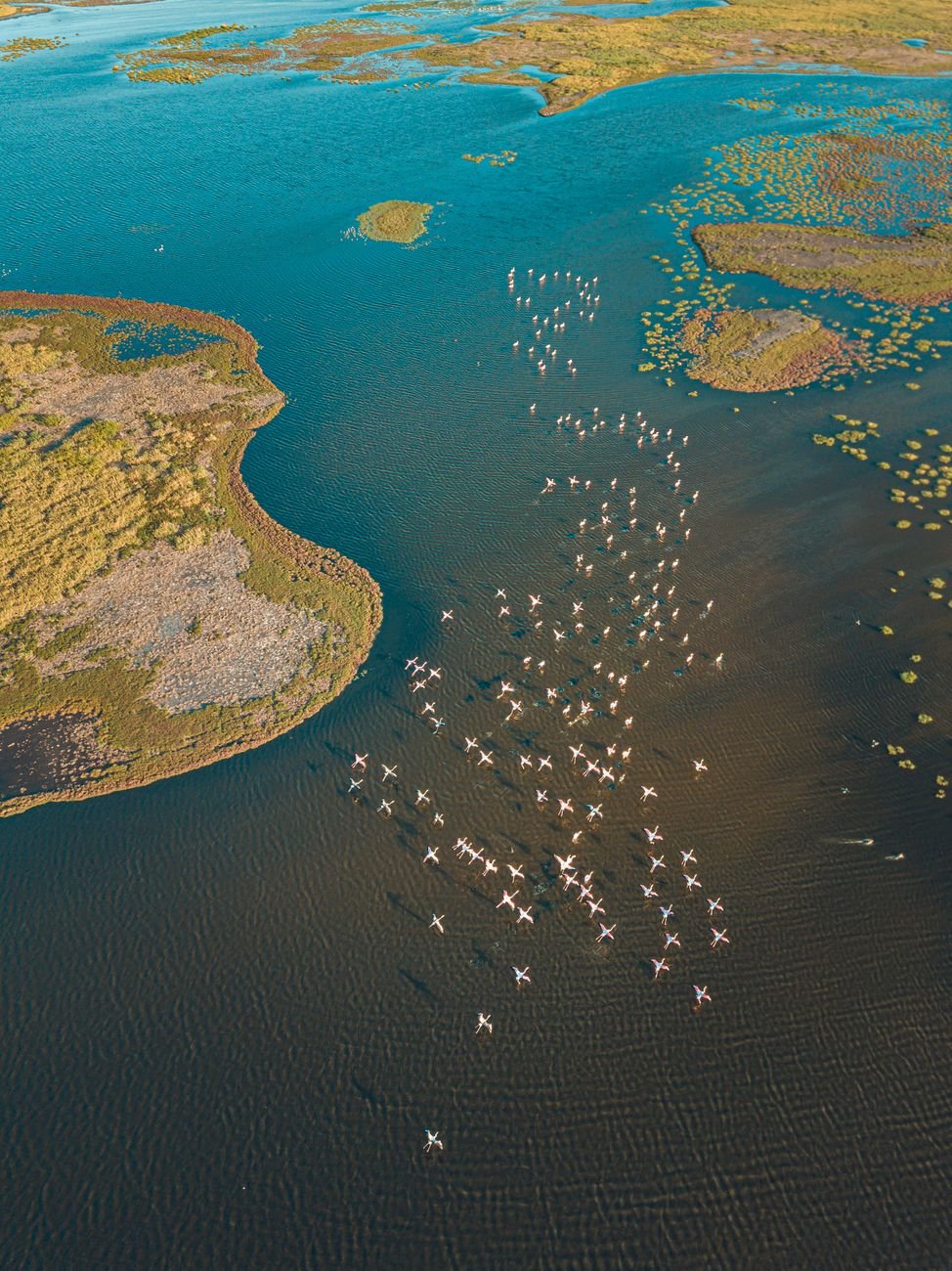
The slaty egret, a small and shy waterbird found almost nowhere outside Botswana’s Okavango Delta, has abandoned several of its known breeding sites while establishing new ones elsewhere, according to researchers who returned to the delta in 2026 to repeat a survey first carried out the previous year.
Egretta vinaceigula is listed as vulnerable on the IUCN Red List, with an estimated 3,000 individuals remaining, the great majority in the Okavango. The United Nations Environment Programme highlighted the latest findings in a statement tied to World Migratory Bird Day 2026, themed “Every Bird Counts: Your Observations Matter”, using the species as a case study in why ordinary observation of a single bird can carry outsized scientific value. Monei Onalethata, a senior wildlife biologist with Botswana’s Department of Wildlife and National Parks, said the species is highly sensitive to environmental disturbance, making shifts in its distribution a useful early warning of changes moving through the wider ecosystem.

Sites lost, sites gained
The Okavango is an inland delta: floodwater from rainfall in the Angolan highlands flows south into Botswana, spreading across channels, floodplains, lagoons and islands before evaporating or draining into the Kalahari. More than 400 bird species use the delta, some arriving from as far as Europe and northern Asia, alongside large herds of zebra, buffalo, elephant and wildebeest that move through on the same seasonal rhythm. Slaty egrets nest on islands or sites surrounded by water to avoid disturbance, a habit that lets researchers track them using satellite imagery of vegetation, food and water availability, since the birds breed only when those conditions align.
The main breeding site researchers examined in 2025, in the western delta, held no nesting birds at all in 2026, and overall numbers there had fallen. In the Jao Conservancy, two of four former nesting sites had disappeared entirely: one lost to fire, the other damaged after elephants used it to cool off during a summer heatwave. Yet researchers also found new nests elsewhere in the delta, including three bluish eggs laid on a vegetated island not recorded as a breeding site before, suggesting birds are adapting their choices as conditions shift rather than simply declining.
The puzzle is that 2026 brought an unusually large flood to the Okavango, one researchers had expected might let the egrets expand into new territory. Instead, the results were mixed: established sites sat empty, some sites vanished altogether, and new ones appeared in places not previously recorded. Scientists attribute this to several interacting factors, including water levels, nesting vegetation, disturbance and the availability of suitable habitat, where a change in any one factor can alter how the others combine at a given site. The evidence so far is not enough to establish a clear population trend or pin the changes on a single cause, and the researchers are calling for repeated observations over coming seasons to understand why birds abandon long-used sites and how they select new ones. As the UN noted in highlighting the work, a colony’s location reflects the conditions that made it work at a given time, which means a new nesting site is encouraging but not, on its own, proof of recovery.
The stakes extend well beyond one bird species. The Okavango supports one of the largest concentrations of wildlife left in Africa, and its seasonal flood is the mechanism that makes that possible, feeding the fish, insects and vegetation that in turn sustain the delta’s birds and mammals. A species that breeds only when water levels, vegetation and safety from disturbance all align at once is, in effect, auditing the whole system each season; when the slaty egret’s usual sites fail even after an unusually large flood, that points to factors other than water volume alone, from fire to elephant movements to vegetation loss, increasingly shaping whether the delta’s finer-grained habitats still work the way they used to. Across the border, Namibia is facing pressure of a different kind, after a foot-and-mouth disease outbreak prompted the EU to suspend its beef imports.



