
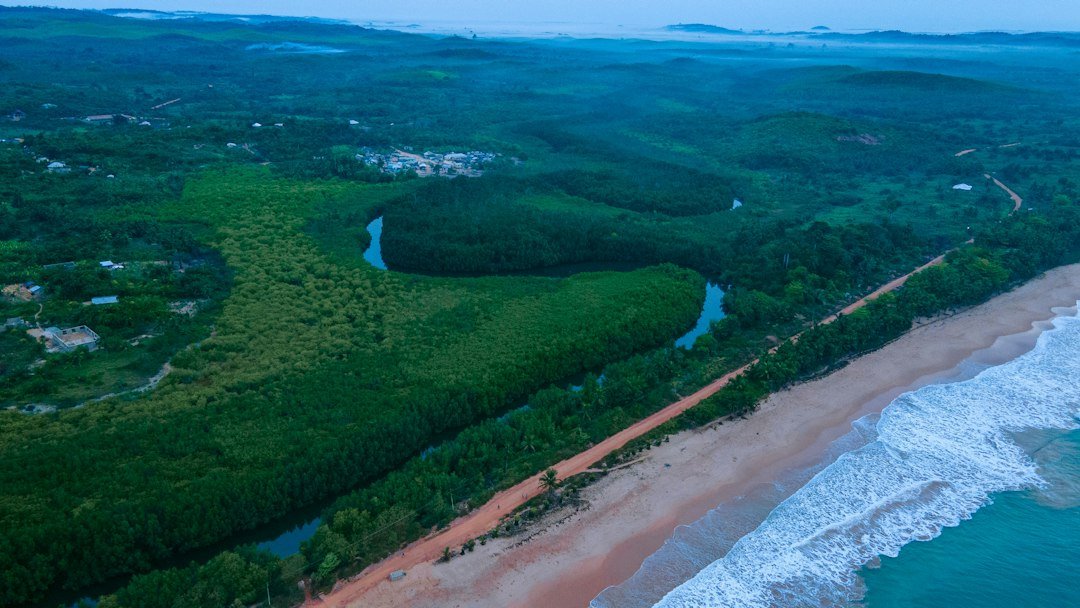
Global mangrove cover has shifted into net gain for the first time in decades, according to the State of the World’s Mangroves 2026 assessment released by the Global Mangrove Alliance and partner researchers in late September. The report puts current global extent at roughly 15 million hectares and finds that restoration and natural regrowth now outpace losses worldwide, reversing a trend that had persisted since the 1980s.
The gain is real but uneven. Old-growth mangrove forest, the densest and most carbon-rich stands, continues to shrink in several countries even as younger, replanted stands expand elsewhere. The report names Senegal, Mozambique, Nigeria, the Philippines and Guinea-Bissau as hotspots where urban expansion, aquaculture ponds and mining continue to clear mature forest faster than it can be replaced.
Mangroves rank among the most effective natural coastal defences, storing carbon at rates several times higher than tropical rainforest by area while buffering storm surge and supporting fisheries that coastal communities depend on. Their recovery has drawn investment from governments and conservation financiers precisely because restored stands deliver measurable climate and livelihood returns within a decade, unlike slower-growing upland forest restoration.

Restoration outpaces new clearing
The Nature Conservancy, which helped compile figures feeding into the assessment, said the turnaround reflects a decade of coordinated replanting programmes across West Africa, South and Southeast Asia and Latin America, alongside tighter permitting in some countries for aquaculture expansion into tidal wetlands. Community-led nurseries have proven more durable than earlier top-down planting drives, which often failed when seedlings were planted in unsuitable tidal zones without local maintenance.
India’s own mangrove cover, concentrated in the Sundarbans and along the Gujarat and Maharashtra coasts, has also grown over the past assessment period, though Kerala’s smaller backwater mangrove patches remain under pressure from aquaculture and construction near Kochi and Vembanad. The global figures offer a benchmark against which state-level restoration efforts, including Kerala’s own backwater conservation projects, can be measured.
Funding for mangrove restoration has also diversified beyond government budgets in recent years, with carbon-credit financing and blue-bond issuances drawing private capital into coastal replanting. Several West African governments have used that financing to underwrite nursery programmes similar to those credited with turning around national mangrove trends, though the long-term reliability of carbon markets as a funding source remains a subject of debate among conservation economists.
Old growth still at risk
Conservationists caution that counting hectares alone understates the loss of mature forest, since young replanted mangroves take 15 to 25 years to match the carbon storage and fish-nursery value of old growth. A hectare of newly planted mangrove is not an equivalent replacement for a hectare of forest cleared the same year, even once the net national ledger turns positive.
The report’s authors are urging governments to pair new planting commitments with stronger protection for remaining old-growth stands, warning that continued permitting for shrimp farms and port expansion in West Africa and Southeast Asia could erode the net gain within years. Satellite monitoring, now central to tracking both mangrove extent and the oil pollution reaching nearby marine parks, has made this kind of early-warning tracking far more feasible than it was even a decade ago. For coastal communities from Kerala’s Vembanad backwaters to the Niger Delta, the distinction between a growing hectare count and a resilient, mature mangrove system will determine how much real protection the recovery actually delivers against rising seas and intensifying storms. Related reporting this week on oil pollution reaching marine protected areas underscores how coastal ecosystems face threats beyond clearing alone.



