
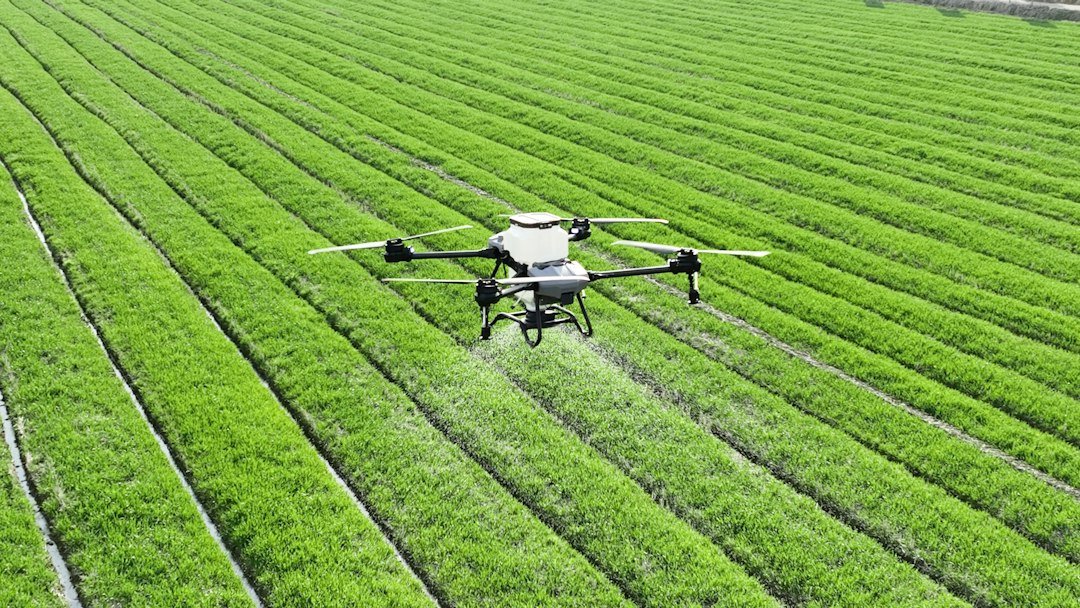
Mati Technologies and Mazao Hub have signed a cooperation agreement aimed at expanding access to agricultural drone services for more than 100,000 smallholder farmers in Tanzania, part of a wider rollout of Tanzania agricultural drones, the companies said in September, according to The Citizen. Mati Technologies chief executive Benjamin Mollel said the partnership would let smallholders reach precision spraying and crop-monitoring services that have so far been concentrated among larger commercial farms.
The agreement adds to a broader push by Tanzania’s agriculture ministry to scale up drone use nationally. A 10-day drone-operator training programme that began in Dodoma, delivered by Indian firm ROKO DC Company alongside the Tanzania Agricultural Research Institute, the Tanzania Fertilizer Regulatory Authority, the Tanzania Plant Health and Pesticides Authority and the Cashew Board, was opened by Deputy Permanent Secretary for Irrigation and Agricultural Equipment Athumani Kilundumya under the ministry’s Build a Better Tomorrow programme.
Officials say drones are now a necessity
“The integration of drones into agriculture is no longer an option but a necessity,” said Upendo Mndeme, director of the ministry’s Crop Development Department, describing the wider rollout. Justa Katunzi, assistant director of extension services, said drones let agricultural officers cover more farmers while sparing them direct exposure to chemical spraying. Eliada Muya of the Tanzania Agricultural Research Institute said the technology would help revolutionise pest management and nutrient application, citing cashew farming in particular.

The ministry’s drone fleet includes DJI Matrice 350 multispectral and thermal models running Flytbase software, deployed across Morogoro, Mtwara and Dodoma regions on cashew, coffee and maize crops. The Tanzania Civil Aviation Authority has also backed local drone regulation and production, part of a broader ambition to position the country as a regional hub for agricultural drone technology.
A single-outlet figure, independently contextualised
The claim that the Mati Technologies and Mazao Hub agreement alone will reach more than 100,000 farmers comes from The Citizen’s reporting and has not been independently corroborated at that specific figure. It sits, however, within a verified wider ministry effort already training operators and deploying drones across three regions and several crops, suggesting the scale of ambition behind Tanzania’s drone push is genuine even where individual company targets cannot yet be checked.
For smallholders who have previously relied on manual spraying, drone services promise faster coverage and reduced direct chemical exposure, officials say, though cost and access to trained operators remain practical constraints as the technology spreads beyond pilot regions. The ministry’s training programmes are intended to build a local workforce of operators capable of serving smallholder clients rather than only large commercial farms.
Agricultural officials say the coming planting season will be an early test of how quickly drone services reach farmers beyond the initial pilot areas in Morogoro, Mtwara and Dodoma.
Drone-based spraying and monitoring can cover far more ground per day than manual labour, agricultural engineers say, while using less pesticide overall because multispectral sensors let operators target only the parts of a field showing signs of stress or pest damage. For cashew farmers in particular, who have struggled with pest outbreaks that spread quickly across large plantations, earlier detection through aerial monitoring could reduce crop losses that have previously gone unnoticed until yields were already affected.
The partnership between Mati Technologies and Mazao Hub also points to a broader shift in how agricultural technology reaches Tanzanian smallholders: rather than selling drones directly to individual farmers, who could rarely afford the equipment, companies are increasingly packaging drone access as a pay-per-use service delivered through local operators, lowering the barrier to adoption even for farmers working plots of only a few acres.



