
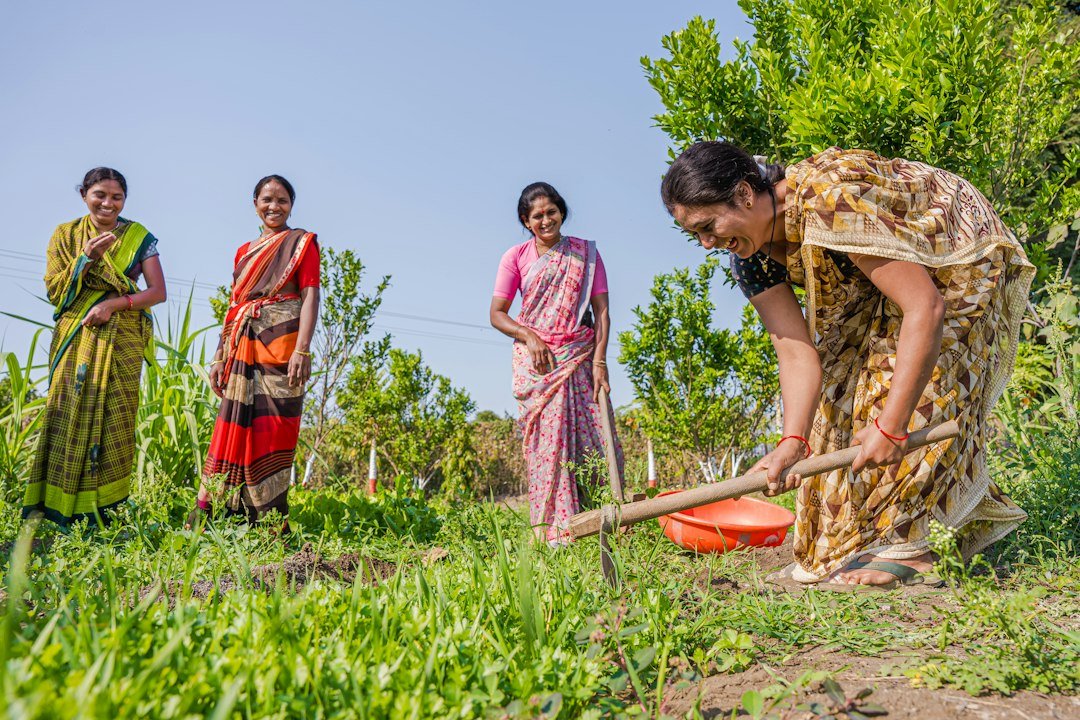
Kankudevi Kama Damor, 65, has spent five decades guarding seed varieties in her village in Rajasthan’s Banswara district. Known locally as “Beej Mata”, the Seed Mother, she belongs to the Bhil community in Seranagla village, Anandpuri tehsil. Her work as a Rajasthan seed saver now anchors a local effort to revive millets and pulses lost to hybrid seed and changing farm practices.
Her father once sowed more than 30 crop varieties across 16 crops before every monsoon. That scale of diversity shaped how Kankudevi later farmed her own land. She herself maintained ten millet varieties and 15 pulse varieties for years, passing seed between harvests rather than buying fresh stock each season.
Many of those varieties have disappeared in recent years. Kankudevi blames the breakup of joint families and the spread of hybrid seed for the losses. Smaller households, she has found, struggle to keep up the work of sorting, storing and resowing so many separate lines of seed. “I was worried that we were losing our traditional seeds, which are precious,” she said.

A network built on earthen pots
To rebuild what had been lost, Kankudevi joined the Saksham Mahila Samuh, or Capable Women’s Group. The organisation Vaagdhara formed the group and gave her a matka kit, an earthen-pot system for storing seed between sowings. The pots keep grain dry and free of pests, allowing rare varieties to survive from one monsoon to the next.
Through this network, seeds are shared free of charge among member households. A farmer who receives seed is expected to return one of their own varieties once it has been grown and harvested. Those with no variety of their own to give back must instead return twice the quantity they originally borrowed. The arrangement spreads scarce seed further each season while discouraging anyone from simply taking without ever contributing back.
“A farmer who has to buy new seed every season gradually becomes a hostage of the market,” Kankudevi said. “Seeds are living beings. They are our ancient roots.”
Millet prices climb as cultivation shrinks
The economics of the crops Kankudevi champions have begun shifting in farmers’ favour. Local farmers have reportedly sold ragi, or finger millet, for Rs 3,700 per quintal. Maize, by contrast, fetched about Rs 2,000 per quintal in the same markets. The gap has made millet cultivation more attractive to growers weighing which crop to plant.
Government support has moved in the same direction. The minimum support price for ragi rose for the 2025-26 Kharif season, climbing by Rs 596 per quintal, from Rs 4,290 to about Rs 4,886.
Even so, millet cultivation across India has fallen sharply since the 1960s. A World Food Programme report cited in the original account put the area under millets at about 36.9 million hectares in 1965-66. That had fallen to 14.7 million hectares by 2016-17, a decline of nearly 60 per cent. National millet production stood at about 180 lakh tonnes, or 18 million tonnes, in 2024-25. Ragi alone now covers roughly 0.5 per cent of India’s cropped area. That is a small footprint for a crop once grown far more widely across the region.
Policy has tried to reverse that slide. The Protection of Plant Varieties and Farmers’ Rights Act, 2001, recognises farmers’ role in conserving indigenous seed. The government’s Nutri-Cereals Sub-Mission promotes millets and other coarse cereals as part of that effort. The United Nations marked 2023 as the International Year of Millets, drawing wider attention to crops long overshadowed by wheat and rice.
Against that backdrop, the work of this Rajasthan seed saver stands out as a village-level answer to a national problem. Her earthen pots hold varieties that formal seed systems have largely left behind. The network she helped build continues to pass them from household to household each planting season. A similar effort to document indigenous crop science is unfolding in southern Africa, where researchers have mapped the best planting conditions for bambara groundnut, another underused crop long reliant on traditional farming knowledge.



