
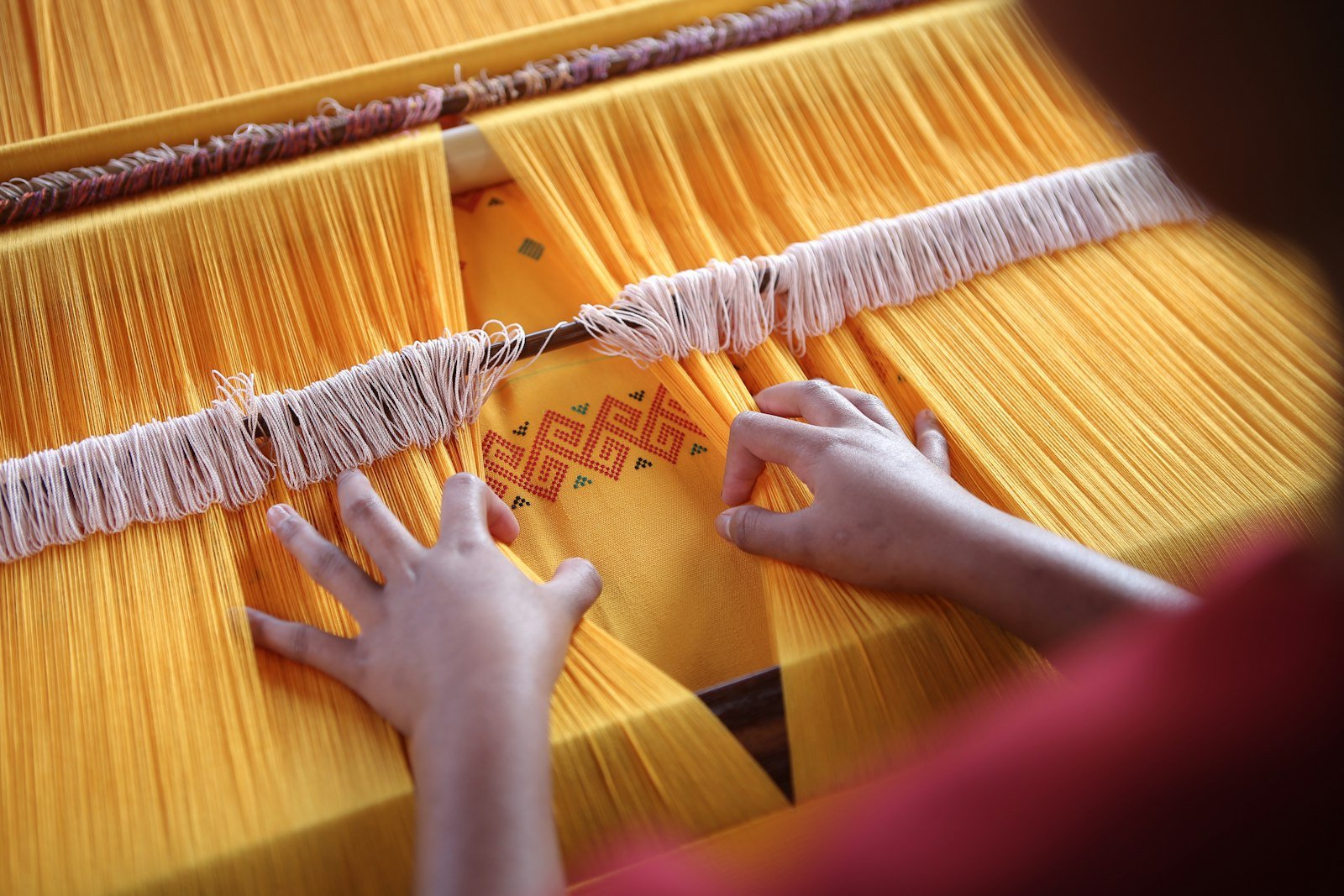
T’boli weavers from Lake Sebu in South Cotabato, the Philippines, have secured formal Geographical Indication protection for t’nalak, a hand-woven abaca cloth central to T’boli culture, according to the Intellectual Property Office of the Philippines (IPOPHL), which confirmed the registration was granted on 4 March 2026 and formally conferred at the 60th T’nalak Festival on 13 July 2026. South Cotabato’s provincial government separately confirmed the recognition, describing it as a milestone for the region’s cultural heritage.
T’nalak is woven by T’boli women known locally as “dreamweavers”, who say the cloth’s patterns are revealed to them in dreams by Fu Dalu, a deity associated with the craft in T’boli belief. The cloth is woven on backstrap looms from abaca fibre, a process that can take months for a single length depending on pattern complexity, and holds enough cultural significance in the Philippines that its motifs appear on the country’s 1,000-peso banknote.
Geographical Indication status legally ties the t’nalak name to its place of origin and the T’boli weaving tradition specifically, a protection similar to those used internationally for products such as Champagne or Darjeeling tea. For the T’boli community, the designation offers a legal tool against imitation products marketed under the t’nalak name without any connection to Lake Sebu’s weavers or their traditional techniques.

Why the status matters commercially
Geographical Indication protection can open new market opportunities for traditional crafts by giving buyers, particularly in export and tourism markets, a verifiable guarantee of authenticity, something T’boli weavers have previously lacked as t’nalak-style textiles have appeared in craft markets with no verified connection to Lake Sebu. For indigenous textile traditions across Southeast Asia, GI status has increasingly become a tool for protecting both cultural heritage and the economic livelihoods of the artisans who sustain it, since authenticated goods can often command higher prices than unverified alternatives.
The recognition followed a path similar to earlier GI registrations the Philippines has pursued for other regional products, where provincial governments and national IP authorities worked together to document a craft’s origin, technique and cultural significance before registration could proceed. IPOPHL’s confirmation suggests that documentation process concluded successfully for t’nalak after what was likely a multi-year application, though the agency’s report does not detail how long the process took from initial filing.
A living tradition, formally recognised
The 60th T’nalak Festival, where the GI certificate was formally conferred in July, points to a weaving tradition with decades of continuous community celebration behind it, suggesting the GI registration formalises recognition of a practice already central to T’boli cultural identity rather than creating new significance around it. South Cotabato’s provincial government has framed the protection as both a cultural and economic milestone, language that reflects the dual purpose GI status typically serves for heritage crafts.
What remains unclear from the available reporting is how T’boli weavers themselves plan to use the new legal protection, whether through pricing changes, expanded export efforts, or enforcement action against unauthorised use of the t’nalak name. For now, the designation stands as formal recognition of a textile tradition that has survived largely through oral transmission between generations of T’boli women, each dreaming new patterns into cloth passed down the same way.



