
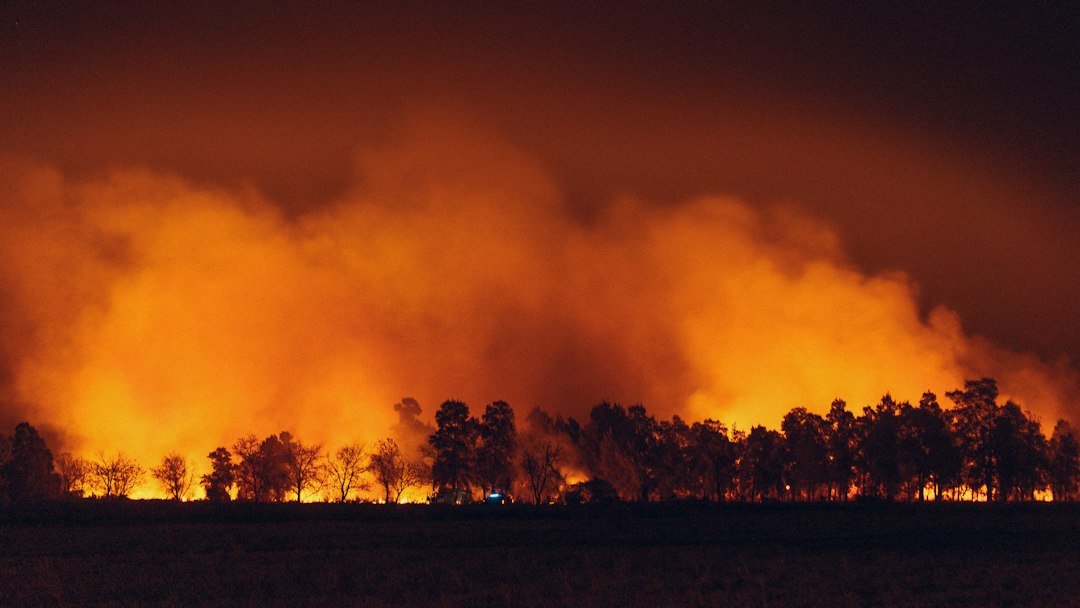
Wildfires fanned by El Nino-driven heat and dryness have killed 12 people in Peru since June. The deaths were confirmed by the country’s National Emergency Operations Centre, known as COEN. Most of the victims were farmers who died while trying to fight flames that had spread onto their own land. That pattern shows how directly rural, land-based communities bear the human cost when wildfires move through farmland.
Peru has recorded 457 separate forest fires over the same period, concentrated in the Andean highlands and the Peruvian Amazon. That is a striking number for just a few months, and it shows how widely the fires have spread across two very different landscapes. COEN reported seven fires still burning as of late October, with the Cusco region worst affected. One blaze broke out near the Machu Picchu citadel earlier in the month, threatening one of the country’s most visited archaeological sites. Firefighters also tackled a separate fire among the totora reed beds that fringe Lake Titicaca in Puno on 21 October.
The damage has extended well beyond the fires themselves. More than 1,000 hectares of farmland have been destroyed and about 12,000 hectares of natural vegetation have been lost, COEN figures show. Roughly 100 homes have also burned down, leaving hundreds of people homeless. Many of the fires began as routine land-clearing burns set by farmers. That is a common practice, but it has turned far more dangerous as vegetation dries out faster than usual. The result is that routine farming activity and extreme weather are now combining to create fire risks that are harder for rural communities to control.

Scientists point to an unusually hot, dry air mass
Daniel Valle, a biologist at the Scientific University of the South in Lima, said the underlying driver is atmospheric rather than simply seasonal. “We have a huge mass of hot, dry air over the whole of Peru as a result of El Nino,” he said. He described conditions that have made vegetation across multiple regions far more flammable than usual for this time of year.
That assessment lines up with the Peruvian government’s own climate monitoring. The multi-agency body that tracks El Nino in Peru, known by the Spanish acronym ENFEN, issued a Coastal El Nino Alert in mid-October. It forecasts that sea-surface warming off the Peruvian coast will stay “extraordinary”, at 3.5 degrees Celsius or more above normal, until January 2027. The alert projects above-normal rainfall along the north and central coast, alongside normal to below-normal rainfall in the southern highlands and Amazon. That split pattern raises the risk of water rationing in some interior regions, even as coastal areas brace for flooding.
A wider pattern across the region
Peru’s experience fits a broader pattern of El Nino stress unfolding across Latin America this year. Unusually warm Pacific waters are disrupting rainfall patterns from the Andes to the southern tip of the continent. Agricultural communities, which depend on predictable wet and dry seasons to time planting and controlled burns, are proving especially vulnerable to the shift. That is exactly the kind of disruption already playing out in Peru, where farmers’ routine burns have turned into major wildfires.
With the Coastal El Nino Alert extending well into next year, officials face pressure to tighten rules around agricultural burning during the dry season. They also face pressure to strengthen rural firefighting capacity, as forecasters expect a prolonged period of heightened fire risk. For now, COEN’s emergency teams remain focused on the handful of fires still active in the Andes and Amazon. The government’s own forecasts suggest that the conditions behind those fires are unlikely to ease soon.
The fires fit a wider pattern flagged in the UN’s own Emissions Gap Report, which warns that breaching the 1.5C warming limit is now unavoidable, and in South Africa, where the same El Nino pattern is driving fresh drought fears for farmers.



