
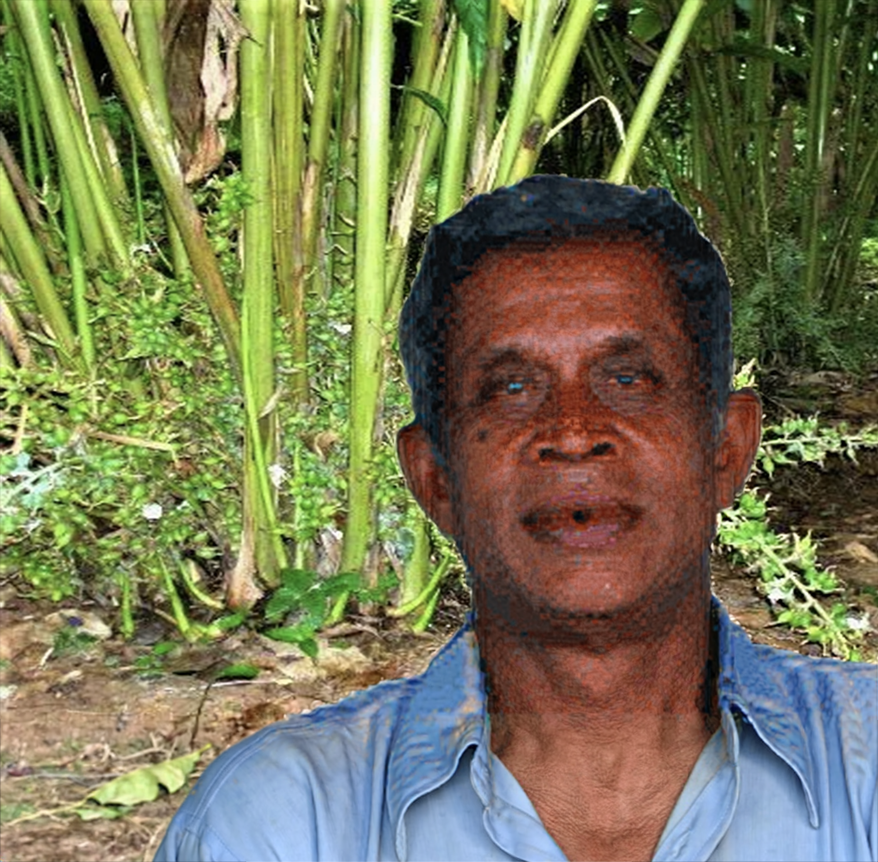
In April 2007 the journalist Sreekumar Raghavan asked a bus conductor near Kattappana to stop at the house of Njallani Sebastian Joseph. Spices Board scientists at Myladumpara had told him the night before about a cardamom variety that had carried Idukki’s planters through a slump. He wanted to meet the farmer who bred it.
Sebastian was at church. Raghavan left his visiting card with a grandson and was in an autorickshaw, almost at the main road, when his phone rang. The old man had hurried home and wanted to see him.
He was 76, Raghavan wrote, tall, slow on his feet and soft-spoken. He served lemon juice and snacks. On the walls hung photographs of a former President, a Vice President and Union ministers who had come to honour him. He told Raghavan he had never received the recognition he deserved. “Thanks for this visit. I felt like talking to my son,” he said at the door. He was sorry there was no rice left in the house to offer him lunch.
Six years before that visit, Sebastian’s Njallani cardamom had won the National First Prize for plant varieties, worth Rs 1,00,000, at the National Innovation Foundation’s first grassroots innovation awards. The foundation recorded that 88.7% of the land under cardamom in Idukki already grew it. Four years after the visit, the Spices Board gave him Rs 8 lakh. He died that night.
India celebrates its grassroots innovators on award day. Nobody keeps a record of what happens to them after. Twenty-five years on from that first prize, The Fourth Plate is going back to the farmers in the foundation’s 2001 award book to ask. Sebastian Joseph is the first.

Four plants and a few beehives
Sebastian owned 1.5 acres in the Kattappana hills and had studied up to Class 4, according to the foundation. He had come to Idukki from Pala in his late teens, he told Raghavan. His first crop, bananas, failed. Wild animals destroyed the food crops he planted next, and he lost money. He turned to cardamom, the crop of the Cardamom Hill Reserve, about 870 sq km of forest that the Maharaja of Travancore set aside for the spice in 1897.
The 2001 award book sets out his method. He noticed that the capsules on his plants varied in shape. With the help of his son Rejimon, he chose four plants with good capsules, set beehives among them to carry the pollen and covered them with mosquito netting. He marked every flower that set fruit and kept the clones that bore the most and the biggest capsules. Each capsule was about twice the size of the common Mysore type.
He multiplied the plants from shoots instead of seed, which brought the first crop within about two years. A Njallani plant carries 120 to 160 capsules, the book says, against 30 to 35 on the ordinary variety. He named it after his family. The book credits Rejimon with contributing “significantly to the success of his selection”. A 2021 monograph from the Centre for Development Studies, Thiruvananthapuram, dates the variety to 1987.
A lifetime award and death
Raghavan’s story ran on Commodity Online and Rediff in May 2007, and Livemint followed it. According to Raghavan, Jairam Ramesh, then Minister of State in the Department of Commerce, Ministry of Commerce and Industry, wrote to Livemint and announced that the Spices Board would give Sebastian a lifetime achievement award.
It took nearly four years. On Sunday 13 February 2011, Oommen Chandy, then Leader of the Opposition in Kerala, opened the Spices Board’s first Spices Park at Puttady in Idukki. At the same function the board, chaired by V.J. Kurian, honoured Sebastian with Rs 8 lakh in a fixed deposit. The interest was meant to keep him in his old age.
Rejimon took his father to the function and dropped him that night at the house where he lived alone, he later told the Kerala High Court. Sebastian died that night, the foundation recorded. Rejimon found him the next morning. He told the court his father had a heart condition. Sebastian was buried in the family vault at the parish cemetery on 15 February 2011.
Four years later the death became a police case. In October 2015 Kattappana police registered it under Section 174 of the Code of Criminal Procedure, which covers inquiries into unnatural deaths. The case followed an undated petition signed by ten people (who never appeared for any court hearing) and sent to the Inspector General of Police. The petition said the death was not natural. Among its claims was a dispute over the “patent right” to Njallani.
Rejimon told the court the allegations were false. A special investigation team took up the case, and on 23 March 2019 Rejimon was served notice that his father’s body would be exhumed. Three days later the High Court put the notice on hold.
On 8 February 2022, Justice K. Haripal quashed the case. He found the petition’s allegations vague and lacking in particulars, the patent claim among them. All ten signatories were served notice, and none came to court. Sebastian’s wife had been buried in the same vault in June 2012, and after a decade nothing useful would remain to examine, the judge wrote. “The long lapse alone is sufficient,” the order reads. No one was charged. The court did not rule on how Sebastian died.

One variety, two names
The record of who bred Njallani has changed with time. The foundation’s 2001 citation names Sebastian, “with the help of his son Rejimon”. Raghavan’s 2007 report names Sebastian. A 2009 booklet by the GREEN Foundation in Bengaluru, Farmer Breeders: Stewards or Owners?, lists father and son together. The Spices Board’s cultivation guide names Sebastian.
Rejimon, known as Reji, has innovations of his own. In 2010, Business Standard reported a pitless method he devised for planting cardamom suckers, which cut the labour needed per hectare from 124 workers to 24. In 2012, he won a best presentation award at the Second Indian Biodiversity Congress in Bengaluru. In September 2021, the ICAR-National Academy of Agricultural Research Management in Hyderabad named him an Innovative Farmer for 2020–21 at its 46th foundation day.
Some accounts now name Reji alone. A November 2012 report on the news site JustKerala described Njallani Green Gold as his innovation. His LinkedIn profile, where he describes himself as a farmer scientist and cardamom consultant, says he was “the man behind” the variety. A website, njallani.com, calls itself the official home of the variety and offers it to exporters as the “Original High-Yield Variety by Reji Njallani”. Neither the profile nor the website mentions Sebastian Joseph.
A post on the website in January 2026, by Abrar Salim, gives a different origin. It says Reji noticed a single unusual plant in his field in the early 1990s, cloned it and shared it, and it calls the variety a product of “natural mutation and human perseverance”. The 2001 award book describes four plants, beehives and cross-pollination, with Sebastian as the breeder and Rejimon helping. The CDS monograph dates it to 1987.
The foundation’s current page lists the variety under both names. In his 2022 court petition, Reji described Njallani as the joint work of father and son.

What the variety earned and for whom
Njallani did not stay in Kattappana. The Spices Board’s cultivation guide lists Njallani Green Gold as the most popular and widely grown farmer selection. An evaluation of the board’s Indian Cardamom Research Institute found that planters still preferred it to the institute’s own varieties. In 2023 scientists at the ICAR-National Bureau of Plant Genetic Resources chose Njallani Green Gold when they sequenced a draft genome of small cardamom. A nursery website, Farmseller, lists one-year-old Njallani plants at Rs 350 each.
India passed the Protection of Plant Varieties and Farmers’ Rights Act in 2001, the year Sebastian won his prize. It lets farmers register their varieties and provides for benefit sharing.
So who has sold Njallani planting material over the last 30 years, and did any of that money reach the family? Did any institution that used the variety in its research ever pay for it? And why did a farmer with a President’s photograph on his wall feel, at 76, that nobody had noticed?
The variety has its costs too. The foundation’s records call it highly susceptible to thrips and stem borer, and the ICRI evaluation notes its heavy use of chemical fertiliser. The CDS monograph links the spread of high-yielding cardamom in the early 1990s to the loss of forest cover in the Cardamom Hill Reserve.
The Spices Board’s guide to growing small cardamom lists Njallani Green Gold first among the farmer selections. Beside it, the board prints one name: Sebastian Joseph.
Njallani is sold by name today. It is on Amazon, under the Folk Harvest label, and online spice shops sell it as single-origin cardamom and as a bold Idukki grade. A nursery sells the plant, and njallani.com offers it to exporters.
The next time you see Njallani on Amazon or a shop shelf, or crack a pod into your chai, will you remember the farmer from Pala who set beehives among four plants on a Kattappana hillside? We remember the people who found companies and invent machines. Why did Sebastian Joseph, whose cardamom grows on most of Idukki’s cardamom land, have to go unsung?
Sources: National Innovation Foundation, First National Grassroots Technological Innovation and Traditional Knowledge Awards 2001 (award book), its Njallani profile and In Memoriam page; Sreekumar Raghavan, “Bringing the Marginalised Innovators to the Mainstream: Story of a Cardamom Pioneer”, LinkedIn, 6 March 2025; High Court of Kerala, Rejimon Joseph v. State of Kerala, Crl.M.C. No. 5726 of 2017, order of Justice K. Haripal, 8 February 2022; GREEN Foundation, Farmer Breeders: Stewards or Owners?, 2009; George Joseph, “Kerala farmers cut cardamom need for labour”, Business Standard, 2 September 2010; JustKerala, November 2012; ICAR-NAARM Annual Report 2021; Lavanya Suresh and M. Suchitra, Suicidal Resistance, CDS Monograph Series, Centre for Development Studies, 2021; Ambika Baldev Gaikwad and others, “Small cardamom genome”, Frontiers in Plant Science, 10 May 2023; Spices Board, Cultivation Practices for Small Cardamom; “Research and Development in small cardamom by ICRI: An evaluation”; South Indian Green Cardamom Company, report on the Spices Park inauguration; Abrar Salim, “From a Single Plant to a Revolution: The Legend of Reji Njallani”, njallani.com, 26 January 2026; Farmseller, accessed 24 November 2026.


