
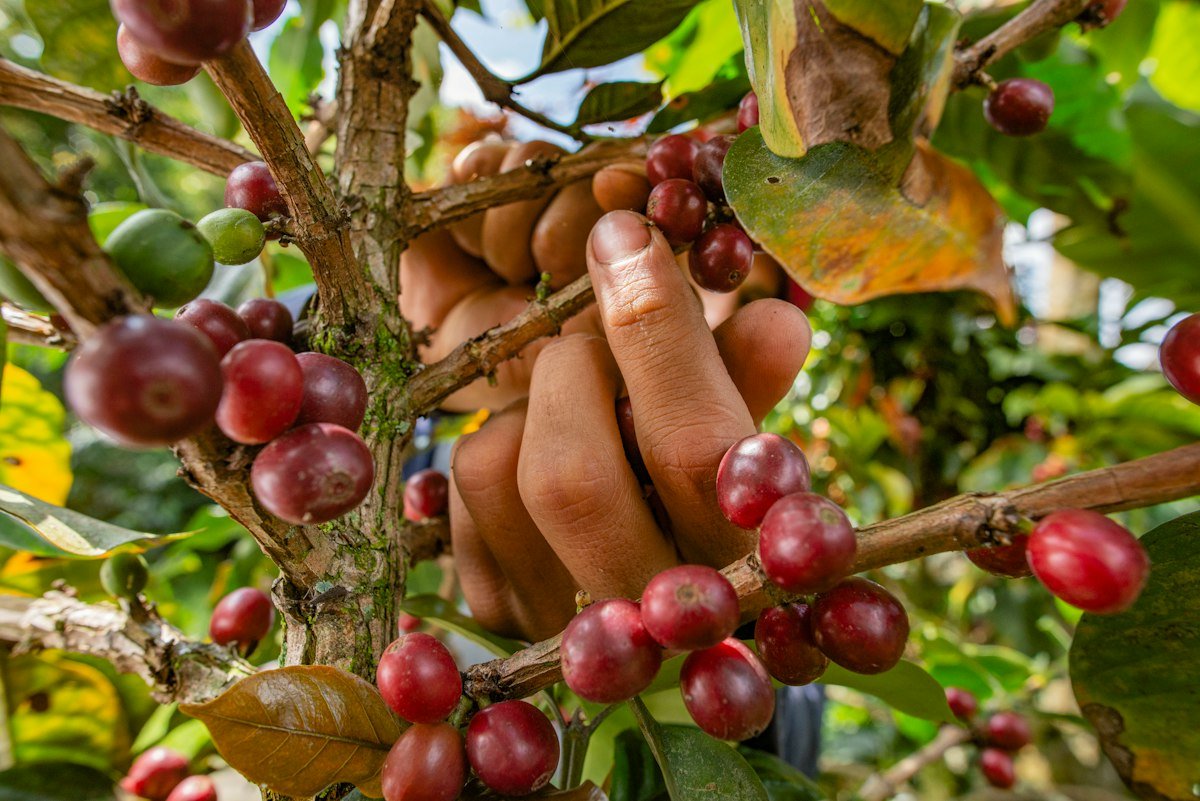
Uganda exported 846,376 60-kilogram bags of coffee in July 2026, down from 997,105 bags in July 2025. Export earnings fell to $204.1 million from $250.7 million a year earlier. The figures capture a difficult stretch for Uganda coffee farmers. They are contending with drought-damaged harvests and a sharp slide in global prices driven largely by rising supply elsewhere.
About 1.7 million Ugandan households depend on coffee for their livelihoods, making the crop central to rural incomes nationwide. A prolonged drought and unusually high temperatures struck several of the country’s coffee-growing areas this year. The resulting water stress disrupted flowering and slowed cherry development. It also affected bean filling, which in turn lowered processing yields and quality. Farmers already absorbing weaker prices now face smaller, less consistent harvests as a result.
Frank Tumwebaze, Uganda’s agriculture minister, said the price drop stemmed mainly from higher global supply, particularly from Brazil. The country’s harvest was nearing completion at the time, adding large volumes to the market. Tumwebaze described the downturn as part of a wider trend rather than a problem unique to Uganda. He called it “part of a wider international market adjustment.” The minister urged farmers and value-chain players not to lose confidence despite the squeeze on prices.

Confidence despite falling prices
Tumwebaze said falling prices do not automatically translate into farmers losing money. He described Uganda’s coffee industry as resilient enough to keep production profitable, even against a tougher pricing environment. That framing matters for a sector where incomes are closely tied to global benchmarks that farmers themselves cannot influence. With Brazil’s harvest nearing completion, global supply remained elevated. Further price pressure may persist into the coming months, even as Uganda’s own output faces separate strain from drought.
The export numbers show how exposed Uganda’s coffee economy is to conditions far beyond its borders. A single month’s drop in earnings lands directly on farming households, cooperatives and exporters who plan around expected revenue. For the 1.7 million households that rely on coffee, lower prices and weaker yields compound financial strain built up over a demanding season. Many of those households have little capacity to absorb a second difficult year in a row. Coffee often provides their main source of cash income. Tumwebaze’s resilience message therefore carries real weight for rural communities watching both the weather and the market closely.
The government says it is working on measures to help farmers recover from the weather damage already suffered this season. Those plans also aim to reduce future climate risk across coffee-growing regions. Officials want to raise productivity and incomes over the longer term, not treating the current price slump as a one-off event. The approach reflects an acknowledgement that drought now shapes Uganda’s coffee outlook as much as global pricing does. Raising productivity matters too, since yields determine what farmers ultimately earn just as much as prices do. Better resilience to heat and water stress is central to that goal, given the damage already recorded this season.
A similar squeeze is playing out in West Africa’s cocoa sector, where Ghana recently raised its farmgate price for the 2026/27 season amid El Niño-linked supply risk. Both cases illustrate how climate stress and global price swings are increasingly shaping policy decisions for Africa’s major cash crops. For Uganda, the immediate task is clear. Officials must support Uganda’s coffee farmers through a season that combined drought losses with a falling export market, while keeping the long-term industry viable.



