
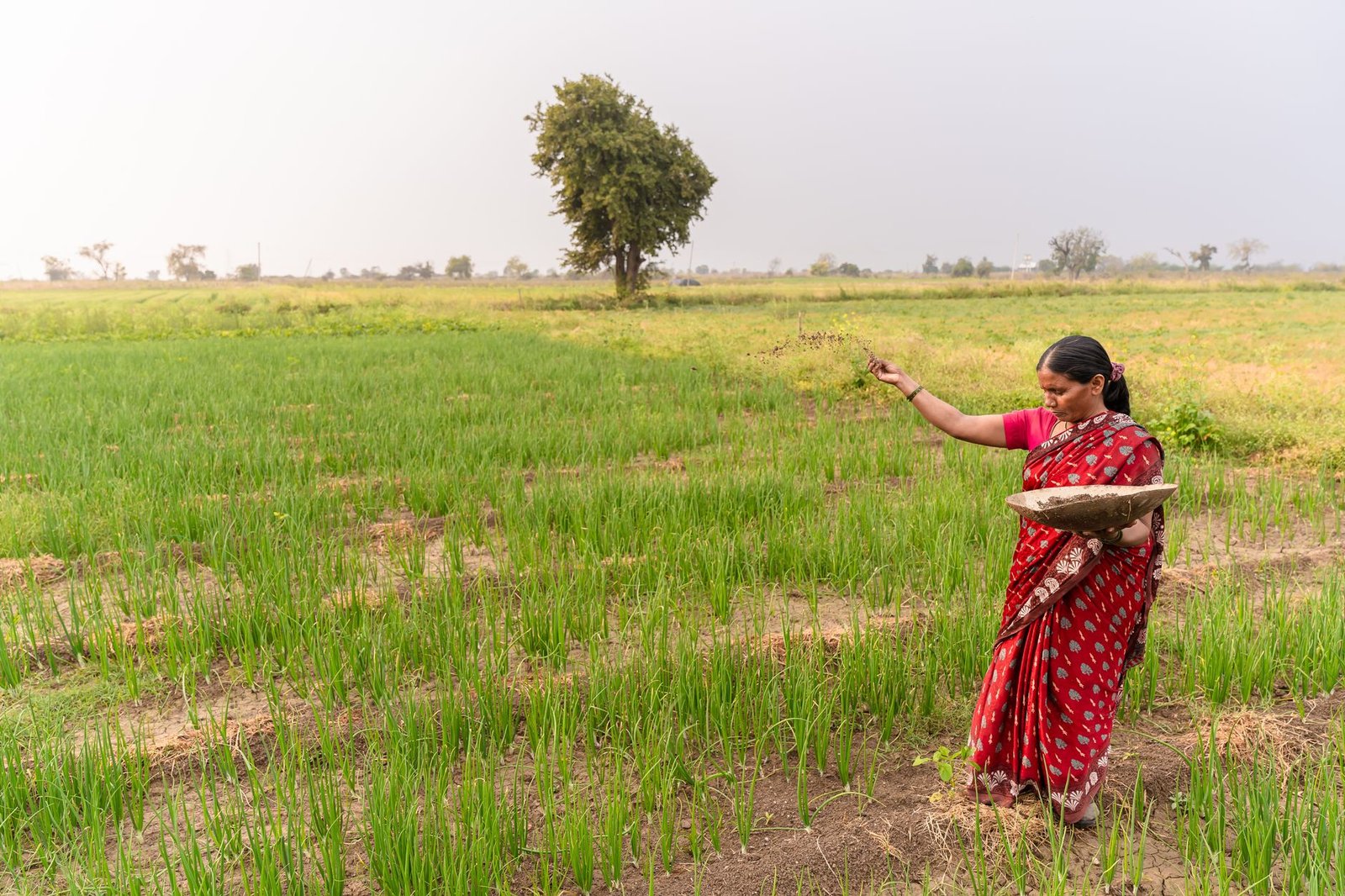
Community-run seed banks scattered across rural India are quietly preserving crop varieties that commercial seed systems have largely abandoned. A new report from the Centre for Science and Environment argues they deserve far more policy support than they currently receive. The report marks International Seed Day. It documents how these small, often informally organised repositories conserve heirloom and climate-hardy seeds. These range from drought-tolerant millets to flood-resistant rice landraces that formal breeding programmes and commercial suppliers rarely stock.
The case for supporting them is practical rather than sentimental. Commercial seed markets tend to concentrate on a narrow set of high-yield varieties, bred for predictable conditions and strong market demand. That leaves farmers in marginal or climate-stressed regions with fewer options suited to erratic rainfall, saline soils or short growing seasons. Community seed banks fill that gap by maintaining locally adapted varieties, selected and re-selected by farmers over generations for resilience rather than yield alone. They make these varieties available to neighbouring growers season after season.
The report, along with independent reporting on India’s seed bank networks, describes a system that operates largely outside formal agricultural policy. Farmer collectives, women’s self-help groups and village-level cooperatives run these networks with minimal institutional backing. That informality is a strength, since it lets the banks respond quickly to local needs. It is also a vulnerability, because most banks operate without secure funding, storage infrastructure or succession planning as the farmers who maintain them age.

Climate change raises the stakes
Climate stress has sharpened the case for treating these networks as infrastructure rather than tradition. Rainfall patterns are becoming less predictable, and extreme weather events are more frequent across India’s farming regions, from prolonged dry spells to sudden flooding. That trend strengthens the case for maintaining a wide genetic base of locally adapted seed varieties. A single commercial variety optimised for average conditions can fail entirely in a bad year. A diverse pool of locally adapted seeds spreads that risk across varieties bred for different stresses.
The report calls for state governments to formally recognise and fund community seed banks. It wants them integrated into broader food security and climate adaptation planning, rather than treated as a cultural footnote to India’s dominant commercial seed economy. Suggested measures include cold storage support, seed-testing access and legal recognition. These would let seed banks operate alongside the certified seed system, rather than in its shadow.

The stakes extend beyond any single growing season. India’s seed diversity, built up over centuries of farmer selection, represents a genetic resource that plant breeders draw on when developing new climate-resilient varieties. Its erosion would narrow options for the farmers currently relying on community banks. It would also close off raw material that future breeding programmes might otherwise have drawn on.
A Kerala example
Kerala’s own experience with heirloom rice and vegetable varieties illustrates the same principle on a smaller, regional scale. Some of these varieties resurfaced after recent flooding disrupted commercial supply chains (see related story). Supporters argue that recognising and funding these networks now is considerably cheaper than trying to reconstruct lost genetic diversity later. That reconstruction becomes necessary once varieties adapted to a particular soil, climate or pest pressure have disappeared from cultivation altogether.
Funding remains the central obstacle. Community seed banks typically operate on donations, small membership contributions or occasional grants from non-governmental organisations. That funding base rarely covers the cost of proper cold storage or regular seed viability testing. Without that infrastructure, seeds stored for multiple seasons can lose their germination capacity, undermining the very continuity the banks are meant to provide. State agricultural departments, by contrast, already operate cold storage and testing facilities for certified commercial seed. Researchers are calling for those existing facilities to be opened up, even partially, to community seed bank networks. That would save each collective from having to build parallel infrastructure from scratch.