
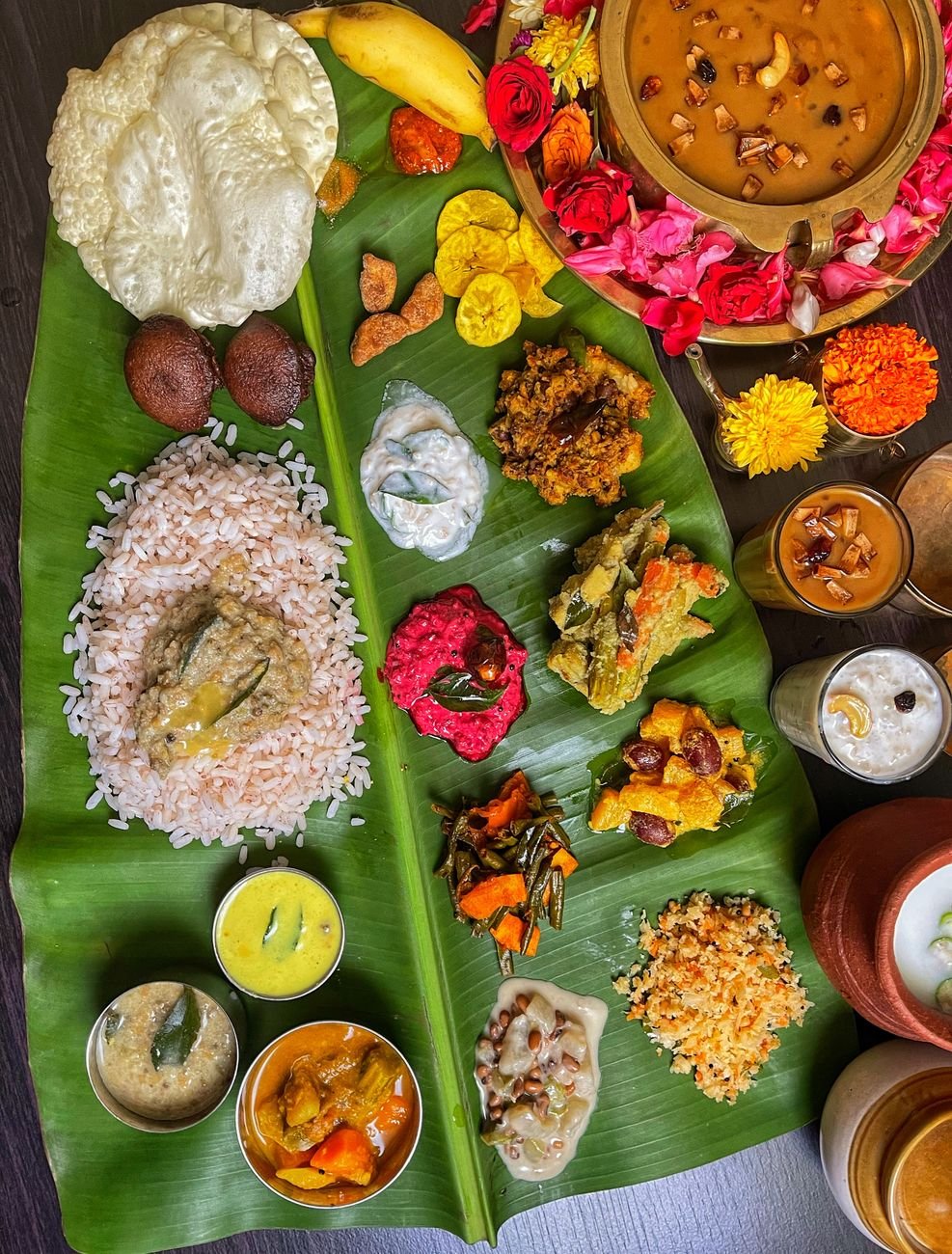
Vegetable prices climbed sharply across Kerala in the weeks before this year’s Onam, the state’s harvest festival. The surge pushed up the cost of the elaborate sadya feast that sits at the centre of the celebration. It also revived long-standing concerns about pesticide residues on produce sold in the run-up to the festival. Two separate Kerala-focused outlets tracked the price surge. Both noted that key sadya ingredients, from banana and yam to gourds and leafy greens, saw some of the steepest increases.
The sadya is traditionally served on a banana leaf and comprises two dozen or more dishes. It draws heavily on vegetables grown within Kerala or trucked in from neighbouring states during the festival season. Demand spikes sharply for a narrow window of days around Thiruvonam, the festival’s main day. That short, concentrated surge has historically made sadya ingredients particularly sensitive to supply disruption. Disruption can come from weather, transport bottlenecks or speculative trading ahead of the peak buying period.
Pesticide safety concerns resurfaced alongside the price increases. Consumers and local reporting flagged worries about residue levels on vegetables sourced from outside the state to meet festival demand. Kerala has pushed, with mixed success, to expand local vegetable production through state-backed schemes. These schemes aim to reduce the state’s reliance on vegetables trucked in from Tamil Nadu, Karnataka and further afield. The goal is partly food safety and partly to insulate local prices from supply shocks elsewhere.

Kerala’s push for vegetable self-sufficiency
The state’s vegetable self-sufficiency drive illustrates the stakes. Kerala imports a substantial share of its vegetable consumption from other states. That dependency leaves festival-season prices exposed to conditions well outside the state’s control. Those conditions range from a poor harvest in a supplying state to transport disruption on interstate routes. Programmes encourage farmers to grow more vegetables locally, including through kitchen gardens and community farming initiatives. These aim to narrow that gap over time, though progress has been gradual against a backdrop of land constraints and competing crops.
This year’s price pressure also arrived against the backdrop of August’s monsoon flooding. The floods damaged standing crops in several districts and disrupted the local supply that might otherwise have cushioned festival-season demand (see related story). Flood recovery overlapped with peak festival demand. Households ended up absorbing a squeezed local supply and the usual seasonal price spike at the same time. That combination weighed particularly heavily on families preparing the full traditional sadya rather than a scaled-back version.
Beyond the immediate price story, Onam’s agricultural dimension reflects a broader truth about Kerala’s food culture. Many of its signature dishes are inseparable from a farming calendar that the state increasingly cannot take for granted.
Kerala’s changing relationship with farming
Flooding, market volatility and import dependence each place their own pressure on the ingredients that define the festival. As a result, the conversation around Onam is shifting, gradually, from a purely cultural celebration. It is becoming a more explicit reckoning with the state’s food and farming resilience.

Traders and market associations in Kochi and Thiruvananthapuram reported unusually sharp day-to-day price swings in the final week before Thiruvonam. The pattern was consistent with thin local supply meeting concentrated festival demand, rather than a broader, sustained inflationary trend. Prices for several vegetables eased somewhat once the festival period passed, according to market monitoring. That relief came too late for many households, who had already made their festival purchases at the peak.
Local self-government bodies run Kerala’s kitchen garden and community farming schemes. They have expanded in recent years, partly in response to these recurring festival-season spikes. The schemes offer households a small buffer of home-grown produce. That produce avoids the same market swings as vegetables bought at peak demand. Uptake varies significantly between urban and rural areas. Space constraints in cities limit how much of the gap home cultivation can realistically close. Even so, the schemes are credited with modestly easing pressure in the areas where they have taken hold most strongly.