
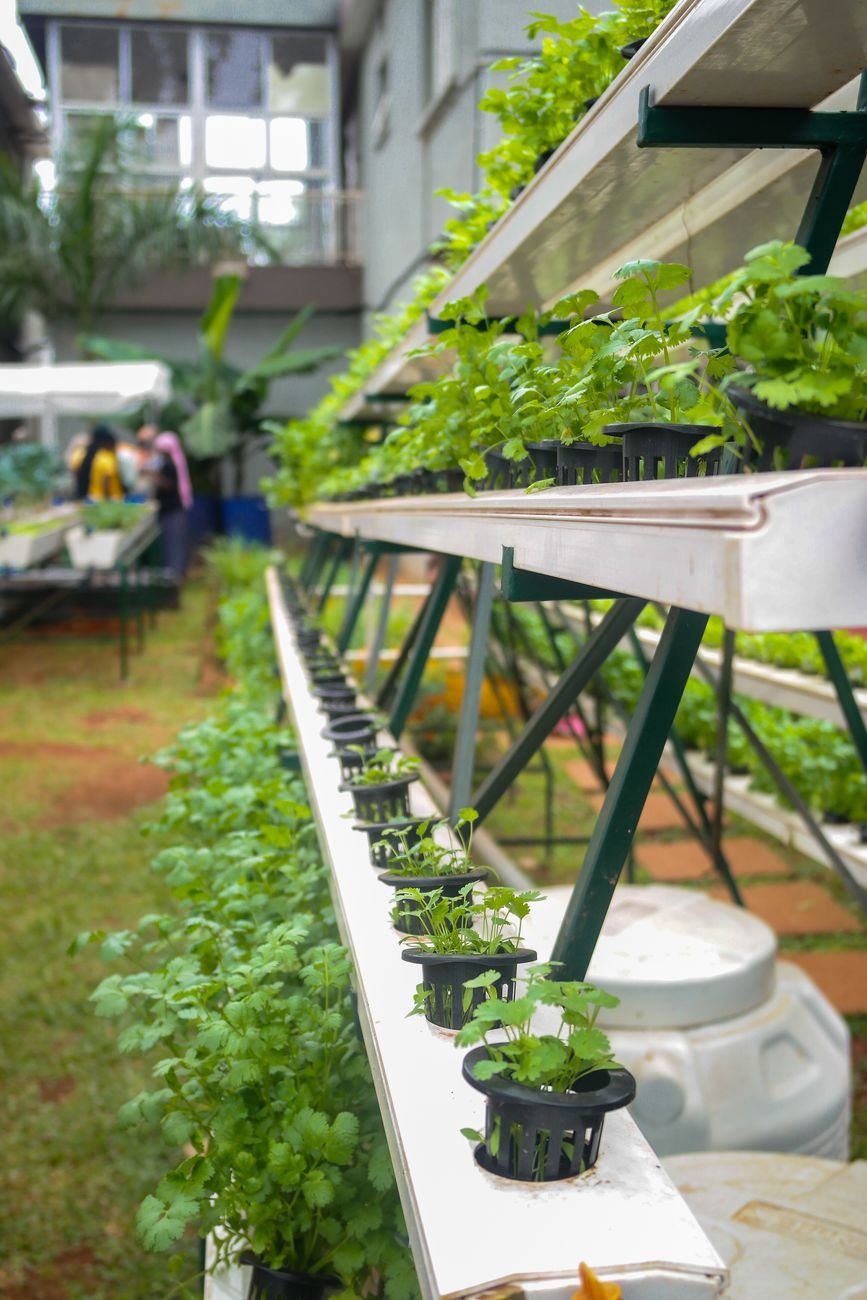
Indian agritech start-up GROWiT has raised $3m (roughly Rs 289m) in a Series A funding round led by GVFL, with participation from other investors, to expand its range of protective farming equipment for smallholder growers. The company makes crop covers, nets and tunnel systems designed to shield fruit and vegetable crops from hail, excess rain, pests and extreme heat.
GROWiT’s products fall under what the industry calls protective or controlled-environment farming, a category that sits between open-field cultivation and full greenhouse production. Covers and nets let farmers moderate the conditions crops are exposed to without the capital cost of a greenhouse, an approach that has found demand among smallholders growing high-value horticultural crops such as grapes, pomegranates and vegetables in regions prone to hailstorms or erratic rain.
The company says the new capital will go towards expanding manufacturing capacity, broadening its distribution network and developing new product lines, as it works to reach more farmers directly rather than through multiple layers of distributors. GROWiT has positioned itself around affordability, aiming to bring protective farming technology to small and mid-sized holdings that could not previously justify the cost of conventional greenhouse infrastructure.

A hedge against India’s more erratic weather
Demand for crop protection equipment has grown alongside the increasingly unpredictable rainfall patterns Indian farmers have reported in recent seasons. This year’s southwest monsoon closed with a 12.6% rainfall deficit nationally, but deficits of that kind mask significant swings within the season, including sudden heavy downpours and hailstorms that can destroy a standing horticultural crop in a single event.
For fruit and vegetable growers, who often carry higher per-acre investment than cereal farmers, a single hailstorm or unseasonal downpour can wipe out a season’s income. Crop covers and hail nets offer a way to blunt that risk without waiting for broader irrigation or insurance reforms, which explains why investors have shown steady interest in the category even as broader agritech funding in India has fluctuated from year to year.
India’s wider agritech sector has drawn roughly $2.1bn in funding this year, according to industry tracking, positioning the country among the leading markets globally for farm-technology investment. That headline figure spans a broad mix of business models, from digital lending platforms to supply-chain and market-linkage start-ups, with hardware-based protection products such as GROWiT’s covers representing a comparatively smaller slice of total capital deployed.
Part of a broader wave of Indian agritech investment
GROWiT’s raise adds to a run of funding activity in Indian agritech this year, as investors back companies addressing distinct points of farmer risk, from credit and market access to, in GROWiT’s case, physical crop protection. Unlike software-first agritech models that have sometimes struggled to show farmers a clear return, hardware-based protection products offer a more immediately visible benefit: a cover either saves a crop from a hailstorm or it does not, a simpler proposition to evaluate than the longer-term gains promised by data-driven advisory services.
GVFL, the lead investor, has previously backed agriculture and manufacturing-linked start-ups in Gujarat and neighbouring states. Protective farming equipment has drawn comparatively less venture capital than digital agritech platforms focused on credit, advisory or market-linkage services, even though hardware products like crop covers address a form of risk, physical crop loss, that software-only tools cannot. GROWiT has not disclosed its current farmer base or revenue figures alongside the funding announcement.
The company’s expansion plans will be tested most directly by how many smallholders it can convert from open-field cultivation to covered systems over the next two planting seasons, and by whether its lower-cost positioning holds up as it scales manufacturing to meet the demand protective farming has started to attract.