
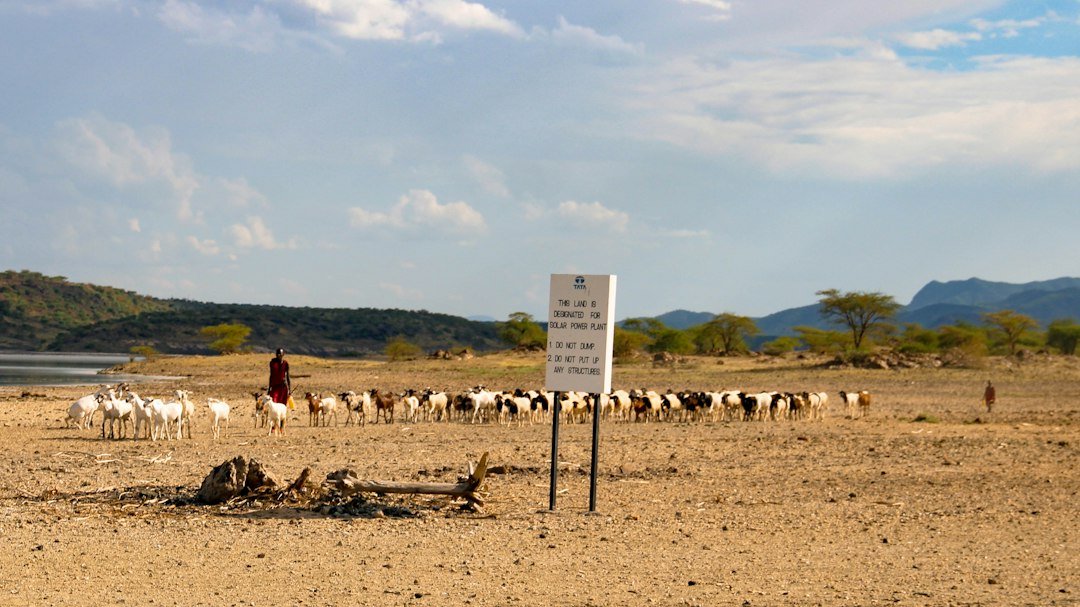
More than two million people across Kenya face heightened health and nutrition risks as one of the country’s most severe droughts in 45 years continues to strain water and food supplies, according to Kenyan health authorities and the WHO’s Africa regional office. Twenty-three counties are now reporting food shortages as the dry spell deepens, with pastoralist communities in Turkana county among the hardest hit.
In Turkana, residents have described a stark contrast between their own hardship and apparent surplus elsewhere in the country, a gap that reflects how unevenly drought conditions and food distribution networks have affected different regions. Herders in the county have watched livestock, their primary store of wealth and food security, die in large numbers as pasture and water sources dry up, leaving many families with no buffer once their animals are gone.
An Integrated Food Security Phase Classification (IPC) assessment cited by the humanitarian group CARE found conditions in northern Kenya continuing to deteriorate, a finding consistent with reports from Médecins Sans Frontières describing drought and displacement affecting millions across both Kenya and neighbouring Ethiopia. The overlapping assessments point to a drought pattern that extends well beyond Kenya’s borders into the wider Horn of Africa.

Aid cuts arrive at the worst possible moment
Humanitarian organisations working in northern Kenya have warned that international aid reductions are compounding the crisis just as needs are rising, leaving response agencies with less capacity to deliver water trucking, supplementary feeding and emergency livestock support than in previous drought cycles. That combination, worsening conditions on the ground alongside shrinking aid budgets, has left some agencies warning that northern Kenya’s hunger crisis is deteriorating faster than the response can keep pace with.
Somalia and Ethiopia are facing parallel pressures, with drought conditions pushing millions of people in both countries towards acute food insecurity alongside Kenya’s Turkana and neighbouring counties. Regional governments and aid agencies have described the situation as a Horn of Africa-wide drought event rather than a localised crisis, which complicates response planning because it means multiple national governments are competing for the same limited pool of regional and international humanitarian funding.
Livestock losses carry particular weight in Turkana’s pastoralist economy, where herds function as both food source and savings account for families with little access to formal banking. A household that loses its cattle, goats or camels in a drought loses its main buffer against the next one too, a cycle aid workers say explains why recovery periods between droughts have grown shorter even as the dry spells themselves have not necessarily grown longer.
Soils and rainfall feeding a longer-term vulnerability
The drought’s severity connects to a wider pattern flagged in a recent FAO assessment of the world’s soil resources, which identified Africa’s dryland farming regions as facing some of the steepest rates of soil degradation globally. Degraded, thinner soils hold less water and recover more slowly once rain does arrive, which means each successive drought in a region like Turkana leaves the land in a weaker position to support livestock and crops when conditions eventually improve.
For many Turkana households, the immediate priority remains water and food access rather than longer-term soil or land restoration, a tension aid agencies face repeatedly in drought response: emergency relief and resilience-building compete for the same constrained budgets. Whether the current rains, when they arrive, are sufficient to break the drought cycle will determine how quickly the more than two million people currently at risk can begin rebuilding the livestock herds and food reserves the past several dry seasons have stripped away.