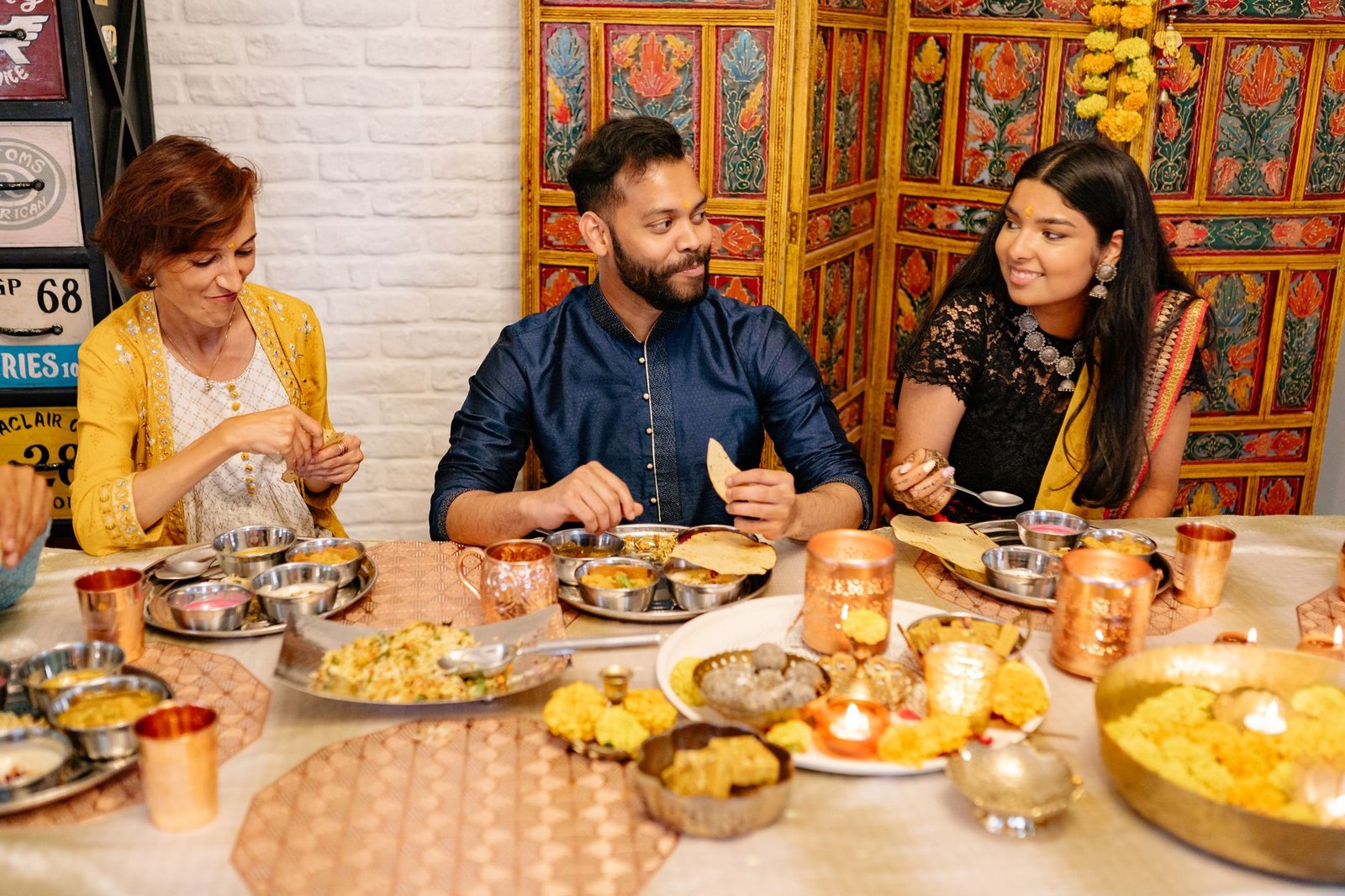
Sharad Navratri, the autumn festival honouring the goddess Durga, runs from 11 to 19 October this year, beginning with Ghatasthapana and closing with Maha Navami, followed by Vijayadashami, or Dussehra, on 20 October. For the nine days in between, many Hindu households across India and the diaspora follow fasting rules that reshape everyday cooking, replacing staple grains and vegetables with a distinct set of ingredients built around what observant fasting permits.
The rules vary by region and household, but a common thread runs through most versions: regular wheat flour, rice, onions, garlic and most pulses are set aside for the duration, replaced by ingredients classified as fasting-appropriate. Buckwheat flour (kuttu ka atta) and water chestnut flour (singhare ka atta) become the base for flatbreads. Sama rice, actually a grass seed rather than true rice, substitutes for regular rice in dishes like khichdi and pulao. Rock salt (sendha namak) replaces ordinary table salt in most fasting kitchens, based on the belief that it is less processed than mined and refined salt.
Potatoes, sweet potatoes and arrowroot (singhara) carry much of the starch load during the fast, appearing fried, boiled or mashed across multiple dishes through the nine days. Fruits, dairy, nuts and a narrow set of permitted spices, typically cumin, black pepper and ginger, round out what observant households cook with, while asafoetida, turmeric in some traditions, and most standard masalas are left out entirely.

A week that reshapes retail demand
The scale of Navratri fasting has commercial consequences well beyond individual households. Retailers across India report a reliable seasonal spike in demand for kuttu and singhare flours, sama rice and rock salt in the weeks leading into the festival, a pattern distinct enough that some specialty food brands build entire product lines around “vrat” or fasting-specific packaged snacks, from kuttu flour mixes to ready-to-fry potato chaat. Supermarket chains in Delhi and Mumbai typically dedicate standalone shelf sections to these items for the fortnight surrounding the festival, stocking volumes they would not carry at any other point in the year.
Restaurants in cities with large observant populations frequently introduce limited-run Navratri menus for the nine days, a commercial recognition that fasting shifts what diners order rather than whether they dine out at all. Hotel and catering groups in cities with significant Gujarati and North Indian communities have long treated the festival as a predictable, bookable revenue period rather than a quiet stretch in the calendar, with banquet halls reporting advance bookings for post-fast community dinners weeks ahead of Ghatasthapana.
A diaspora marker as much as a religious one
Across the Gulf, where large Indian communities mark Navratri each year, the festival’s food rituals travel with the diaspora largely intact, supported by Indian grocery stores that stock fasting staples specifically for the period. Garba and dandiya dance events, often paired with post-fast community meals, have become fixtures of the Gulf’s Navratri calendar in cities with sizeable Gujarati and broader Indian populations, turning the festival into both a religious observance and a visible marker of cultural continuity for communities living far from home.
For many households, the appeal of Navratri’s fasting cuisine extends beyond religious observance into something closer to an annual culinary reset, a structured week that revisits ingredients, such as buckwheat and water chestnut flour, that otherwise rarely feature in everyday Indian cooking outside this specific nine-day window each year.