
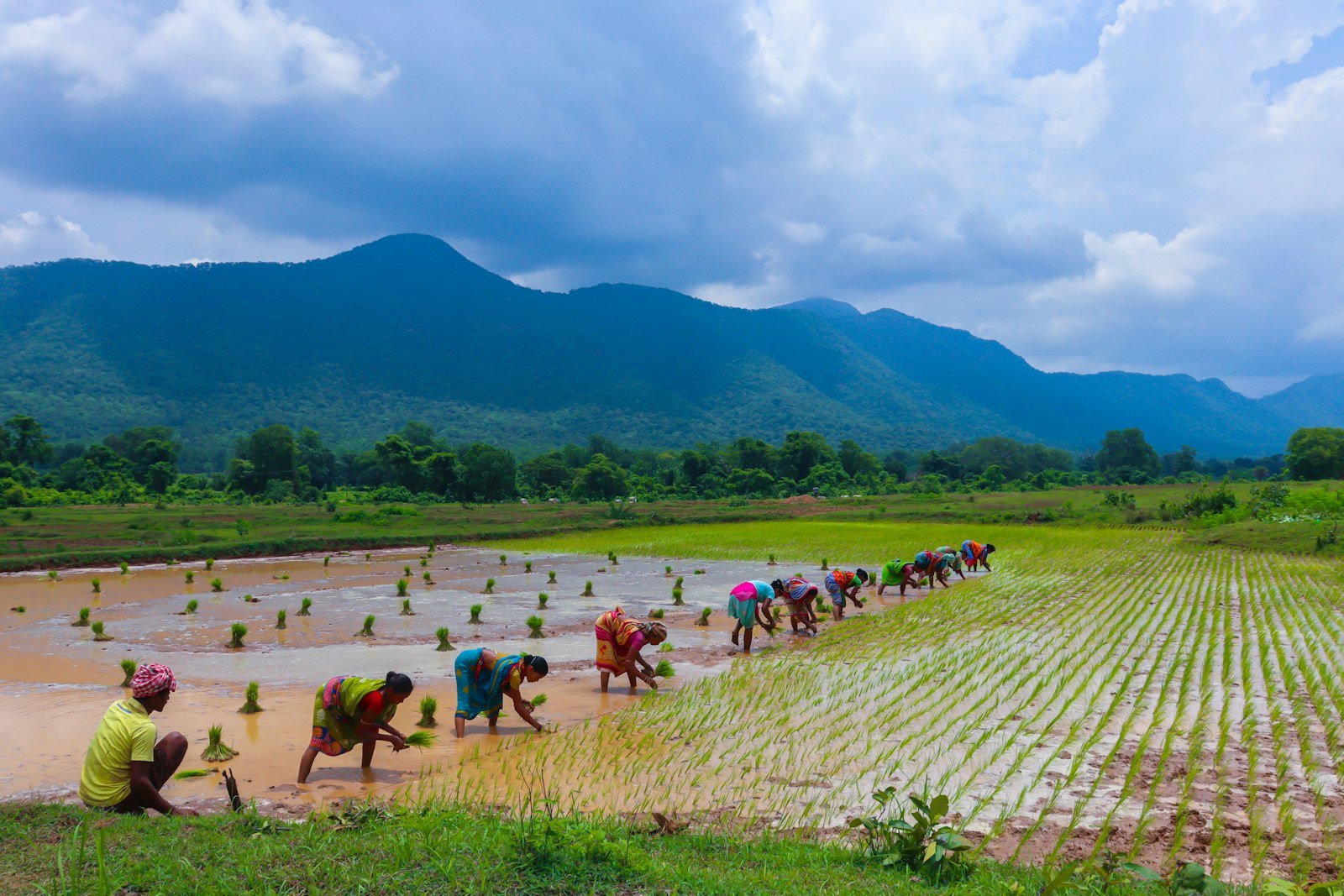
Fewer than 2,000 of Telangana’s planned 8,283 procurement centres had started buying paddy by late October. The state is far behind its target of procuring 65 lakh tonnes, or 6.5 million tonnes, before the season ends. The shortfall is not for lack of grain. Millers and traders from Telangana and neighbouring Maharashtra, Karnataka and Andhra Pradesh are buying straight from farmers’ fields, at prices well above what the government offers.
Private buyers are offering between Rs 3,100 and Rs 3,700 a quintal for fine paddy varieties, roughly $33 to $39 or £24 to £29. Some lots have cleared above the minimum support price. One lot of the Jai Sriram variety at Kesamudram reportedly sold for a record Rs 5,016 a quintal, about $53 or £39. Farmers are choosing traders over government centres for a simple reason: private buyers pay immediately. Selling to the state means drying the grain, arranging transport, and waiting through procurement delays that can stretch on for weeks. For smallholders with loans to repay before the next sowing season, that wait carries a real cost of its own.
Buyers are also betting on stronger demand for fine rice later in the marketing year. That bet is partly driven by concern that El Nino conditions could dent production and tighten supply further. The expectation is pulling grain out of government channels at exactly the point in the season when the state needs to be filling its own stocks.

A buffer stretched thin
Telangana needs about 2.38 lakh tonnes, or 238,000 tonnes, of fine rice every month. That rice supplies its public distribution system, welfare schemes and mid-day meal programmes. Its buffer godowns currently hold roughly 9.64 lakh tonnes. A further 18.39 lakh tonnes is still pending delivery from custom-milled rice contracted to private millers. Officials project the combined total, about 28.03 lakh tonnes, should cover requirements into September 2027. That figure depends on millers actually delivering the rice still owed under those contracts.
District-level numbers show the gap between ambition and pace. In Nizamabad, officials expect a crop of around 12 lakh tonnes, against a procurement target of 6.5 lakh tonnes. They now doubt government purchases will reach even 4 lakh tonnes. In Nalgonda, procurement is expected to land between 2 and 3 lakh tonnes, against a 4.5 lakh tonne target. Officials in both districts say traders are matching or beating government rates at the farm gate, leaving farmers little reason to wait for state purchases.
The state says it has months, not weeks
State officials say existing stocks can cover three to four months of requirements. The remaining seven to eight months depend on millers delivering the custom-milled rice still pending. No immediate market intervention is planned. Officials say the state could seek support from the central government if shortages emerge or prices rise sharply.
At the same time, the government has asked farmers not to grow paddy in the coming Yasangi, or Rabi, season. The request aims to ease a broader milling and storage bottleneck. It could tighten supply further if large numbers of farmers comply, trading one problem for another just months down the line.
Private millers add a further layer of uncertainty. They have less incentive than the government to release grain quickly, and prolonged stock-holding by millers could delay deliveries the state is counting on to meet its own targets. Officials still describe the buffer as adequate. They have not said what happens to the state’s welfare and mid-day meal programmes if that assessment proves wrong. For now, it rests on millers keeping promises that private traders, who are currently outbidding the government in the fields, have given them every reason to question.



