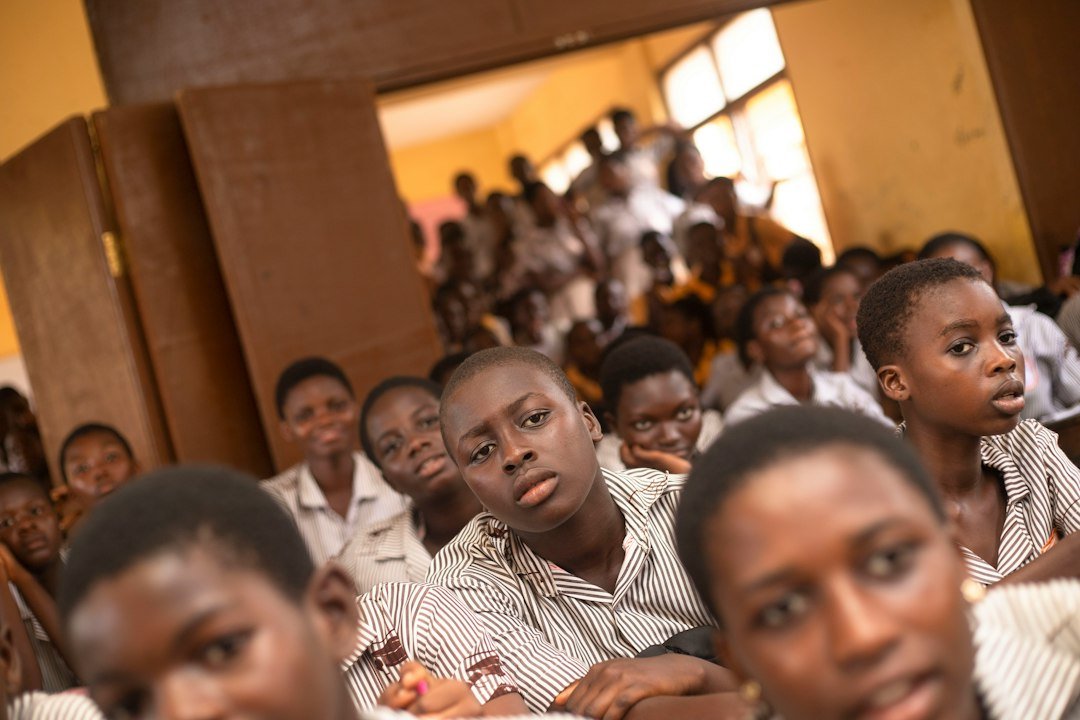
Ghana’s School Feeding Programme now serves more than 4.53 million pupils daily, up from about 4.03 million in 2024, Gender, Children and Social Protection Minister Dr Agnes Naa Momo Lartey said at a government accountability session. The programme’s annual allocation has risen from GHS 1.393 billion in 2024 to GHS 1.788 billion in 2025 and GHS 1.982 billion in 2026, a 42% increase over the two-year period.
The meal grant paid per pupil was raised to GHS 2 in 2025, the first increase in years, and has held at that level into 2026. Alongside the funding increase, the government cleared arrears owed to the Caterers’ Association from 2024 and paid out the first and second terms’ allocations for the 2025/2026 academic year, addressing a payment backlog that had previously disrupted meal delivery in some districts.
Lartey tied the expansion to Ghana’s Social Protection Act of 2025 and the accompanying Social Protection Regulations introduced in 2026, framing school feeding as one strand of a broader social protection architecture rather than a standalone nutrition intervention. She said the government will prioritise timely payment of both school feeding and the country’s separate LEAP cash transfer grants going forward.

Oversight has scaled alongside the budget
Compliance monitoring expanded from 4,419 schools in 2025 to 8,270 in 2026, nearly doubling the government’s capacity to verify that meals are being served as intended and that funds reach caterers rather than being lost to administrative leakage. More than 20,000 caterers and head cooks were trained in nutrition standards, an investment aimed at improving meal quality rather than simply expanding the number of pupils covered.
Ghana’s programme sits within a wider African push on school feeding, which the African Union has highlighted through its own Day of School Feeding initiative promoting nutritious meals, clean water and local sourcing as linked priorities rather than separate goals. Programmes that buy from local farmers, in particular, can double as a demand driver for smallholder agriculture, though Ghana’s government has not detailed what share of its programme’s food is sourced domestically.
Scaling a programme this large brings persistent risks: payment delays to caterers have disrupted meal service in the past, and verifying that funds reach the intended 4.53 million pupils, rather than a smaller number recorded on paper, depends heavily on the expanded monitoring regime holding up in practice. The jump in school coverage under compliance checks suggests the government is treating that risk seriously, though monitoring capacity and actual fraud prevention are not necessarily the same thing.
For the pupils and caterers involved, the headline figures mark tangible progress on a programme that has struggled with funding gaps in the past. Whether the 2026 allocation proves sufficient to sustain coverage at 4.53 million pupils through the full academic year, without the payment delays that have disrupted the programme before, will be the more meaningful test in the months ahead.
Ghana’s experience also carries lessons beyond its own borders. School feeding has become one of the most consistently popular social protection tools across West Africa, partly because it delivers a visible, daily benefit that is harder for governments to quietly scale back than less tangible welfare spending. Neighbouring countries weighing their own school meals budgets will likely watch whether Ghana’s expanded monitoring regime succeeds in keeping pace with its rapidly growing pupil numbers, and whether the funding increases agreed this year prove durable once budget pressures resurface elsewhere in government spending.


