
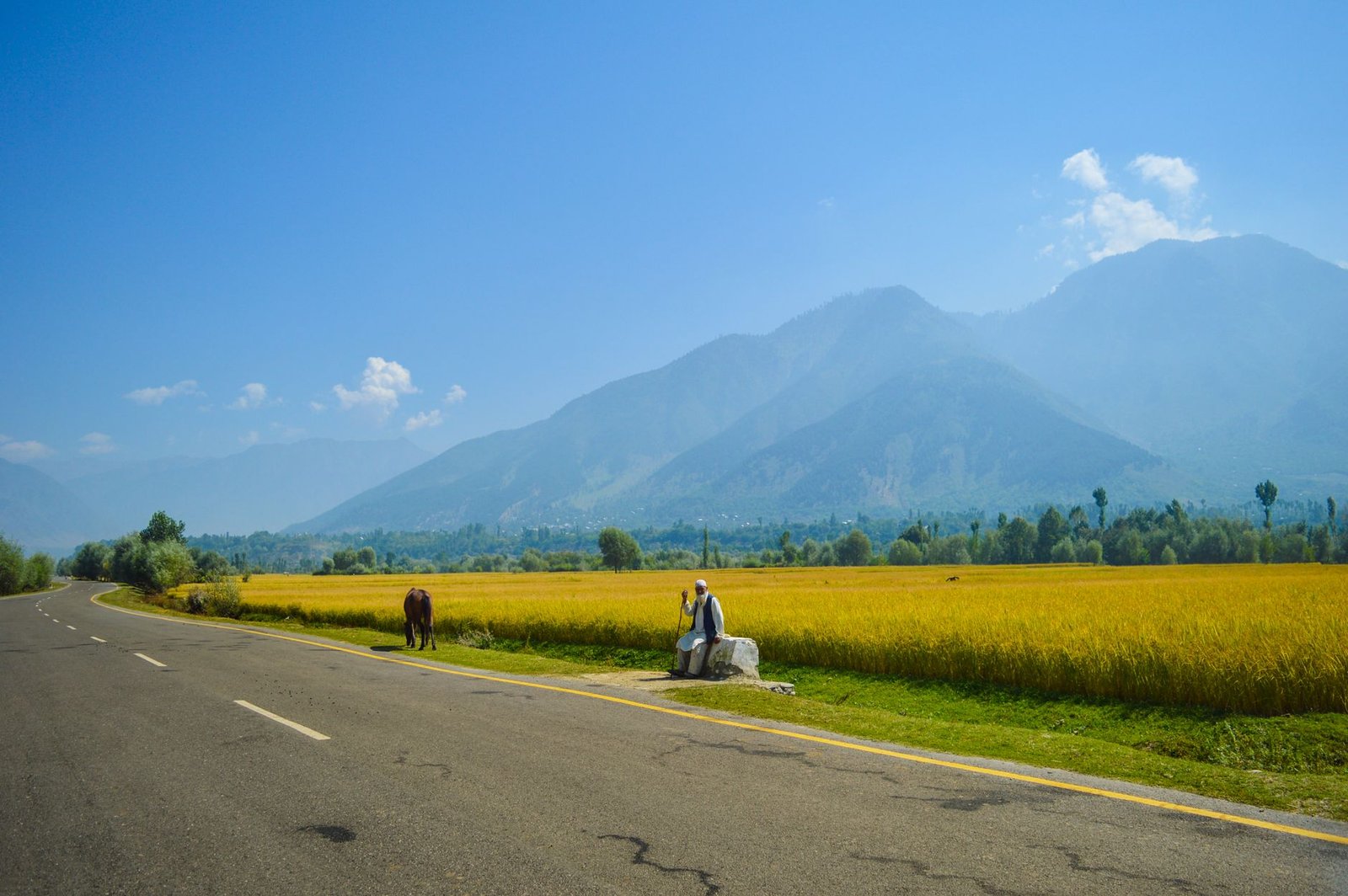
Jammu and Kashmir received 259.7 millimetres of rain in July 2026, 35% above the seasonal norm of 192.6 mm, ending a long dry spell and setting up what farmers in the Kashmir Valley are calling their best paddy season in over a decade.
In Wandakhpora village, Pulwama district, 47-year-old Mohammad Maqbool Ganaie said it was the first harvest of this kind in 15 years. Last year, floodwater submerged his fields until the harvest season had passed. Seventy-year-old Abdul Rasheed, who farms near Awantipora, reported a markedly higher yield than in previous years. His land sits far from the river, and in drier years its lift-irrigation pumps struggled once water levels fell. This year’s steady rain solved that problem without machinery.
Harvesting is under way across Kulgam, Anantnag, Pulwama and Ganderbal, with farmers in Kakapora and nearby villages focused on bringing in the crop before the weather turns. Rice remains central to the Valley’s own food economy as well as its export trade, and a strong local harvest tends to ease pressure on households that rely on home-grown grain through the winter months, when road access to the Valley can narrow after early snow.

Rainfall was not evenly spread. Baramulla recorded a 165% July surplus and Ganderbal 110%, while Shopian was the only Valley district to post a deficit, of 40%. Waheed Ur Rehman, Pulwama’s chief agriculture officer, said temperatures stayed in line with what the paddy crop needed through the growing season, and credited newer high-density varieties in the Shalimar Rice series, including SR 4, SR 2 and Shalimar Sugandh-1, alongside the older high-altitude K 332 variety released in 1982. These varieties resist diseases such as rice blast better than older strains, he said, and farmers are growing more aware of zinc deficiency in their soil. Crop Cut Experiments, the standard method Indian agriculture departments use to estimate yield by physically harvesting and weighing produce from small sample plots before the wider harvest is complete, are now under way across the district and will confirm final output once collated. Rehman nonetheless expects production well above recent years once those numbers are in.
A good season, not a reversal
Mohammad Anees, a Kashmir-based environmentalist, said conditions this year suited paddy particularly well in south Kashmir, with moisture available at the crop’s key growth stages and no prolonged water stress. Last year’s rain, by contrast, was erratic and excessive. He cautioned that climate variability remains a real concern for the seasons ahead.
That caution matters because the area under paddy in the Kashmir Valley has been shrinking for decades. A 2020 study by SKUAST Kashmir put paddy area at about 1.5 lakh hectares, with Pulwama alone accounting for 16,500 hectares. Valley-wide, the crop covered roughly 1.69 lakh hectares in 1980, peaked near 1.36 lakh hectares in 2017, and had fallen to about 1.29 lakh hectares by 2024, a decline of nearly 24%. Better yields per hectare have offset part of that fall, but not reversed it.
Last September, heavy rain had the opposite effect, submerging thousands of hectares of paddy and apple orchards across Jammu and Kashmir, flattening standing crops and washing away topsoil. Some farmers had burned paddy they could not harvest at all. This year’s turnaround shows how much a single well-timed monsoon can change for smallholders working land that has grown more exposed to swings between flood and drought.
For farmers such as Ganaie and Rasheed, the difference between the two seasons is not abstract: it is the difference between a year’s income lost to excess water, and a year’s income secured by water that came at the pace their fields needed. Protecting what paddy land remains, and extending farmers’ access to irrigation independent of river levels, will matter more as those swings continue, observers in the Valley agree, even as this season gives Kashmir’s rice growers a rare reason to feel the weather is on their side. Elsewhere in India, a shifting paddy map is reshaping stubble-burning patterns as the season opens in Madhya Pradesh.