
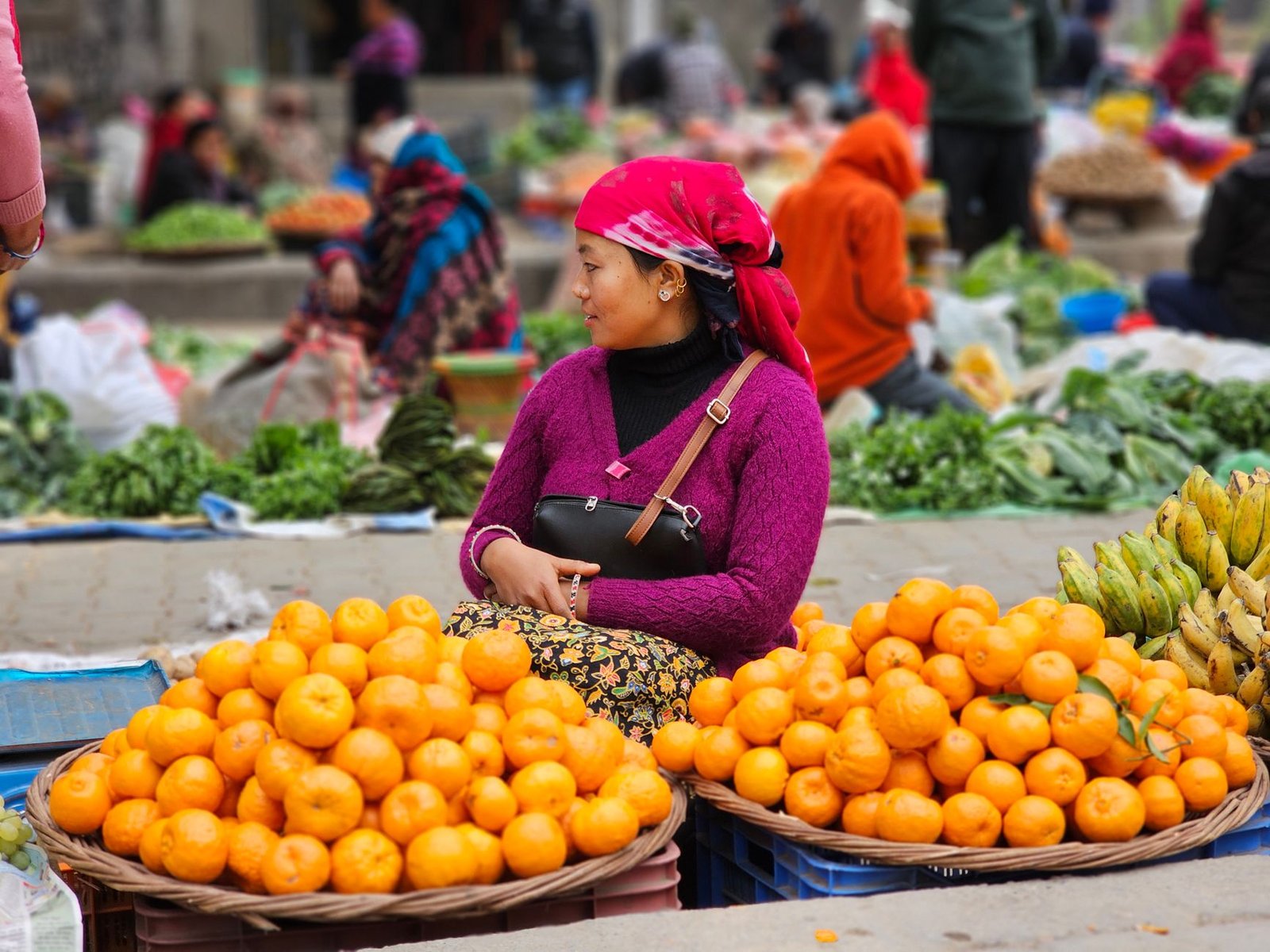
Northeast India is one of the world’s acknowledged centres of citrus diversity, and Manipur sits at its heart, home to wild orange varieties that communities have used for generations but that scientists are only now cataloguing and commercialising in earnest.
Among them is heiribob, a little-known wild citrus fruit associated with Manipur, featured in the fifth season of Down To Earth’s food docuseries The Green Kitchen, which traces India’s herbs, spices and medicinal plants through the communities tied to them. The production team encountered heiribob not in Manipur itself but in Humayunpur, a Delhi neighbourhood with a sizeable Northeastern community, where traders and residents familiar with the fruit explained its uses to the crew, underscoring how diaspora markets have become an unofficial archive for ingredients that rarely reach mainstream Indian kitchens.
That a Manipuri fruit should be easier to find and explain in a Delhi market than through formal documentation says something about how little of the Northeast’s food heritage has been systematically recorded. Local and migrant communities carry that knowledge informally, passed between households and traders, long before any institute catalogues it, and series such as The Green Kitchen depend on exactly that informal network to find ingredients that would otherwise stay invisible to a wider audience.

From forest fruit to licensed product
The scientific interest is not confined to one fruit. Researchers working in Tamenglong district have documented a distinct, primitive wild orange variety growing in forest tracts there, adding to a small but growing list of citrus relatives identified across Manipur’s hill districts in recent years. The state’s wild citrus diversity includes species adapted to specific micro-climates and soils, many surviving only in small stands that depend on local communities choosing not to clear them.
That diversity has begun attracting formal institutional backing. The Indian Council of Agricultural Research’s Central Citrus Research Institute has signed a licensing agreement with the private firm Magfruit to develop citrus-based processed products sourced from Manipur, a step that gives wild and semi-wild varieties a commercial route beyond informal local sale. Supporters of such deals argue that giving forest-sourced citrus commercial value is one of the more reliable ways to keep the trees standing, since communities are more likely to protect fruit that earns them income than fruit that does not. Sceptics of commercialisation drives elsewhere in India’s Northeast have warned that licensing deals can sideline the communities who conserved a crop for generations unless benefit-sharing terms are made explicit and enforced, a caution that applies as much to Manipur’s citrus as to any other forest product now drawing commercial interest.
Northeast India’s status as a global centre of citrus diversity is not a new claim among botanists, but it has historically drawn relatively little investment compared with the region’s other agricultural exports. A licensing deal and a newly logged forest variety are modest steps against that backdrop, yet they mark a shift from citrus as a subject purely for academic cataloguing toward citrus as a resource with a market, usually the point at which conservation funding starts to follow scientific interest.
For now, much of Manipur’s wild citrus heritage survives the way heiribob does: known intimately within particular communities, traded informally, and unfamiliar to most of India despite the country’s own stake in preserving it. The Green Kitchen’s choice to track the fruit down in a Delhi market rather than a Manipur orchard says as much about distribution as about botany, suggesting that the clearest window into Northeast India’s forest foods, for many Indians, now runs through the diaspora kitchens and stalls of cities far from the Northeast itself. Linking that diaspora-led visibility with the institutional backing now reaching Tamenglong and similar sites may determine whether fruits such as heiribob stay a regional secret or finally become part of the wider conversation about India’s food heritage that figures such as the state’s own agricultural scientists have been pressing for.



