
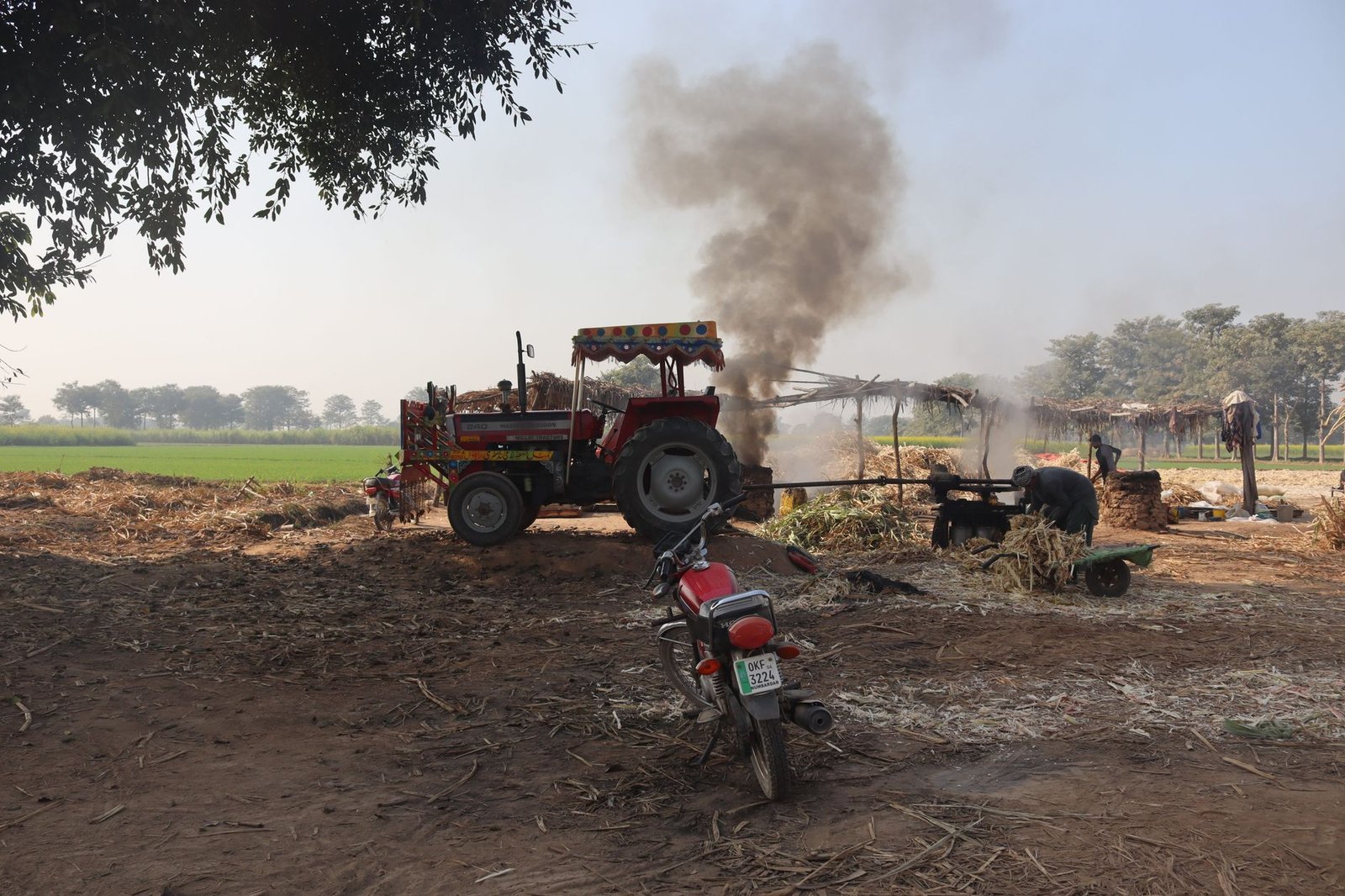
Madhya Pradesh has recorded more crop-residue fires than Punjab so far this season, satellite data show, a reversal that experts say reflects farmers there switching from soyabean and other kharif crops to paddy as extreme weather threatens non-paddy harvests.
The Consortium for Research on Agroecosystem Monitoring and Modelling from Space, run by the Indian Agricultural Research Institute, recorded 287 crop-residue fires across seven states between 15 September and 6 October 2026, based on satellite detection of active burning. Madhya Pradesh accounted for 118 of them, the highest the state has logged for this period, reaching double digits on five separate days. Punjab recorded 88, its lowest tally for this period in seven years, and did not reach double digits on any single day this season. Uttar Pradesh logged 65, Rajasthan 10, Haryana 4, Uttarakhand 1 and Delhi 1. On 6 October alone, of 33 fires detected nationwide, 24 were in Madhya Pradesh, 73% of the day’s total.
The consortium’s bulletin relies on satellite remote sensing of active fires, a method that can only record burning it can actually see. Cloud cover over east and southeast Madhya Pradesh and Uttar Pradesh, and denser cloud over the higher reaches of Uttarakhand, hampered detection this round, meaning the true number of fires already lit this season is almost certainly higher than the satellite count suggests.

A reversal with deeper roots
The shift looks stark against last year’s pattern. Between 15 September and 30 November 2025, six states recorded 33,028 crop-residue fires in total, and Madhya Pradesh alone accounted for more than half, at 17,067, ahead of Uttar Pradesh’s 7,290 and Punjab’s 5,114. This season’s early figures confirm that trend is deepening rather than reversing: incidents are falling in Punjab and Haryana even as they rise in Madhya Pradesh, Uttar Pradesh and Rajasthan.
Experts attribute the shift to the changing climate and to farmers hedging against it. As erratic rainfall and heat increasingly threaten crops such as soyabean and black gram, more farmers in Madhya Pradesh are turning to paddy, which tolerates those swings better but leaves behind stubble that many clear by burning it, since that remains the fastest and cheapest way to prepare a field for the next sowing. Analysts describe the state as now following the trajectory Punjab set a decade ago, when expanding paddy acreage there drove the smoke that blankets North India each winter.
That trajectory matters well beyond the fields where the stubble burns. The smoke from crop-residue fires across Punjab, Haryana and increasingly Madhya Pradesh is one of the best-documented contributors to the severe air pollution that settles over North India every October and November, worsening respiratory illness across a swathe of the country that stretches from the fields themselves to cities hundreds of kilometres downwind. A rising count in a state that was not previously a major contributor changes the geography of who breathes that smoke each winter, even if the total national picture does not shift dramatically in a single season.
The bulletin gave no update on government interventions specific to Madhya Pradesh’s rising fire count, even as Punjab’s steady decline suggests that years of enforcement, machinery subsidies for in-field residue management, and farmer outreach there are gradually taking hold, with incidents falling to levels not seen in seven years. Haryana’s count, at just four fires so far this season, points the same way. Whether Madhya Pradesh can bring its own trajectory down the same way, rather than repeat Punjab’s path from the start, may depend on how quickly similar support, from residue-shredding machinery to alternative uses for the straw, reaches its farmers before the season’s smoke builds further through late October and November, when fire counts in a typical year climb fastest. In Kashmir, by contrast, a well-timed monsoon has just delivered one of the best paddy harvests in years.



