
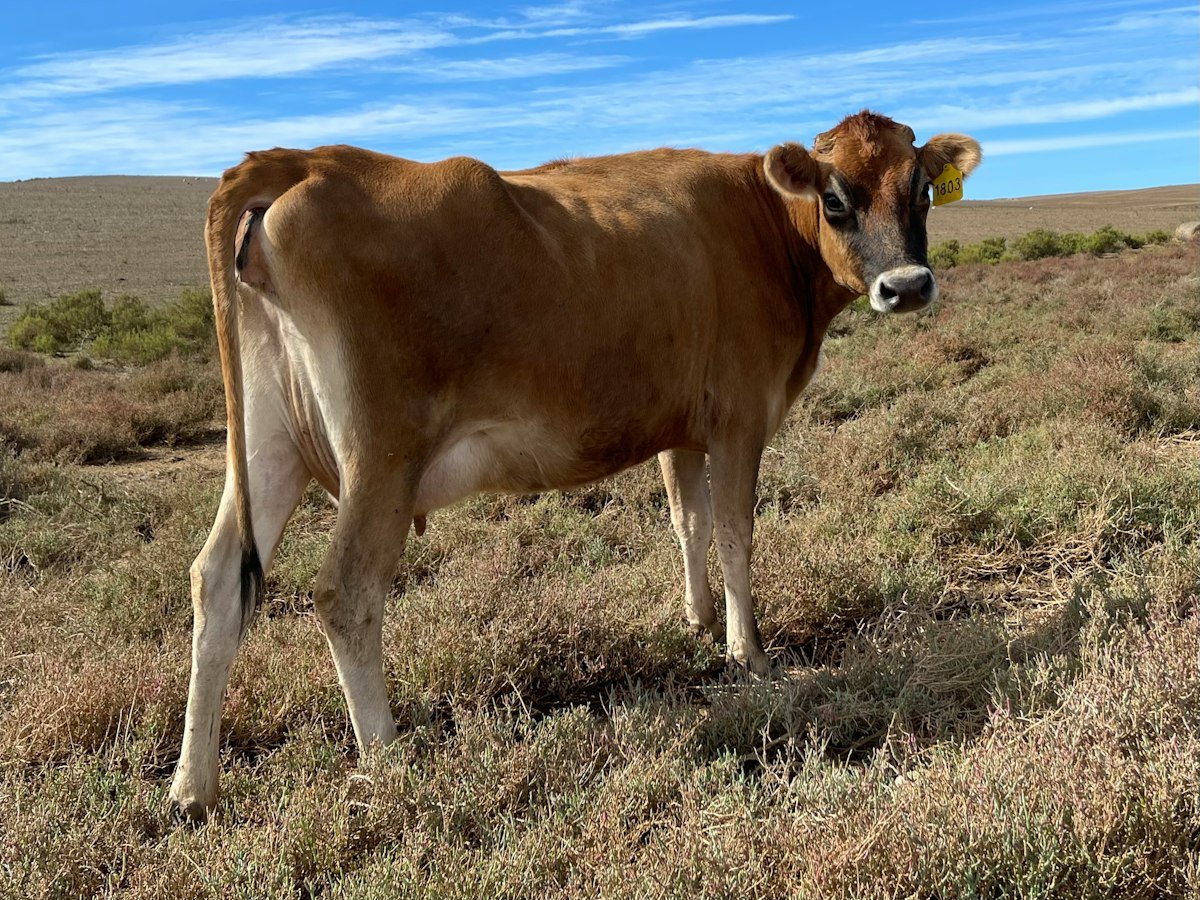
Black-owned farms account for only about 10% of South Africa’s commercial agricultural output, even though white-owned operations dominate the sector by land and production. President Cyril Ramaphosa highlighted this gap after visiting the Land Bank-supported Redlands Dairy Farm in the Eastern Cape on 8 October 2026. He called for more enterprises built on the same model. The Eastern Cape dairy operation has become a reference point for what Ramaphosa wants scaled up across South Africa’s black farmers and land reform efforts more broadly.
In his weekly newsletter following the visit, reported by Engineering News on 12 October 2026, Ramaphosa described the sector as home to two distinct agricultures. Predominantly white-owned commercial farms produce the bulk of the country’s agricultural output, he wrote, while black-owned farms remain confined to a small share of commercial production. He said this split demands transformation, both for the wider economy and for food security.
Developing a new generation of commercial farmers requires more than goodwill, Ramaphosa argued. Skills, mentorship, training, technology and other resources must reach black farmers if they are to compete at scale. Access to land is the first step, he said, but practical learning from established farmers is equally necessary before land translates into viable enterprises. Land transfers alone cannot close the output gap, since newly settled farmers still need working capital, markets and know-how to operate at commercial scale.

Land transfers gather pace
The government is already moving land into black hands. The Proactive Land Acquisition Strategy is releasing around 2.5 million hectares of state-owned land to black farmers and issuing title deeds alongside the transfers. Ramaphosa framed this programme as the foundation for the commercial farming he wants replicated beyond Redlands. Title deeds give farmers the security to invest in their land and borrow against it, turning transferred ground into a lasting asset.
Land alone will not sustain a farm, he added. Successful commercial farming needs affordable, patient capital that can absorb the slow returns typical of agriculture. The Land Bank and the Department of Agriculture have jointly launched a blended finance instrument to supply exactly that kind of funding to black farmers entering the sector. Patient capital of this kind allows a farm to survive its early seasons, when yields and income are least predictable.
Private capital invited in
Ramaphosa urged agribusinesses and commercial banks to join the blended finance scheme and to design further instruments of their own. Government funding alone cannot carry the scale of transformation required, and private capital has a direct stake in building a more inclusive farming economy. Banks and agribusinesses already deal with established commercial farmers, giving them existing networks that could extend credit and mentorship to newer entrants.
Beyond finance, the government is working to diversify and grow export markets for South African agricultural produce. It is also engaging industry on new breeding techniques and agricultural biotechnology. Ramaphosa pointed to these efforts as parallel tracks to land reform, meant to keep the sector competitive as its ownership base changes.
Ramaphosa also credited established commodity associations with helping build a more inclusive farming economy. Grain South Africa, Potatoes South Africa and the Milk Producers’ Organisation each run programmes he singled out for praise. For Ramaphosa, the Redlands visit set a template he wants multiplied across provinces, combining land, capital, mentorship and market access. Turning that combination into standard practice, instead of an exception tied to one farm, is now the task facing government and industry alike.



