
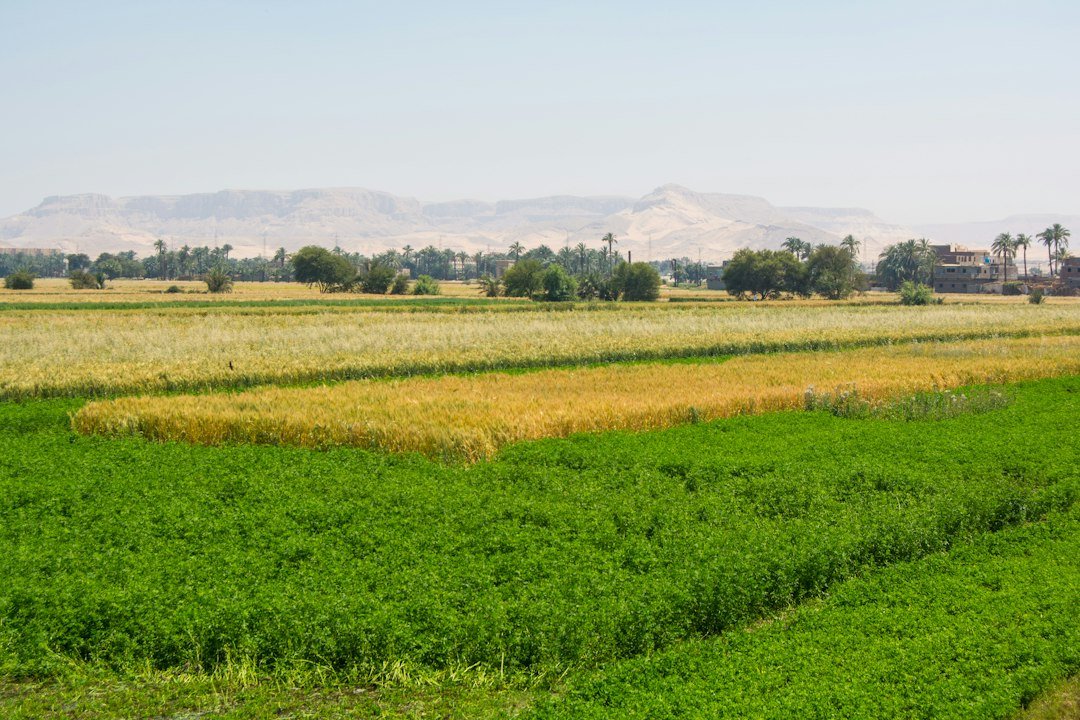
An Egypt wheat harvest record forecast puts 2026/27 production at up to 10 million tonnes, according to a US Department of Agriculture Foreign Agricultural Service forecast reported by UkrAgroConsult in October and independently corroborated by Cropgpt.ai and Millingmea.com. The harvested area is forecast to expand to about 1.5 million hectares, up from 1.33 million hectares, an increase of roughly 13%.
The record Egypt wheat harvest forecast would cut the country’s import needs to 12 million tonnes, down 23% on the previous year and the lowest level since the 2022/23 marketing year. Domestic consumption is forecast to rise only slightly, by about 0.5%, to roughly 20.7 million tonnes, meaning the extra production goes directly toward reducing reliance on imported grain rather than meeting a surge in demand.
A different story from Egypt’s export boom
The forecast adds a new angle to Egypt’s recent food-trade story. Fourth Plate reported in September that Egypt’s food exports were hitting record pace even as the country remained exposed to Black Sea wheat-import risk; that story concerned processed food exports and import dependency on Black Sea supply routes. This latest data concerns a separate trend: a genuine rise in domestic wheat production that, if realised, would ease some of that same import exposure from the supply side rather than the trade side.

Egypt’s agriculture authorities have already procured 4.72 million tonnes of the current domestic wheat harvest, according to Millingmea.com, as the government continues a long-running local procurement programme aimed at building strategic reserves and supporting domestic millers. Flour exports are forecast to rise 17% to 1.4 million tonnes in the coming year, suggesting Egypt is positioning some of its wheat-processing capacity for regional markets as well as domestic supply.
Weather and policy both have to hold
Egypt remains one of the world’s largest wheat importers by volume, and any forecast rise in domestic output depends on continued government support for local farmers, including guaranteed procurement prices, as well as favourable growing conditions through the winter wheat season. Analysts tracking North African grain markets say a sustained reduction in Egypt’s import needs would have ripple effects on global wheat trade, given the country’s historic reliance on Black Sea and other overseas suppliers. The forecast lands in the same month as a record olive oil export season in neighbouring Tunisia, another sign of North African producers gaining ground in global food trade.
Whether the record forecast is realised will become clearer as the harvest progresses through the first half of next year, with Egyptian officials expected to update procurement and import figures as the season unfolds.
Egypt’s wheat self-sufficiency push carries political as well as economic weight. Bread remains a heavily subsidised staple for much of Egypt’s population, and successive governments have treated reducing import dependency as a national food-security priority since global grain prices spiked sharply earlier in the decade. Expanding irrigated wheat area in the Nile Delta and newer reclaimed desert land has been central to that strategy, alongside guaranteed procurement prices intended to keep local farmers growing wheat rather than switching to more profitable cash crops.
Grain traders say a genuine 10-million-tonne Egyptian harvest would be among the largest in the country’s history and could modestly ease pressure on global wheat markets that have remained sensitive to Black Sea supply disruptions in recent years. Even so, Egypt is expected to remain among the world’s largest wheat importers by absolute volume for the foreseeable future, given the size of its population and bread-subsidy programme relative to domestic growing capacity.
Officials at Egypt’s supply ministry have said expanding domestic wheat storage capacity is a parallel priority to raising production, since a larger harvest only reduces import dependency if the country can store and mill it efficiently through the year rather than losing a share to spoilage or logistical bottlenecks at harvest time.



