
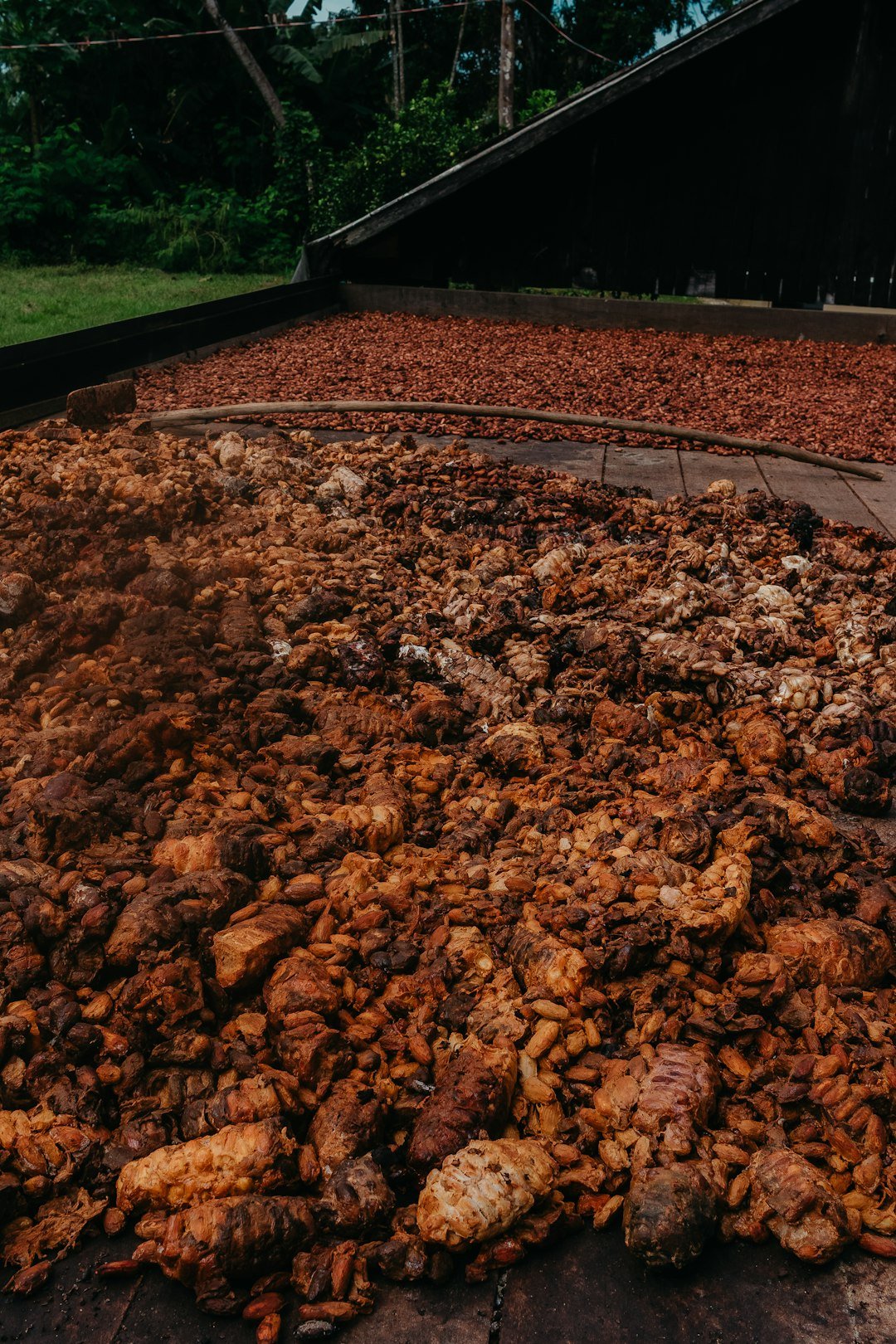
Ivory Coast cocoa prices have fallen far enough that the government is now stepping in to buy unsold beans directly, after growers in the world’s largest producing country went weeks without being paid for cocoa multinational buyers no longer wanted at the agreed price. Synapci, the main farmers’ union, estimates that around 700,000 tonnes of cocoa remain unsold and unpaid across the country, beans that were supposed to move under forward contracts signed months earlier.
The mechanics of the crisis trace back to how Ivory Coast prices its harvest. The state fixes a guaranteed price at the start of each season, and roughly 85 percent of the crop is typically sold in advance at that level. Ahead of last October’s harvest, timed around a presidential election, officials set the season’s price at a record near $5,000 a tonne. Global cocoa prices have since slipped to around $4,630 a tonne, and multinational buyers holding contracts for the remaining 15 percent of the crop refused to take delivery at the higher domestic rate, leaving the surplus to pile up in warehouses.
Farmers describe months without income
For growers, the gap has meant real hardship. Some went nearly two months without income from their main cash crop, according to Synapci, and the union says some farmers sold cocoa at a steep discount just to generate cash, while others saw stock rot in storage and destroyed it outright. Agriculture Minister Kobenan Kouassi Adjoumani says the government will now buy the unsold stock at the guaranteed seasonal price to keep exports moving and reassure growers that payment is coming. “The situation is now under control, and collection operations will begin in the coming days,” he said.

Synapci’s president, Moussa Koné, is not convinced the intervention resolves the underlying problem. Asked what guarantees the government was offering beyond the announcement itself, he said: “They are making nice promises, but what guarantees are they offering?” He has also pressed officials on compensation for cocoa that rotted during the standoff, stock that cannot simply be replaced once spoiled.
A new season, a lower price already locked in
The crisis lands just as the 2026-27 main crop season gets under way. Agriculture Minister Bruno Kone confirmed in September that the farmgate price would hold at 1,200 CFA francs, about $2.12, per kilogramme for the new season, unchanged from the mid-crop rate set in March after global prices fell from their earlier peak. That marks a steep drop from the roughly 2,800 CFA francs per kilogramme guaranteed ahead of last year’s main crop. The new season runs through 28 February 2027, giving the government most of a year to work through the backlog before the next pricing decision arrives.
International markets tell a messier story than the domestic price cuts suggest. London cocoa futures fell to around $2,840 a tonne in early March before climbing back above $6,500 a tonne by the summer, a swing that makes the current gap between world prices and Ivory Coast’s guaranteed rate harder to read as a simple one-way decline. Even so, the specific contracts behind the unsold 700,000 tonnes were priced before that rebound, which is why buyers walked away rather than paying the agreed rate once the wider market had moved against them.
Ivory Coast produces between 2 and 2.5 million tonnes of cocoa annually, close to half the world’s supply, which means swings in Ivory Coast cocoa prices ripple through chocolate markets well beyond West Africa. Neighbouring Ghana, the world’s second-largest producer, has yet to announce its own farmgate price for the new season, though traders expect it to hold steady rather than follow Ivory Coast’s cut, at least for now.



