
Laos has formally sought UNESCO recognition for larb, the minced-meat salad that functions as something close to a national dish, after a three-month documentation drive that wrapped up with a short film posted to UNESCO’s website in February. Officials in Vientiane describe the video’s publication as a milestone in a process that began in early 2025 and now awaits a decision from UNESCO’s Intergovernmental Committee for the Safeguarding of Intangible Cultural Heritage, expected later this year.
The Lao Business Women’s Association pushed for the nomination from the outset, working with the Ministry of Culture and Tourism to assemble a case built on more than recipes. A task force brought in historians, culinary experts and village elders to document how larb is made, served and understood across different regions of the country, material intended to show the dish’s cultural weight rather than just its popularity.
One dish among several nominations
Larb is not travelling alone. The Lao government has named four other cultural elements it intends to put forward over the next five years under its latest national development plan: the baci soul-calling ceremony known as Sou Khuan, the mythical grandparents Pou Yer and Ya Yer associated with Lao New Year, the Boun Pi Mai Lao new year festival itself, and the preparation of sticky rice dishes called khao tom and khao lam. Alongside the cultural nominations, officials also plan to seek World Heritage status for three sites: Nakai-Nam Theun National Park, the Hintang Archaeological Park in Houaphanh province, and the temple of That Ing Hang in Savannakhet.

If the committee approves the larb nomination, it would become the fourth Lao element on UNESCO’s Representative List of Intangible Cultural Heritage, following khaen music in 2017, naga motif weaving in 2023 and the lamvong circle dance in 2024. Officials frame the inscriptions as a package: each successful bid brings a measure of legal protection, access to international funding, and visibility that can support tourism built around culture rather than scenery alone.
Shared dish, separate claims
The nomination arrives at a moment when Thailand is pursuing recognition for its own cultural touchstone, the Chud Thai national costume, through the same UNESCO cycle. Larb itself is eaten widely across both countries and the wider region, a fact Lao officials have been careful to address directly. Under the 2003 UNESCO convention that governs these listings, inscription is explicitly not a claim of exclusive ownership or a form of copyright. Anyone, in Laos, Thailand or elsewhere, remains free to cook, serve and sell the dish exactly as before.
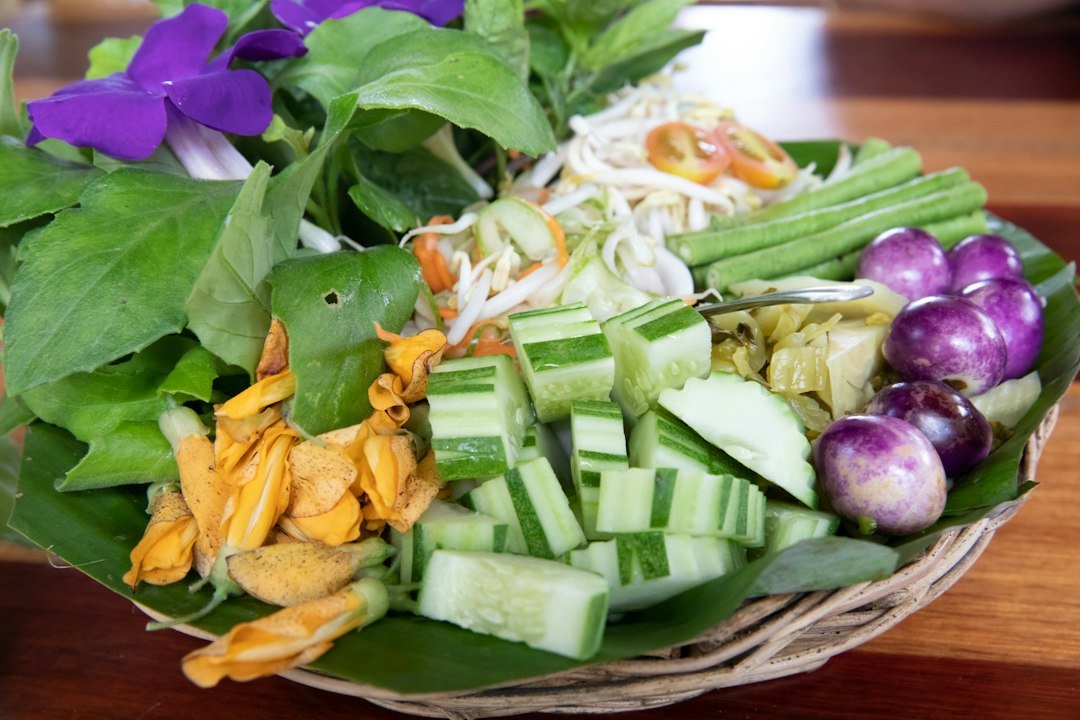
What the listing would change, officials argue, is recognition of larb’s specific place in Lao identity and daily life, distinct from its popularity as a regional menu staple. Lao cooks typically build the dish around minced meat or fish tossed with toasted rice powder, lime juice, fish sauce, chillies and a generous handful of mint, coriander and other herbs, served alongside sticky rice rather than on its own. Variations shift by region and household, which is part of why the task force spent so long documenting different versions rather than settling on a single definitive recipe.
For a government building its heritage strategy around five cultural nominations and three physical sites simultaneously, a successful larb bid would offer an early, globally visible marker that the strategy is working, well before the slower-moving site nominations reach any kind of verdict. Securing UNESCO recognition for larb would not stop anyone outside Laos from cooking it, officials readily admit, but it would put an official record of the dish’s Lao origins and variations into the global heritage system, a form of documentation that advocates say matters regardless of who else claims to cook it best.



