
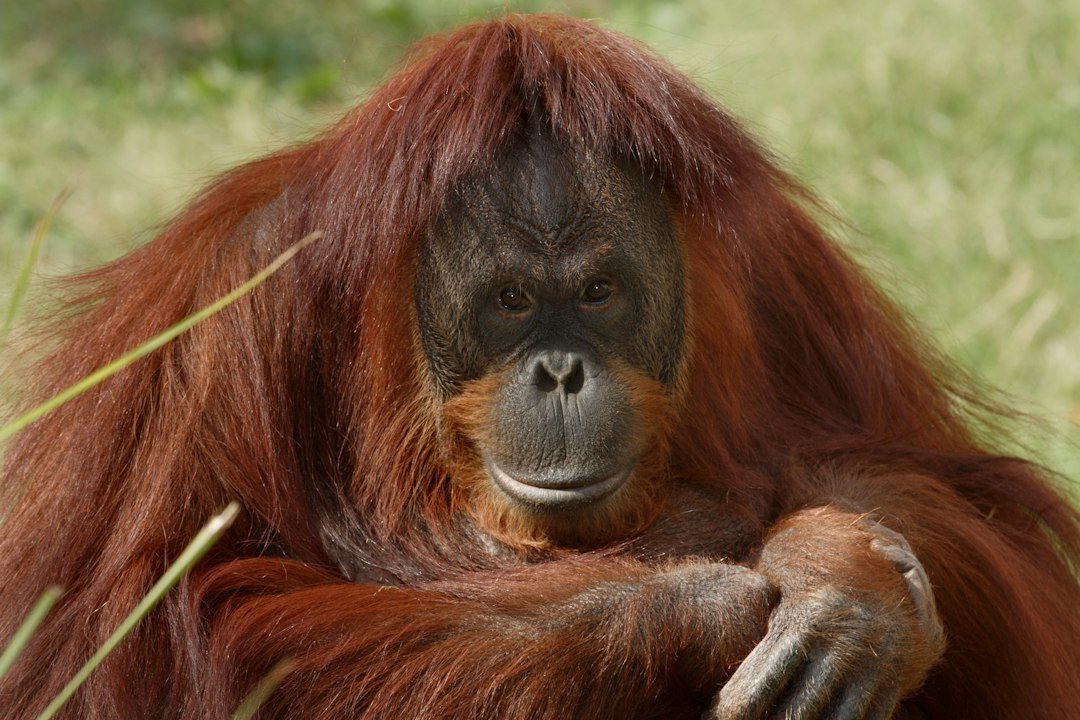
A juvenile orangutan seized from an apartment in Dombivli, in India’s Maharashtra state, flew home to Indonesia on 19 October. Officials describe it as India’s first successful repatriation of a seized animal listed under the Convention on International Trade in Endangered Species. The animal will now be rehabilitated in Sumatra, its natural range.
The orangutan was rescued in 2024 after being kept illegally in the apartment, according to Mongabay India and the Free Press Journal. It was later moved to Gorewada Zoo. From there it went to Vantara, a large wildlife rescue and rehabilitation centre in Gujarat, while authorities worked out the legal and logistical steps needed to send it home.
Five more cases still open
The Dombivli case is not isolated. Five baby orangutans rescued separately in Odisha remain at Nandankanan Zoo while a trafficking investigation continues. Indonesia has proposed forming a joint assessment team with Indian authorities to examine those animals. No timeline has been set for their return.

Orangutans are not native to India. That means every animal found in the country has been trafficked there. Almost always, the route runs through the illegal exotic-pet trade, which has grown alongside demand among wealthy buyers for rare primates as status symbols. Wildlife trade investigators say Southeast Asian smuggling networks have increasingly used India as a transit and holding point in recent years. They exploit gaps between countries’ CITES enforcement capacity.
Why repatriation is hard
Returning a trafficked animal to its country of origin involves more than a flight booking. Authorities must establish the animal’s likely origin, often through genetic testing. They must agree health and quarantine protocols between governments. They must also find a rehabilitation facility equipped to prepare a captive-raised animal for eventual release or lifetime sanctuary care. Orangutans raised in captivity from infancy, as many trafficked animals are, often cannot be released directly into the wild. Many need years of rehabilitation to relearn forest survival skills, including how to forage and build nests.
Indonesia’s own orangutan population has fallen sharply over recent decades. Habitat loss from logging and palm oil expansion is the main driver. This year, wildfires pushed orangutans in Borneo toward the edges of shrinking forest too. Each trafficked animal recovered and returned therefore matters disproportionately for a species already under pressure, conservationists say. That is true both for the individual animal and as a test case for enforcement cooperation between countries.
Indian officials have not said how the Dombivli case was initially uncovered. Nor have they said whether anyone has been prosecuted for the original trafficking and illegal keeping of the animal. Wildlife crime specialists say prosecutions in such cases often lag behind rescues. Tracing an animal’s supply chain back to importers and breeders takes far longer than removing it from an unlawful owner.
For now, attention turns to the five orangutans still in India. Their cases involve infants, which wildlife rehabilitators consider both more hopeful and more delicate. Young animals adapt to new environments more readily, but infant primates also require intensive, specialised care to survive the stress of international transfer. How quickly the proposed joint assessment team is formed will decide whether those animals spend months or years in Indian zoos before any return home.
The two-year gap between the Dombivli orangutan’s rescue and its eventual flight home illustrates how slow this process still is, even in a case officials now point to as a success. Bilateral paperwork, veterinary clearance and funding for transport and quarantine all have to align before any animal can travel. Smaller rescue centres, with fewer resources than a facility like Vantara, may find that timeline even harder to compress for future cases.



