
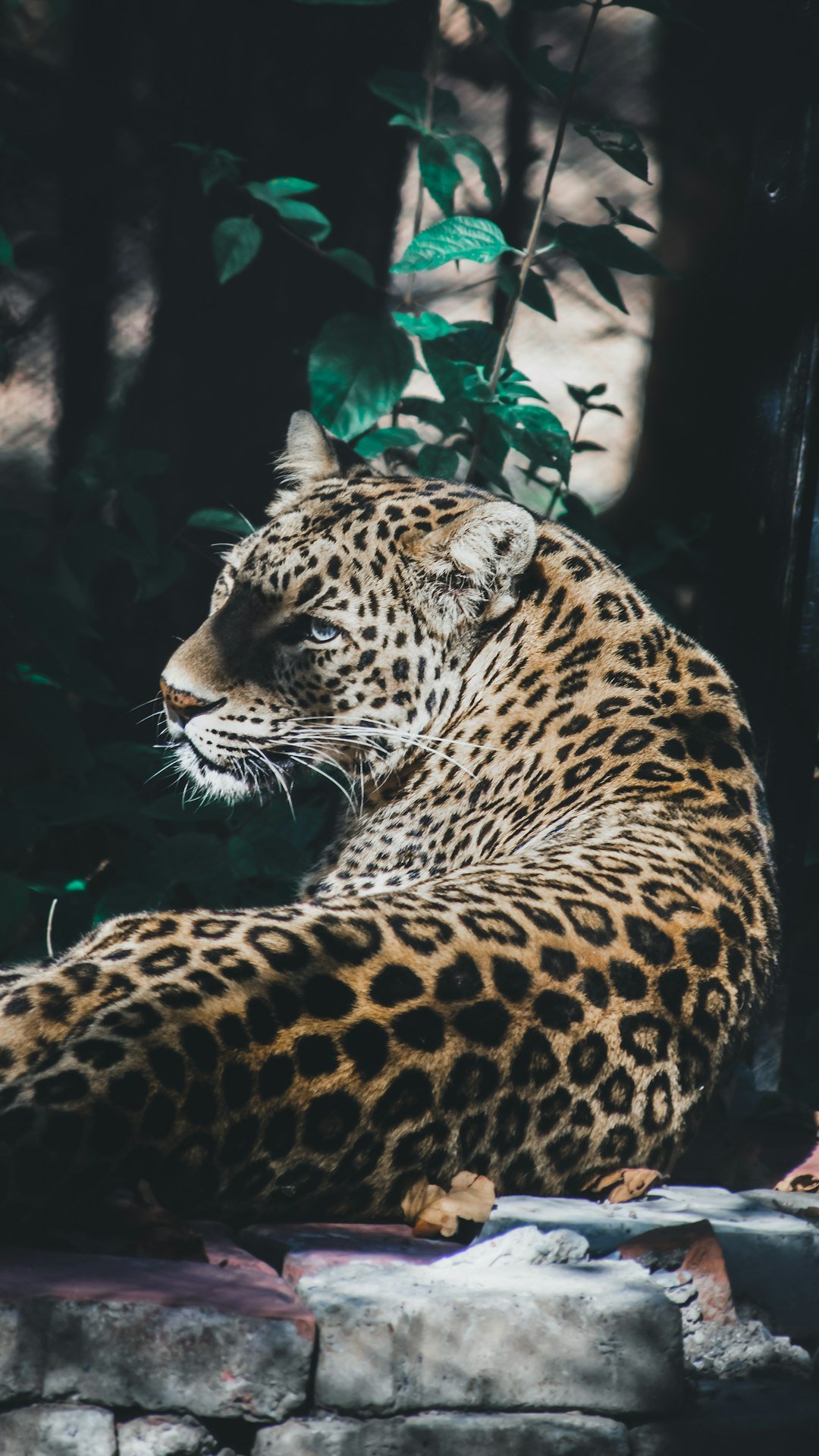
Wildlife officials in Maharashtra’s Junnar forest division have given two female leopards an immunocontraceptive vaccine and released them back into the wild, in what the state forest department describes as India’s first such initiative to manage leopard populations without killing or permanently removing animals.
The pilot targets Junnar, a sugarcane-growing area in Pune district where dense cover and abundant prey have long supported one of India’s highest concentrations of leopards living alongside farming communities. Between 2000 and 2025, leopard attacks killed 56 people in the division, making human-leopard conflict a recurring source of fear and, more recently, a political issue: candidates in several affected talukas made it a campaign pledge during Maharashtra’s 2024 state elections.
The project follows a directive issued in August 2025 by Sudhir Mungantiwar, then the state’s forest minister, and received formal clearance from the Union Ministry of Environment, Forest and Climate Change under the Wildlife Protection Act, 1972, legislation that lists leopards as an endangered species alongside their CITES Appendix I status internationally.

In April 2026, the forest department selected five female leopards in the Junnar division for observation as candidates for the trial, though only two have so far received the vaccine and been released, with the status of the remaining three not yet disclosed by officials. RESQ Charitable Trust, a wildlife rescue and rehabilitation group, has supported the operation with veterinary expertise and on-the-ground handling, while researchers at the Indian Council of Medical Research in Mumbai are analysing blood samples from the treated animals to track hormonal changes and assess the vaccine’s longer-term effects.
Why Junnar, and why now
Junnar’s leopard population has adapted unusually well to farmland, denning in sugarcane fields that offer cover close to villages and livestock. That proximity has made conventional conflict-management tools, trapping and relocating animals, insufficient on their own, since relocated leopards often return or are quickly replaced by others moving into vacated territory. Immunocontraception offers a different lever: if it proves safe and effective, it could gradually reduce local leopard density without the ecological disruption of repeated capture-and-release operations.
The state forest department says it will monitor the two treated leopards throughout the study, though officials have not yet set out a public timeline for assessing results or disclosed exactly how the vaccine is administered in the field. Sugarcane workers in Junnar have for several years worn spiked collars while harvesting, a low-tech defence against surprise encounters in dense cane that has become emblematic of how routine leopard risk has become for local farm labour.
A test case with wider implications
If the trial demonstrates that immunocontraception is practical to deliver and effective over time, Maharashtra’s forest department is likely to consider extending it to other high-density leopard landscapes in the state, where conflict has followed a similar pattern of farmland encroachment on wildlife habitat. Ambegaon, Shirur and Khed, the talukas neighbouring Junnar, report similar patterns of leopards denning close to cane fields and villages, making them candidates for a wider rollout should the pilot hold up under longer observation.
Immunocontraceptive vaccines have been trialled on other large carnivores and herbivores in parts of Africa and North America as an alternative to culling, with mixed results depending on the species and the delivery method used. Maharashtra’s forest department has not disclosed which vaccine formulation it is using in Junnar, and independent wildlife biologists say the technique’s success in leopards will depend heavily on how long immunity lasts and whether repeat dosing proves logistically feasible in a landscape where the same individual animal can be difficult to locate twice.
For now, officials are treating the two sterilised leopards as the first data points in what they describe as a multi-year study, with success measured not by immediate results but by whether a non-lethal method can be scaled without unintended ecological consequences for a species already classified as endangered. The approach echoes a wider shift in regional wildlife policy toward prevention over punishment, visible too in Indonesia, where researchers have just documented international trafficking emerging as a new threat to the Critically Endangered maleo bird, a reminder that human-wildlife conflict takes very different forms depending on whether the animal is seen as dangerous or merely valuable.



