
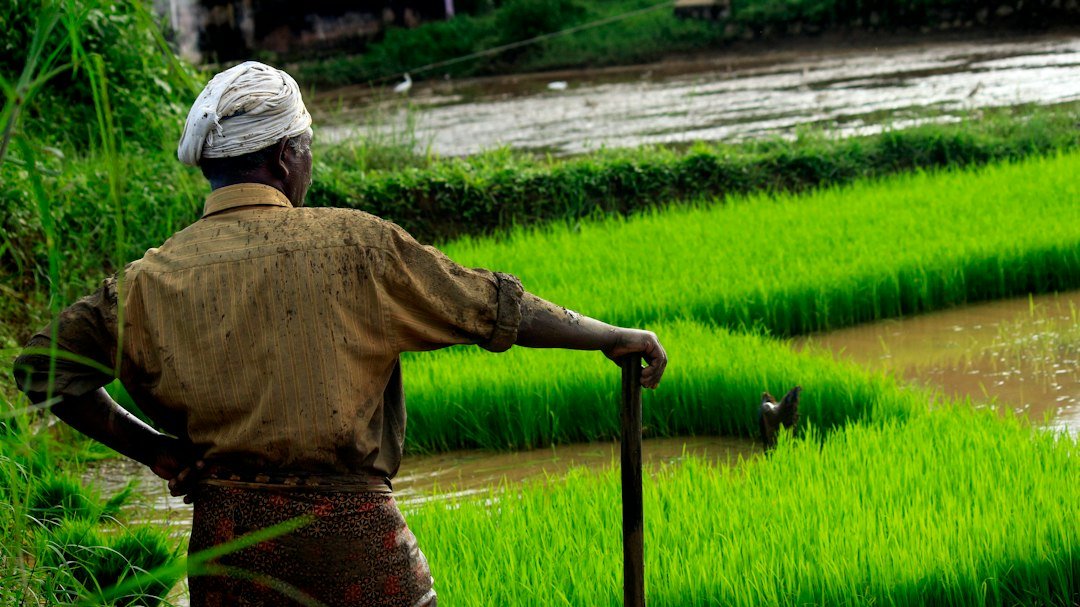
Cheruvayal Raman, the Wayanad farmer who spent more than four decades conserving over 45 traditional rice varieties on a single field in Kammana, died on 14 October at the age of 74.
A member of the Kurichya tribal community near Pulpally, Raman turned roughly an acre of family land into a living seed bank. He grew and re-sowed heirloom paddy varieties each season, many of them long abandoned elsewhere in Kerala as farmers switched to high-yield hybrids after the 1960s. Among the varieties he kept alive were Gandhakasala and Jeerakasala, aromatic rices now protected by Geographical Indication tags and used in biryanis across the state.
A one-man gene bank
Agricultural scientists and seed-conservation groups visited Raman’s field for years, drawn by a collection that formal gene banks had let slip away. He distributed seeds free to any farmer who asked, arguing that a variety survives only if people keep growing it, not if it sits catalogued in a cold store. Several of the varieties he held are no longer found in state agricultural department records at all.

Local agricultural officers estimate Raman supplied planting material to several hundred farmers over the decades, nearly all of it free of charge and without him asking why anyone wanted a particular variety. That informal distribution network, built on personal visits and word of mouth rather than any institutional scheme, is one reason researchers describe his field as harder to replace than a conventional gene bank: knowledge of which variety suited which soil, season or pest pressure travelled with the seed itself, not in a separate catalogue.
Raman’s conservation work earned him the Padma Shri, India’s fourth-highest civilian honour, recognition that was unusual for a farmer working entirely outside commercial agriculture. He continued to work his field into his seventies, hosting researchers, students and officials who wanted to understand why traditional varieties mattered when modern ones promised higher yields.
The traditional varieties he grew tend to need less fertiliser and tolerate Wayanad’s waterlogging and pest pressure better than commercial hybrids, according to agricultural researchers who studied his fields. That resilience has taken on new relevance as erratic monsoons make Kerala’s paddy farmers more exposed to crop failure.
A heritage now unattended
Tributes from Kerala’s agriculture department, fellow seed-keepers and heritage researchers have focused on what happens next to the collection. Unlike a government gene bank, Raman’s field depended entirely on him continuing to grow every variety every season, and it is not yet clear whether family members or a local institution will keep the collection going at the same scale.
The loss comes as Kerala tries to formalise interest in indigenous crop diversity through its own smallholder economy; in the state’s rubber belt, for instance, farmers have spent recent seasons swapping ageing rubber trees for exotic fruit varieties that pay far better than Raman’s generation of rubber planters ever earned.
Wayanad’s paddy fields have shrunk for decades as farmers moved to cash crops, making fields like Raman’s an increasingly rare record of what the district once grew. Seed-conservation researchers have pointed to his archive as a practical resource rather than a museum piece: breeders can cross his drought- and pest-tolerant landraces into newer varieties without having to search gene banks abroad for similar traits.
Raman is survived by family in Kammana. Local reports describe visits from current and former state agriculture officials among the mourners, a reflection of a reputation built almost entirely through word of mouth among farmers and scientists rather than formal publicity.
For a district where paddy cultivation has fallen sharply over 30 years, his death closes one of the last remaining links to Wayanad’s pre-Green-Revolution rice diversity, at a time when climate pressure is pushing agricultural researchers to look again at exactly the traits his varieties carried.



