
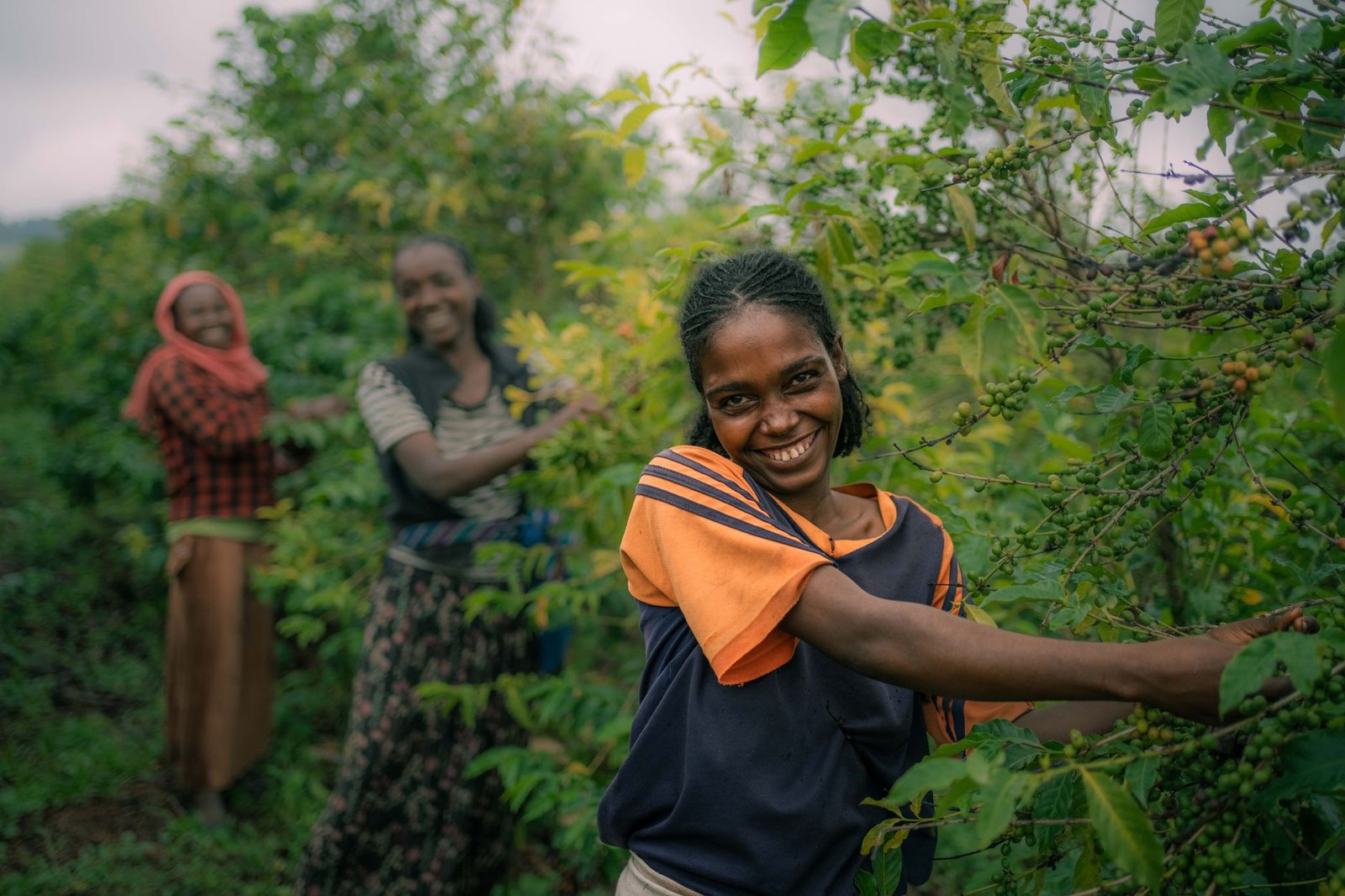
Ethiopian coffee exporters are increasingly directing shipments towards China and other Asian markets, according to data from the Ethiopian Coffee and Tea Authority reported by Capital Ethiopia, as the European Union’s deforestation regulation moves closer to taking effect for large and medium operators on 30 December 2026. China imported up to 47,836 tonnes of Ethiopian coffee worth $347m, around £259m at current exchange rates, in the 2025-26 financial year, a rise of 40% in volume and 58% in value compared with the previous year.
The EU Deforestation Regulation, known as EUDR, requires companies placing coffee, cocoa, soy, palm oil, cattle, rubber and wood products on the EU market to prove the goods were not produced on land deforested after a 2020 cut-off date, with full traceability documentation required down to the plot of land. For Ethiopian exporters, many of whom source coffee from smallholders across fragmented, often undocumented plots, meeting that traceability bar by the December deadline has proven difficult, pushing some to look elsewhere for buyers in the meantime.
Ethiopian Coffee and Tea Authority officials say the shift towards China does not reflect an abandonment of the European market, which remains a major and higher-value destination for Ethiopian coffee, but a hedge while the industry builds the traceability systems EUDR requires. Several exporters have begun piloting digital tracking tools intended to map coffee back to individual farms, though officials acknowledge that scaling such systems to the country’s smallholder base will take time.

A deadline built for large supply chains, not small farms
EUDR’s traceability requirements were designed with large, often vertically integrated commodity supply chains in mind, and critics in producer countries argue the rules place a disproportionate compliance burden on smallholder-dominated sectors like Ethiopian coffee, where a single export consignment can be aggregated from hundreds of small farms. Ethiopia has previously sought flexibility from the EU on implementation timelines, though the current deadline for large and medium operators stands at 30 December 2026, with small operators given a further six months.
Industry figures say the risk is not that EU demand disappears, but that compliance costs and paperwork delays make Ethiopian coffee less competitive against origins that have moved faster on traceability, pushing more volume towards markets like China that do not yet impose comparable requirements. Whether that redirection proves temporary or becomes a lasting shift in Ethiopia’s coffee trade likely depends on how quickly the country’s traceability infrastructure can catch up.
A trade story with a ticking clock
With roughly two months left before the deadline takes effect, Ethiopian industry bodies say the coming weeks will be decisive for determining how much of the country’s EU-bound coffee trade is actually ready for the new rules. Exporters who have invested early in plot-level mapping say they expect to retain EU buyers; those who have not are increasingly treating China and other Asian markets as the more reliable near-term outlet, a trade recalibration playing out across Ethiopia’s coffee belt as the clock on EUDR compliance runs down.
Smallholders carry the compliance burden
Cooperative union leaders representing smallholder coffee growers say the cost of plot-level mapping, GPS surveys, farmer registration and digital record-keeping, is typically borne by exporters and cooperatives rather than individual farmers, but warn that any resulting squeeze on export margins can still filter down to the farm-gate prices growers receive. Ethiopia’s coffee sector, one of the country’s largest sources of export earnings and a livelihood for millions of smallholders, has weathered previous market shifts, including price volatility and earlier changes to EU import rules, but industry figures say EUDR’s plot-level traceability requirement is a materially different kind of compliance challenge than anything the sector has had to manage before.



