
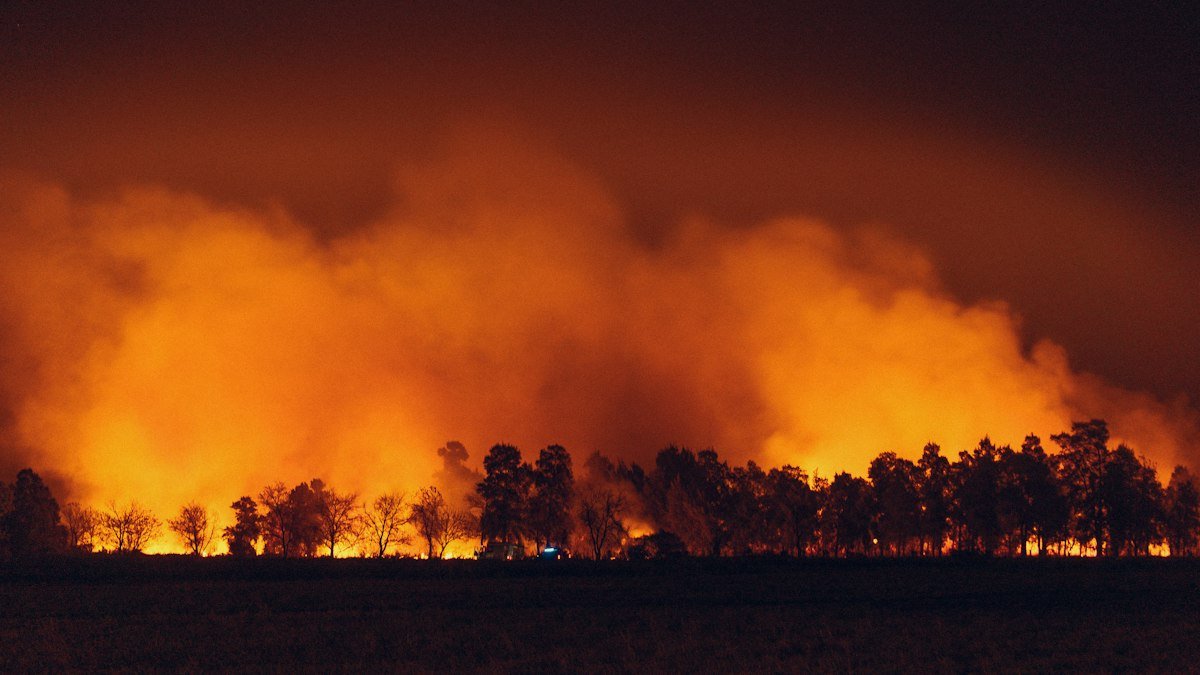
Mozambique reforestation efforts in Zambezia province have suffered a severe setback. Repeated bushfires destroyed large sections of a community-led project that local communities and conservation partners had built up over several years to restore degraded forest land.
The project involved community nurseries raising native tree seedlings for planting on land cleared by earlier agricultural expansion and logging. It had reported encouraging survival rates in its early plantings. Organisers say uncontrolled fires swept through sections of the restored area and killed a significant share of the young trees planted over recent years. Some fires were linked to land-clearing practices by neighbouring farmers. Others spread from unmanaged grass fires during the dry season.
A setback measured in years, not seasons
Young reforested stands are especially vulnerable to fire, unlike mature forest. Saplings are often killed outright by blazes that older trees might survive. Project organisers say the loss represents more than destroyed vegetation. It wipes out years of accumulated growth, meaning the restored area has effectively been set back to a much earlier stage of recovery. New planting cycles will be needed to make up the lost ground.

Fire risk has long been recognised as one of the central threats to reforestation efforts in savanna and miombo woodland regions of southern Africa. Seasonal dry-season fires are a natural, sometimes necessary feature of the landscape, but they can prove devastating to young, deliberately planted stands that lack the fire resilience of established natural forest. Community fire-break maintenance and coordinated burning schedules with neighbouring farmers are standard mitigation measures. Organisers say resourcing such measures consistently has proven difficult.
Communities weigh whether to replant
Despite the setback, project organisers say affected communities intend to continue the reforestation effort. They cite the erosion control, water catchment and livelihood benefits the restored forest was beginning to provide before the fires. Replanting will require renewed nursery production and, organisers say, a stronger fire-management plan involving coordination with surrounding land users to reduce the risk of recurrence.
The episode illustrates a broader challenge facing community reforestation projects. Such projects are increasingly promoted as tools for meeting global biodiversity and restoration targets, including the 30% land protection goal under discussion at the COP17 summit in Yerevan. Restoring degraded land is not simply a matter of planting trees. It means managing the surrounding human and environmental pressures that can undo that work within a single bad fire season.
Forestry extension officers in Zambezia say they are now pushing for fire-management training to be built into future Mozambique reforestation funding agreements from the outset, rather than added later once a project is already under way. They argue that treating fire risk as a core design element, alongside seedling supply and land tenure arrangements, would make projects more resilient to the kind of losses seen this season.
Donors who helped finance the original planting effort say they are reviewing the fire damage before deciding whether to fund a renewed planting cycle, with some requesting a revised fire-management plan as a condition of further support. Community organisers say they hope to have that plan ready before the next dry season begins, to avoid losing a second generation of seedlings to the same preventable cause.
Local chiefs in the affected villages say they have already begun negotiating informal agreements with neighbouring farmers over the timing and location of land-clearing burns, hoping to reduce accidental spread before any formal fire-management plan is in place. They describe the talks as a necessary stopgap, acknowledging that lasting protection for the next round of seedlings will depend on resources and coordination well beyond what village-level agreements alone can deliver.



