
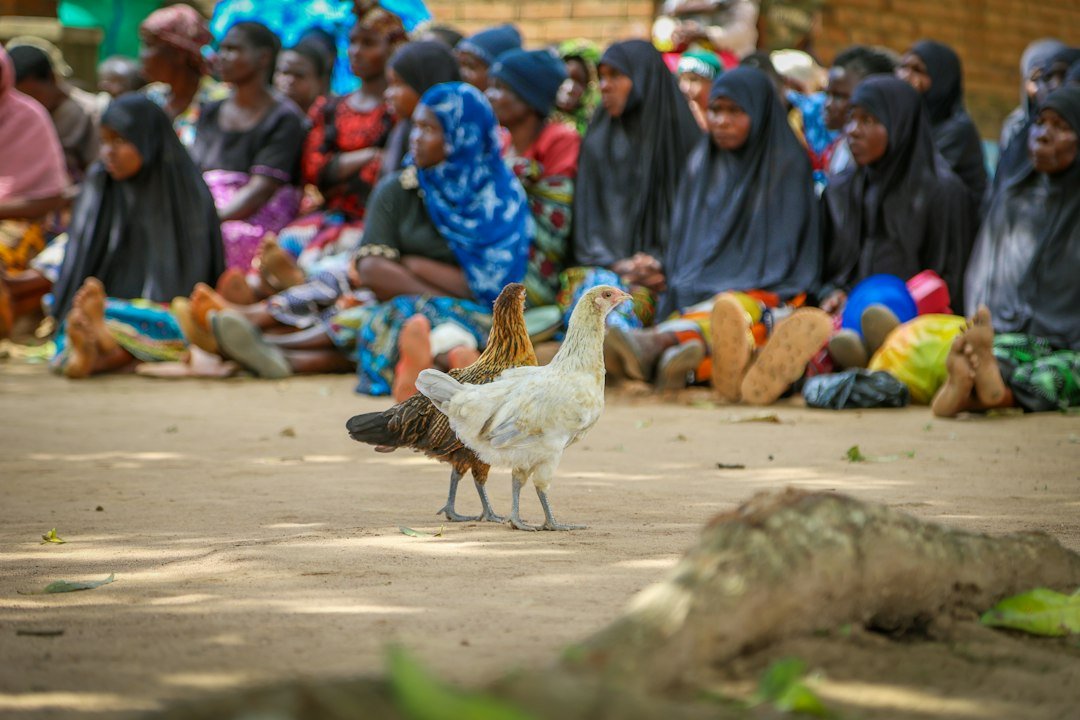
Local poultry meat covers only about 0.4% of annual demand in the Republic of Congo. The rest arrives as imports from the United States, Brazil, Turkey and Poland. The World Bank has committed $60m, about £49m, to change that balance, according to Poultry Bulletin reporting published by African Farming on 27 October 2026.
Congo’s table-egg production fares better, meeting roughly 37% of domestic demand. But poultry and fish remain the country’s two largest food import categories by value. Imported frozen, mechanically deboned dark meat can land in Congo for under $1,000 a tonne, the report said, often less than half the cost of producing the same cut locally. Poultry imports were worth about $222m in 2024, a figure officials want to see fall as the new programme takes effect.
Where the money goes
The World Bank package breaks down into six components. Some $23m will support feed crops, commercial feed processing and feed-manufacturing businesses, the single largest allocation in the plan. A further $12m covers infrastructure in eight protected agricultural zones, including power, cold chains, processing facilities and digital connectivity, the basic utilities that commercial poultry operations depend on to function reliably.

Policy and regulatory reform, covering breeding-stock imports, hatchery licensing, cooperatives and environmental compliance, receives $9m. Another $5m targets access to finance, agricultural insurance and digitising poultry and aquaculture value chains. A further $3m funds climate-suited breeds and parent-stock access for private hatcheries, while a final $2m goes toward training and upgrading four agricultural stations into reference centres for the wider sector.
A regional pattern
Congo’s gap mirrors a wider tension across African poultry markets, where several governments are now trying to close the distance between cheap imports and costly local production. South Africa, by contrast, has an established industry but is importing more chicken than in recent years. Shipments rose steadily through the first seven months of 2026, and offal imports reached a record 103,000 tonnes in 2025, up from 43,000 tonnes in 2017, according to the South African Poultry Association.
That contrast illustrates the trade-off facing poultry-dependent economies across the continent. Importing is often cheaper in the short term, especially when European bird-flu outbreaks or currency swings disrupt supply chains elsewhere. But it leaves domestic producers exposed and does little to build processing jobs at home. Congo’s plan leans explicitly toward the second path, betting that cheaper feed and better infrastructure can narrow the cost gap that currently favours imports over local production.
The scale of the commitment is modest next to the country’s $222m annual import bill. The published breakdown accounts for $54m of the $60m total, leaving $6m unexplained in the public summary released so far. Even so, officials involved in similar World Bank-backed programmes elsewhere in Africa say feed costs, not breeding stock, are usually the binding constraint on local poultry expansion. That is part of why the feed-crop allocation is the largest single line item in Congo’s plan.
Whether the investment narrows Congo’s reliance on imported chicken will depend partly on factors outside the programme’s control. Global feed-grain prices and the pace at which European exporters recover from bird-flu restrictions will both weigh heavily on the outcome.
Congo’s agriculture ministry has framed the programme as part of a broader push for food sovereignty, a term that has gained currency across Central African policy circles in recent years. Officials elsewhere in the region, including in neighbouring Gabon and Cameroon, face similar import dependence for poultry and have watched World Bank-backed agribusiness lending closely for lessons that might transfer to their own markets.



