
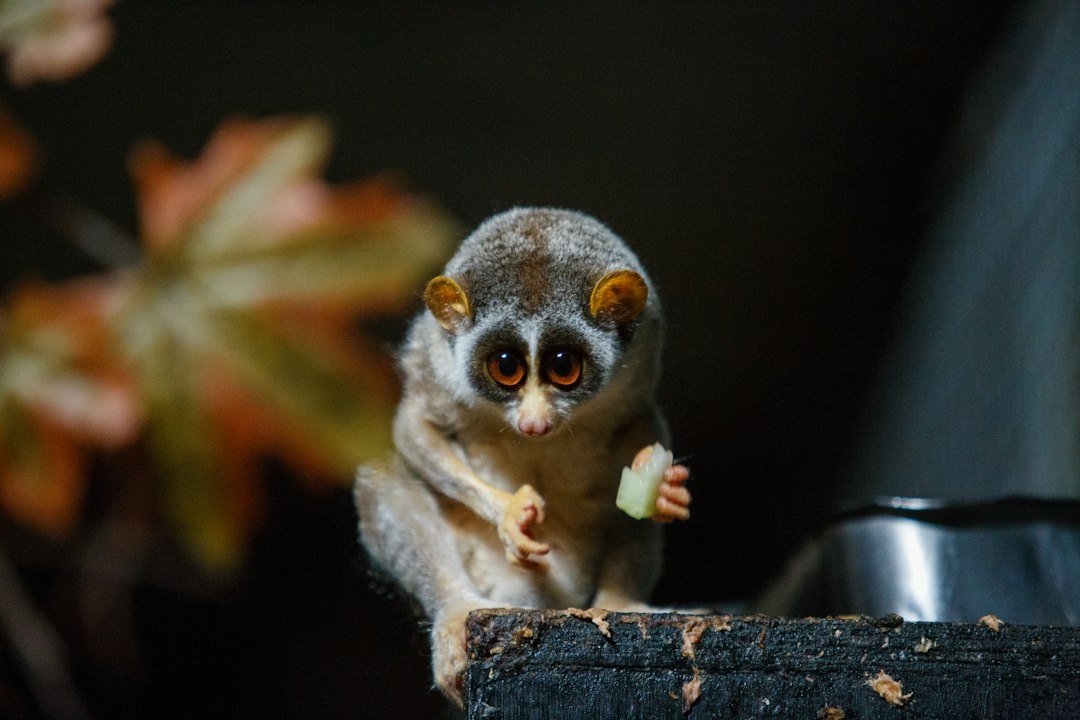
The Bangka slow loris, long feared extinct and the only primate known to produce venom, has been confirmed alive on Bangka Island off Sumatra. Researchers reported the finding in coverage published on 20 and 21 October 2026. Camera traps and night surveys recorded several individuals in forest fragments that had not been surveyed for the species in years.
The slow loris family is unusual among mammals for carrying a venom gland near the elbow, which the animals combine with saliva and deliver through a bite. Scientists believe the toxin evolved to deter predators and to settle disputes with other lorises. The animals are otherwise slow-moving and largely defenceless, which makes the venom an unusual evolutionary trade-off for a primate.
Why the rediscovery matters
Bangka Island has lost large areas of forest to tin mining and oil palm expansion over recent decades. Those pressures had led conservationists to assume the subspecies had been pushed to extinction entirely. Confirming its survival gives researchers a narrow window to study a population that may be smaller and more fragmented than those of related loris species elsewhere in Sumatra and Borneo.

The find lands weeks after the WWF’s Living Planet Report 2026, released on 7 October, found that monitored wildlife populations in the Asia-Pacific region have fallen 49% on average since 1970. That is a smaller decline than Latin America’s 95% or Africa’s 80%, but still a steep loss by any measure. Researchers involved in the loris survey said the rediscovery shows that extinction assumptions, even when based on genuine survey gaps, can run ahead of what actually remains in isolated habitat patches.
Conservation status still fragile
The Bangka slow loris remains listed as Critically Endangered. Researchers caution that a handful of confirmed sightings does not mean the population is secure. All slow loris species face pressure from the illegal wildlife trade, where their large eyes and apparent docility make them popular, if illegally kept, pets. Traders often remove their teeth to prevent bites, a mutilation that leaves captured animals unable to return to the wild even if rescued later.
Indonesian conservation authorities have not yet announced new protected status for the forest fragments where the animals were recorded. Researchers involved in the survey say they are pressing for stronger enforcement against further land clearing in the area regardless. Any formal protection would need to balance habitat preservation against continued tin-mining interests on an island where the industry remains economically significant to local livelihoods.
The rediscovery adds the Bangka slow loris to a short list of species recently reclassified away from the brink. The green sea turtle moved from Endangered to Least Concern on the IUCN Red List in October 2025, and wild tiger numbers have grown from about 3,200 in 2010 to roughly 5,700 by 2025. Conservationists say these cases show recovery is possible when habitat and enforcement hold, even as the broader global trend for monitored wildlife remains one of steep decline overall.
Researchers plan further surveys across Bangka Island through the coming dry season. The goal is to establish how many lorises survive and where the remaining forest fragments that support them are most exposed to clearance in the near term.
Indonesian wildlife groups say the find also strengthens the case for treating Bangka’s remaining forest patches as a single connected conservation priority rather than a collection of isolated fragments. Without that broader framing, researchers warn, individual patches too small to support a breeding population on their own could still be cleared piecemeal even as the headline species survives elsewhere on the island.


