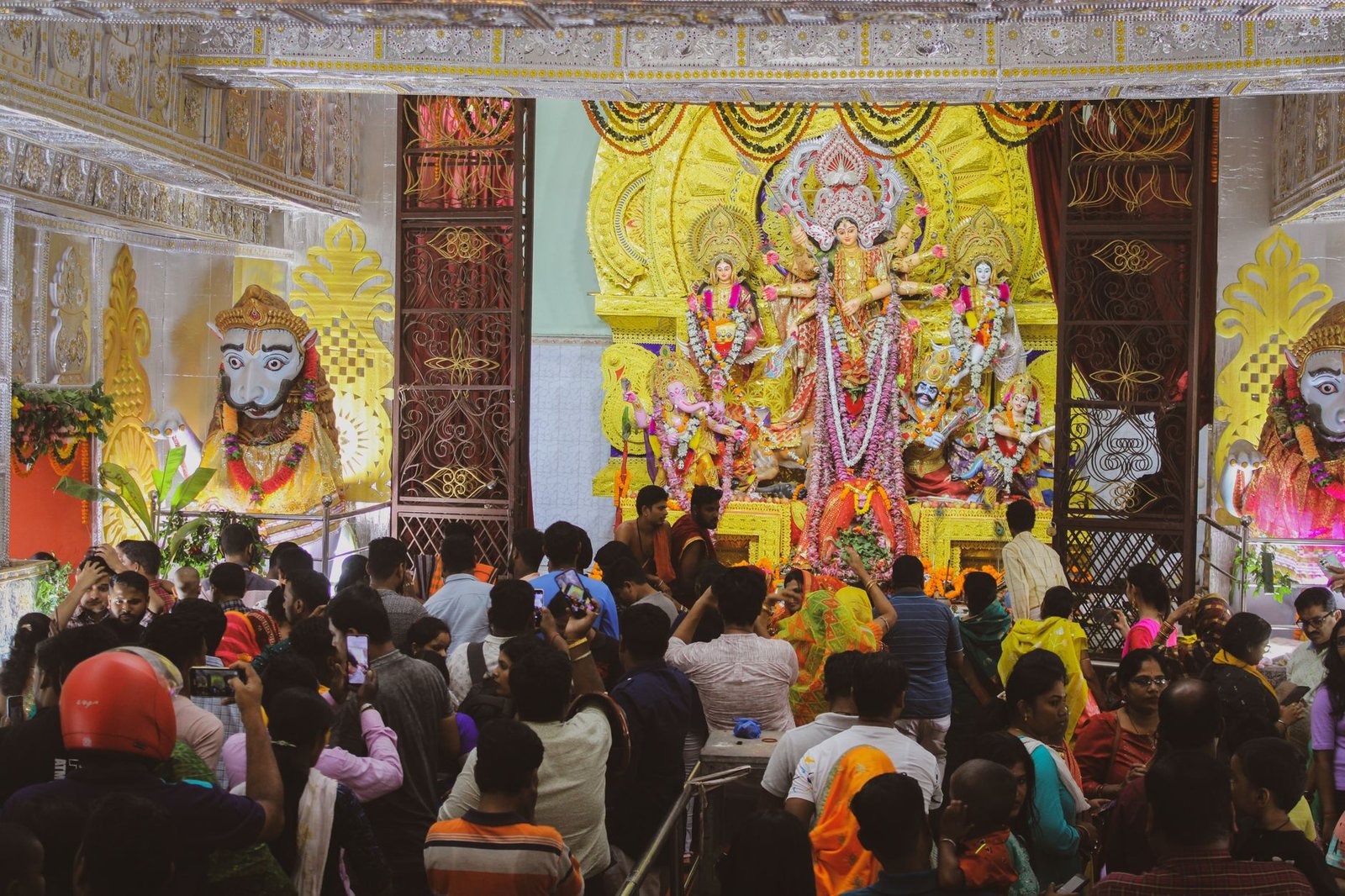
A push by Hindu-right figures to bar non-vegetarian food inside Durga Puja pandal premises has collided with West Bengal’s tradition of festive fish-eating during the festival. The clash has reignited a public debate over whether there is a single, pan-Indian definition of Hindu food. The campaign, led by preacher Dhirendra Krishna Shastri and the Vishva Hindu Parishad (VHP), began in late August 2026. It drew sustained pushback through September and into this month’s Puja season.
In Bengali households, ilish (hilsa) and other fish dishes sit at the centre of Durga Puja’s Dashami feast, alongside the goddess’s bhog, or ritual food offering. In many Bengali traditions, that bhog includes fish as a sanctified part of the celebration, not a departure from it. Food writers and commentators have pointed out that the campaign’s vegetarian-only framing reflects a north Indian devotional norm. That norm does not match how fish-eating Bengali Hindus have historically practised their faith across generations.
Even West Bengal’s own BJP state leadership has declined to back a vegetarian mandate for Puja pandals, according to commentary published this month. Senior state party figures have avoided telling Bengalis publicly what to eat during the festival. That reluctance has been read locally as an acknowledgement of how deeply fish-eating is woven into Bengali religious practice, and of the political risk in dictating regional custom from outside the state.

A six-week-old argument resurfaces each Puja season
The dispute traces to calls in late August for puja organisers nationally to keep pandals strictly vegetarian, a position some campaigners framed as a matter of ritual purity. Bengali cultural commentators responded by arguing there is no single “Hindu plate.” They point to wide variation in devotional food practice across India’s regions, castes and sects. Strictly vegetarian temple traditions in parts of the south sit alongside fish- and meat-inclusive worship common in Bengal, Odisha and parts of the northeast.
The argument has resurfaced prominently as this year’s Puja season reaches its climax. Commentary pieces published in the first week of October have revisited the controversy alongside coverage of the festival’s food traditions. Several pieces frame the recurring clash as evidence of a broader tension. On one side sits a centralising definition of Hindu identity; on the other, regional devotional practices that predate that definition by centuries of local custom.
Food as the proxy for a larger identity question
Scholars of Bengali culture say fish occupies a status in regional Hindu practice closer to a sacrament than a dietary choice. It is cooked in forms specific to ritual occasions and offered to the goddess, not treated as a secular indulgence set apart from worship. That status is exactly what the vegetarian-only campaign challenges. Food becomes the proxy through which a larger argument about religious authority and regional autonomy plays out each festival season.
No pandal organising body in Kolkata has imposed a vegetarian mandate this year. Fish bhog has continued as usual at major pujas across the city, according to commentary tracking this season’s celebrations. Whether the debate recedes once Puja ends, as it has in previous years, or hardens into a standing campaign ahead of next year’s festival, remains an open question among Bengali commentators.
Younger Bengali food writers have used the controversy to document fish bhog recipes and their ritual significance in more detail than in past years, partly as a direct response to the vegetarian-only campaign. That documentation, several note, has itself become a quiet form of cultural assertion, recording a practice precisely at the moment it is being publicly questioned from outside the region.
Similar questions about who gets to define ritual food practice are playing out elsewhere in the region this month, including in Indonesia’s Kei Islands, where a communal sea-harvest ritual tied to a rare tide is being promoted as living heritage rather than staged performance.