
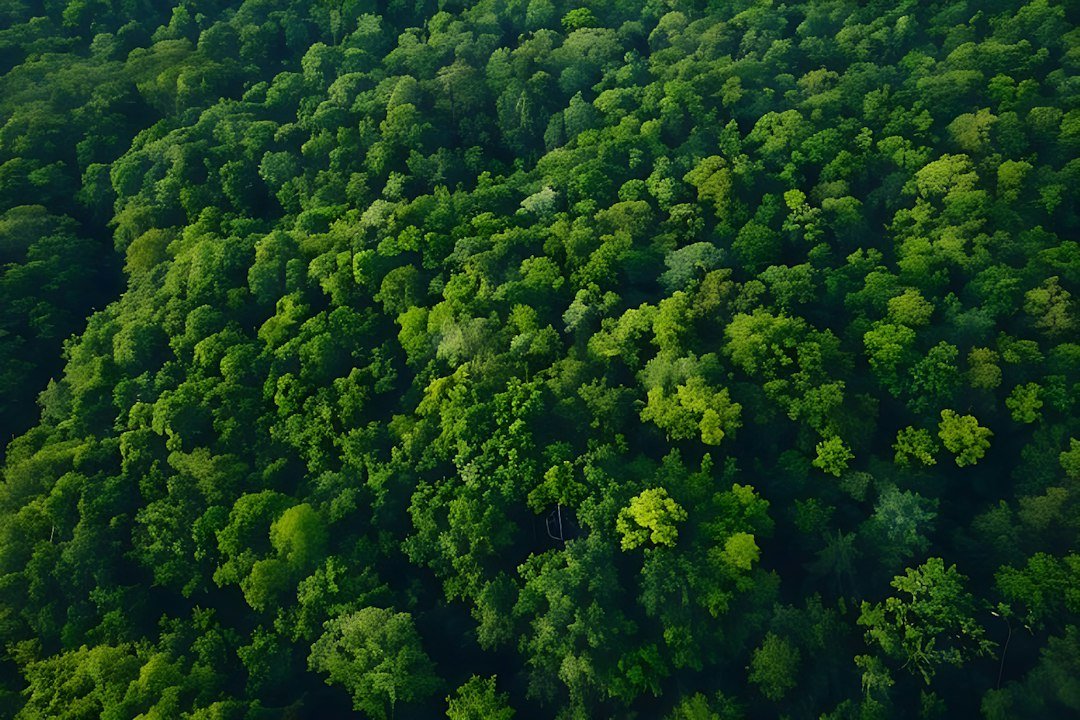
Global deforestation fell 15 per cent between 2024 and 2025, to about 7 million hectares, according to the Forest Declaration Assessment 2026, though the report concludes the world remains well off track to meet its 2030 target of ending forest loss entirely.
The assessment, compiled by Climate Focus and a coalition of research partners, tracks progress against pledges made at COP26 in Glasgow to halt and reverse forest loss by 2030. Annual losses had exceeded 8 million hectares in every year since 2021, meaning the 2025 decline marks the first meaningful improvement in five years. Even so, the world has accumulated a shortfall of 10.7 million hectares of deforestation reduction since 2021 that it has not made up.
The report’s regional breakdown complicates any sense of broad progress. Deforestation in tropical Latin America and the Caribbean fell to 33 per cent below its 2018-2020 baseline, a genuine improvement. Tropical Africa’s deforestation, by contrast, kept rising and is now comparable in scale to Latin America and the Caribbean for the first time, a shift the report describes as leaving the continent well off track. Tropical Asia’s deforestation stayed broadly unchanged, with the report noting that its underlying commercial drivers remain unresolved.

Commodity-driven deforestation, land cleared for crops such as soy and palm oil or for cattle pasture, fell to 6.01 million hectares in 2025 from a 2018-2020 baseline of 7.24 million hectares. The report says that pace is still far too slow to eliminate commodity-linked forest loss by 2030, even as it welcomes the direction of travel.
Money and land rights lag the rhetoric
Forestry received about $6 billion in climate finance in 2024, just 0.3 per cent of an estimated $2 trillion in total global climate finance that year. Public funders supplied $5.26 billion of that and private sources $750 million, meaning public money outweighed private investment roughly seven to one in a sector many investors consider too risky without government backing. By contrast, governments spent an average of $410 billion a year on potentially harmful agricultural subsidies between 2022 and 2024, and $921 billion on fossil fuel subsidies in 2024 alone, sums that dwarf the finance flowing to forest protection.
Indigenous Peoples and local communities hold customary rights over an estimated 5.5 billion hectares of land globally, the report notes, but only about 1 billion hectares of that carries clear legal recognition. An Intergovernmental Land Tenure Commitment now aims to recognise or strengthen rights over 160 million hectares, a fraction of the customary total but, researchers say, a meaningful step if it holds.
Corporate pledges are weakening, not strengthening
Among companies assessed under the Forest 500 initiative, only 29 per cent had comprehensive zero-deforestation commitments covering every commodity they handle, and 14 major companies weakened or withdrew their commitments altogether in 2025. Against that, the number of companies adopting science-based targets for forests, land and agriculture under the SBTi FLAG framework doubled over the same period, reaching 461 by June 2026, suggesting the corporate picture is splitting between firms tightening their commitments and others retreating from them.
Protected areas now cover 17.33 per cent of the world’s land and inland waters, the report finds, still well short of the 30 per cent conservation target for 2030 that negotiators are discussing this week at COP17 in Yerevan. Civil society monitors cited in the assessment warn that shrinking civic freedoms in many countries are making it harder for communities and watchdog groups to hold governments and companies to their forest commitments at exactly the moment enforcement needs to tighten. One recent pilot in Peru’s Amazon suggests a different lever may help close that gap: a basic-income scheme for Indigenous households there cut both hunger and migration-driven forest clearing, pointing to household income, not just enforcement, as a tool against deforestation.



