
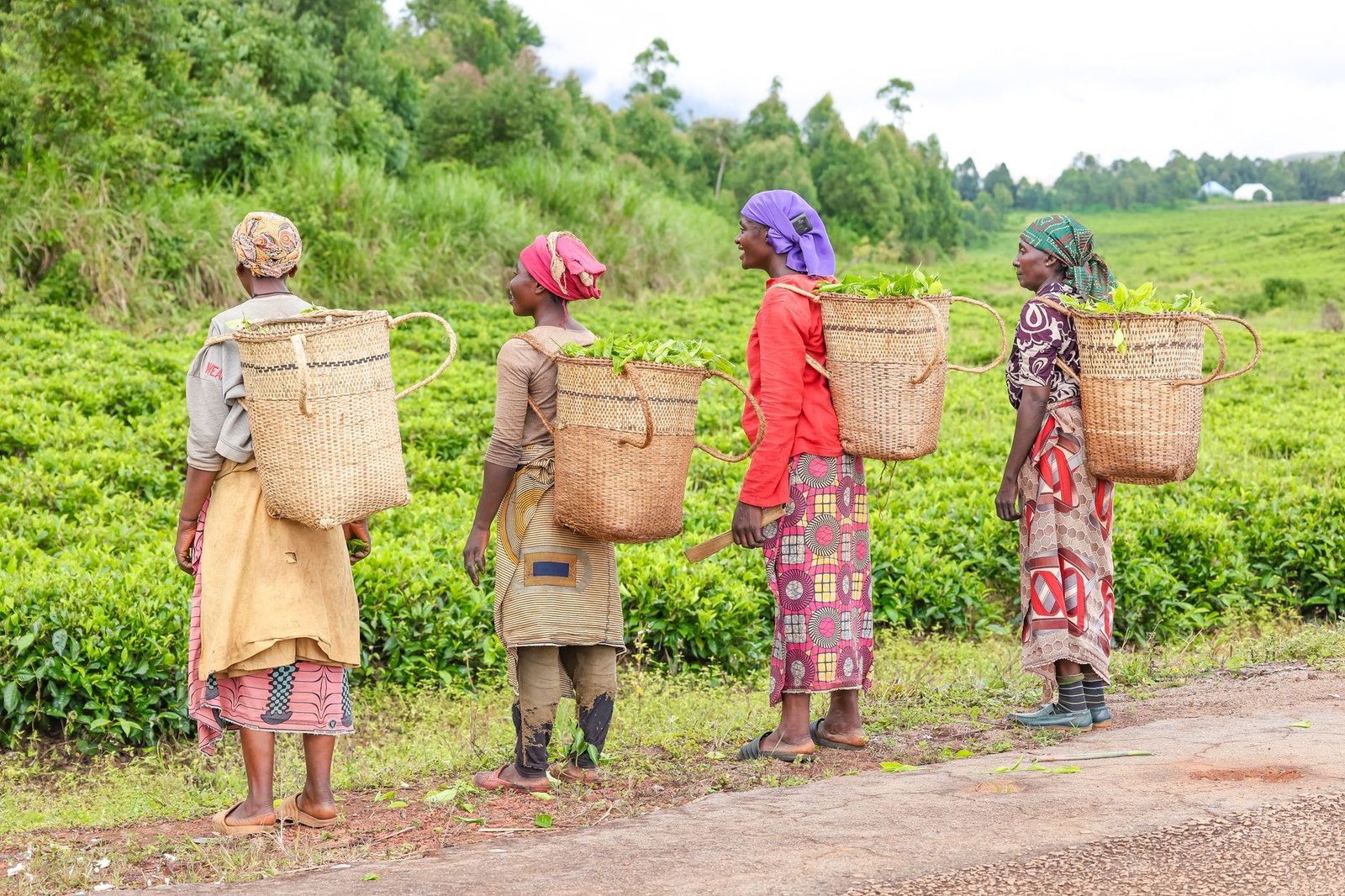
Women farmers in Makueni County, Kenya, raised their adoption of improved seed varieties from 42% to more than 90% after joining a pilot programme pairing new seed with water-harvesting techniques and household dialogue sessions, according to research by the Alliance of Bioversity International and CIAT, part of CGIAR.
The pilots, run across Makueni and Machakos counties in southeastern Kenya, tested what researchers call gender-transformative socio-technical innovation bundles. Rather than distributing drought-tolerant seed on its own, the programme paired it with simple water-harvesting methods, such as small basins and terraces that capture scarce rainfall, and structured “family dialogue” sessions, where households discussed how farming decisions and income get shared between men and women. The combination was designed to tackle both the technical and social barriers that have historically kept women from benefiting fully from new farm technology.
Dr Eileen Bogweh Nchanji, a scientist with the Alliance of Bioversity International and CIAT based in Nairobi, led the research behind the approach. “Women rarely fail simply because good seeds do not exist,” she said. “They fail because systems are disconnected.” Crop productivity rose by up to 80% in some communities, while yields climbed 38-49% where women had equal access to climate forecasts and farming inputs, the research found. Those figures place Makueni among the more striking examples of what happens when seed distribution is paired with changes inside the household rather than treated as a standalone fix.

Why the bundle worked
Single interventions such as handing out better seed have often failed to shift outcomes for women farmers, Nchanji argues, because seed access alone does not address who controls land, money or information within a household. “Women are not ‘afraid of change,'” she said. “They simply face higher risks if an investment fails.” The family dialogue sessions were designed to ease that risk by giving women more say over how a farm’s resources get used, from which crop to plant to how any profit gets spent once the harvest is sold.
Women make up between 40% and 50% of the agricultural workforce across sub-Saharan Africa, yet have long faced unequal access to land, credit, technology and markets, according to the CGIAR GENDER Impact Platform. Nchanji frames the results from women farmers in Makueni as evidence that closing those gaps pays off well beyond the farm gate. “Women are the backbone of African agriculture,” she said. “When women earn money and have a voice, they invest it right back into food, education, and healthcare.” That reinvestment pattern is part of why researchers see household-level change as central to any lasting improvement in seed adoption, rather than a side effect of it.
El Niño risk ahead
The findings arrive as Kenya braces for a strong El Niño weather pattern forecast between October and December 2026, expected to bring above-average rainfall after recent dry seasons. In a worst-case scenario, forecasters have warned that flooding could displace as many as 500,000 people. Programmes that strengthen women’s role in household farm decisions could matter more than usual as families face another season of climate volatility, since decisions about when to plant, harvest or move livestock often fall disproportionately on women in smallholder households.
The Makueni findings sit alongside other seed and climate-finance developments across the region this month. Ghana has just launched its own national seed roadmap to widen smallholder access to improved planting material, while Equity Bank and the International Fund for Agricultural Development have unveiled a climate finance mechanism worth $200 million (roughly £158 million, at an exchange rate of $1 to £0.79) for East African farmers. Taken together, the three stories point to a broader shift in how governments, banks and researchers are approaching smallholder resilience across the region.