
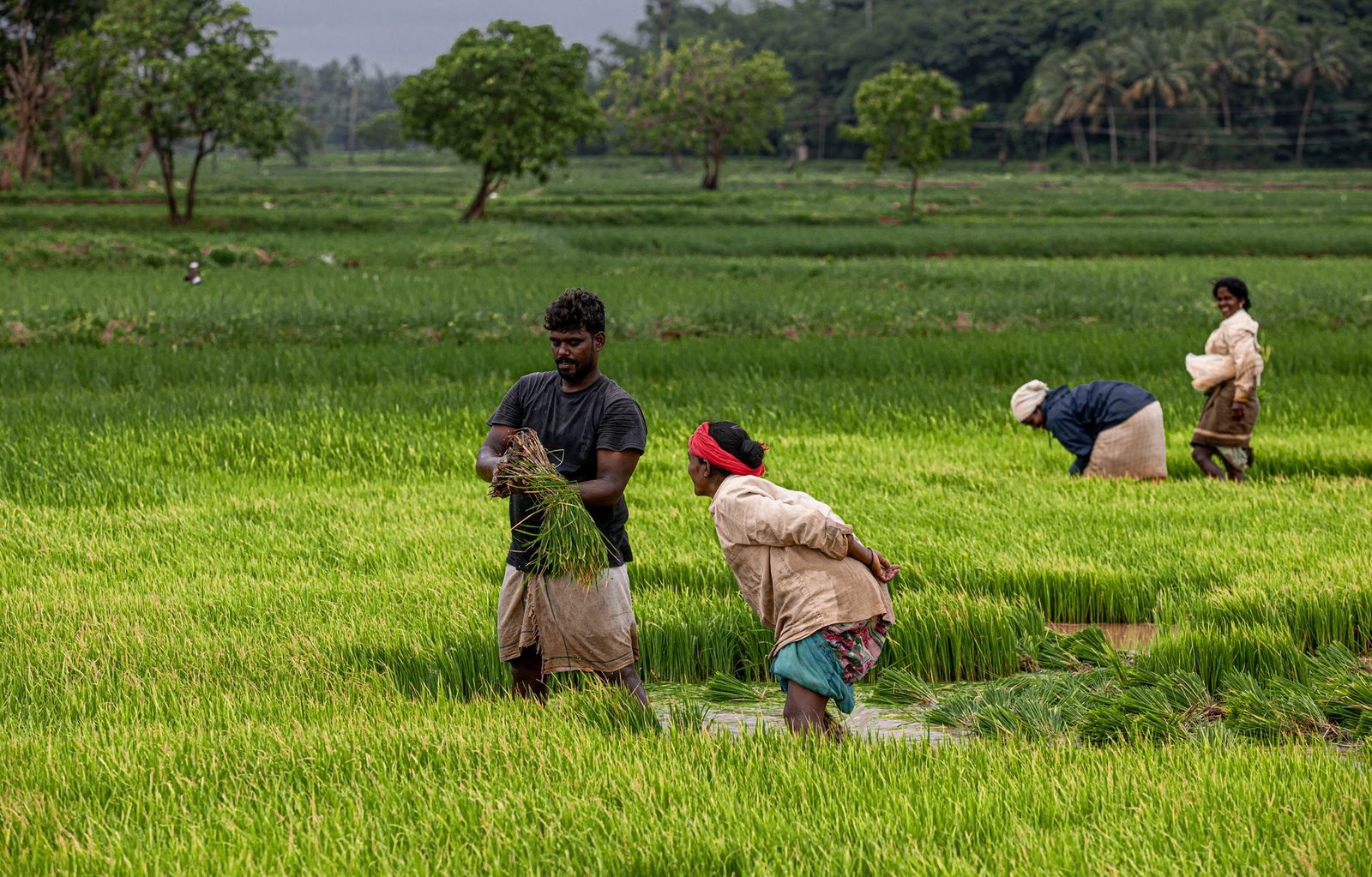
India’s rice production decline this year is set to be the steepest in nearly two decades, after a weak and erratic monsoon undermined planting across the country’s main growing states. Industry estimates put the shortfall at roughly ten million tonnes, a fall of about 6.5 percent from last year’s record crop of around 154 million tonnes. India accounts for close to 28 percent of the world’s rice ending stocks and remains the largest exporter, supplying markets across Africa, the Middle East and South Asia, so a smaller harvest carries consequences well beyond its own borders. Global rice production forecasts have already been trimmed to about 533.85 million tonnes, down from 537.27 million tonnes projected the previous month, largely on the back of India’s weaker outlook.
The monsoon arrived late in June and delivered around 35 percent less rain than normal in its opening month, according to the agricultural news service DTN. Rainfall since the season began has run well below average nationally, with some key rice-growing states recording deficits reported by UkrAgroConsult as high as 42 percent. States including Andhra Pradesh, Uttar Pradesh and Tamil Nadu have seen conditions rated much below normal, compounded by daytime temperatures pushing into the low forties Celsius that accelerated soil moisture loss even where seasonal totals looked closer to average.
UkrAgroConsult estimates summer-sown rice covered 42.68 million hectares as of 11 September, down nearly 4 percent on the same point last year, and summer sowing normally accounts for more than four-fifths of India’s total rice output. DTN notes that even in areas where cumulative rainfall appeared normal, prolonged dry spells followed by sudden heavy downpours left crops stressed despite healthy-looking totals. Millet, cotton, sugar cane, soybeans, peanuts and pulses have faced similar strain, though rice remains the most closely watched crop given its scale.

Prices climb even as stocks stay high
Domestic rice prices have already risen, and export prices have reached their highest level in more than a year, making Indian rice costlier just as prices from other big exporters also climb. Retail inflation reached 4.45 percent in July, with food inflation running higher still at 5.52 percent, and food accounts for more than a third of India’s consumer price index. Government rice stocks stood at a record 59.6 million tonnes on 1 September, according to UkrAgroConsult, well above official targets, which should limit the risk of acute shortages even as open-market prices firm.
Below-normal reservoir levels are also expected to reduce the winter rice-growing area, extending the pressure into next year’s planting season. A smaller harvest threatens farm incomes and rural employment in states where rice cultivation supports large numbers of smallholders. Weather agencies expect September rainfall to stay below average alongside above-average temperatures, offering little relief before the kharif season closes. Analysts tracking the sector describe the shortfall as the largest in nearly 20 years and the first outright annual production decline in a decade.
Global rice markets watch India closely
India’s rice production decline is now feeding directly into that tighter global forecast, narrowing the cushion in a market that depends heavily on Indian surplus. Importing nations in West Africa and the Gulf, which rely on Indian shipments for affordable staple grain, face the prospect of firmer prices into next year. Traders expect the record government stockpile to prevent a repeat of the sharp export restrictions India imposed during past shortfalls, but persistent rainfall deficits through the rest of the season will determine how much further global rice supplies tighten, and how quickly domestic prices settle once the harvest is in.