
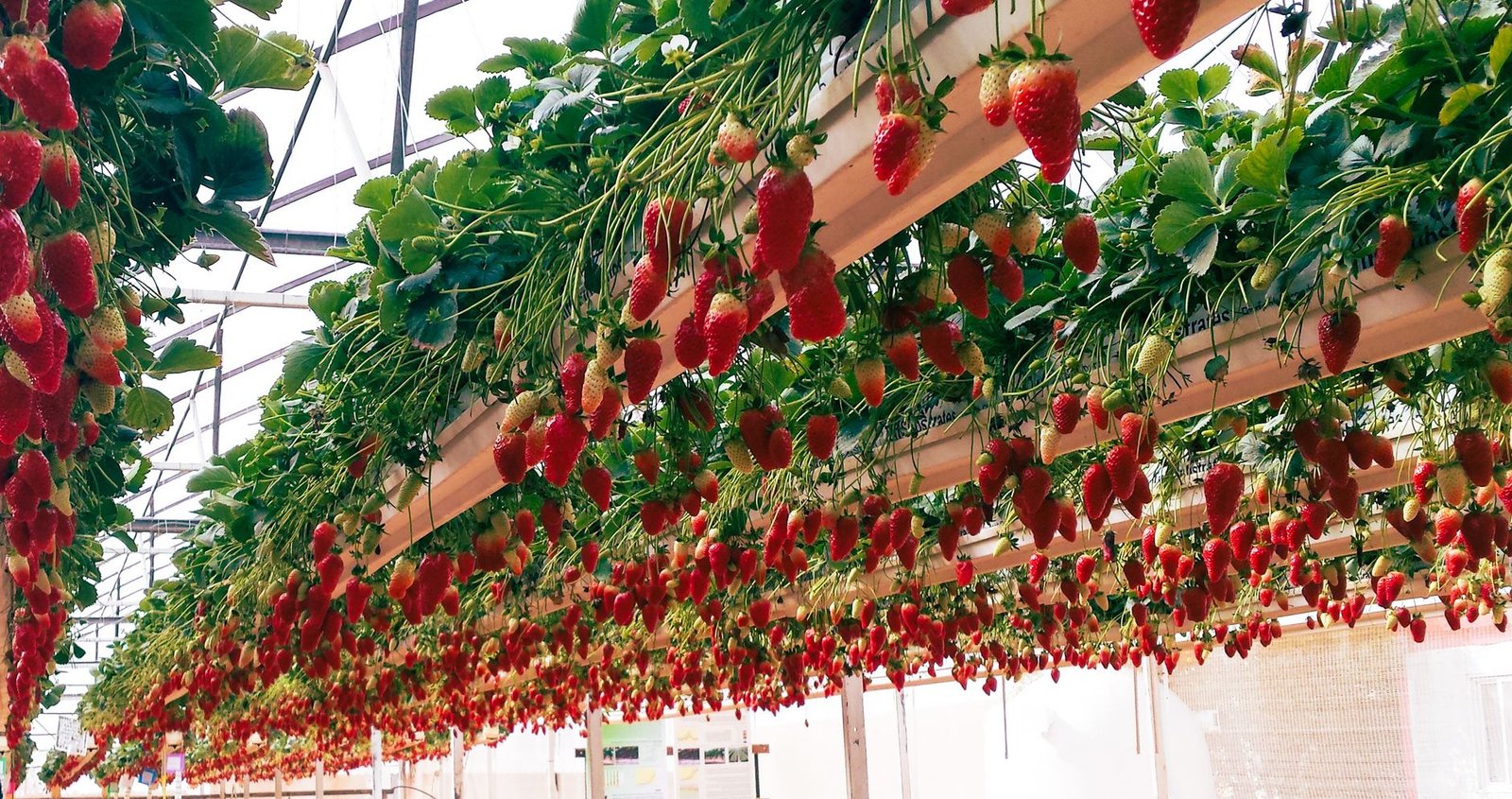
The United Arab Emirates is accelerating investment in vertical farming to cut food imports, as the government works to reduce reliance on produce shipped in from abroad. Almost 90 per cent of the food consumed in the UAE is imported, leaving supply chains exposed to shipping delays, currency swings and climate shocks in other countries. The country’s National Food Security Strategy 2051 has made domestic production, modern farming technology and public-private partnerships central to closing that gap.
Dubai-based Greeneration illustrates the shift under way. Founder Roman Ulyanov and other investors have put five million dollars into a climate-controlled facility midway between Dubai and Abu Dhabi. It grows more than 70 varieties of edible flowers, microgreens, specialty herbs and rare leaves. The operation now supplies over 350 restaurants and hotels across the UAE, including properties at Atlantis and Jumeirah, and grew 15 to 20 per cent month-on-month in its early years. Ulyanov argues that local production improves the consistency and quality of produce reaching kitchens.
In Al Ain, Speedex Group’s UNS Vertical Farms is scaling up on a larger footprint, with a 10,000 square metre facility expected to produce 150,000 kilograms of tomatoes a year. Director Mehlam Murtaza has said food security today depends on more than simple availability, pointing to quality and consistency as equally important measures. Both ventures rely on hydroponic systems, AI-driven climate management and networked sensors that adjust irrigation, temperature and lighting automatically. The approach cuts water use by up to 90 per cent compared with conventional farming and moves produce from harvest to shelf within 24 to 48 hours.

Packaging deal signals wider ambitions
The push extends beyond growing produce. At the Make it in the Emirates event earlier this year, Al Ain Farms Group and petrochemicals company Borouge announced a packaging partnership under which Borouge will supply 3,500 tonnes of high-density polyethylene annually. The deal, struck under Al Ain Farms Group chief executive Hassan Safi, forms part of a wider effort to strengthen the domestic food supply chain beyond the farm gate.
Vertical farming’s advocates argue that its efficiency is what makes it viable in a desert climate. Systems that recycle water and control every growing variable indoors allow crops to be produced year-round, without depending on scarce arable land or seasonal rainfall. That is a significant advantage in a country where conventional agriculture is limited by heat and water scarcity. Because the growing environment is sealed and monitored continuously, operators can also cut the pesticide use and crop losses that come with exposure to open-air pests and unpredictable weather.
Government strategy sets long-term targets
The National Food Security Strategy 2051 sets out a longer-term framework prioritising research, modern farming technology and supply chain resilience alongside public-private partnerships. Officials have positioned vertical farming to cut food imports as one of several tools available to policymakers, aimed at reducing the country’s vulnerability to global food price shocks and disruptions to international shipping routes.
For a country that imports almost all its food, even incremental gains in local production carry strategic weight. Vertical farms cannot yet replace bulk imports of staples such as rice and wheat. Operators report demand for locally grown herbs, leafy greens and tomatoes rising quickly enough to justify further expansion. Continued government backing suggests the sector will keep growing over the next several years, gradually reshaping how the Gulf state feeds itself.