
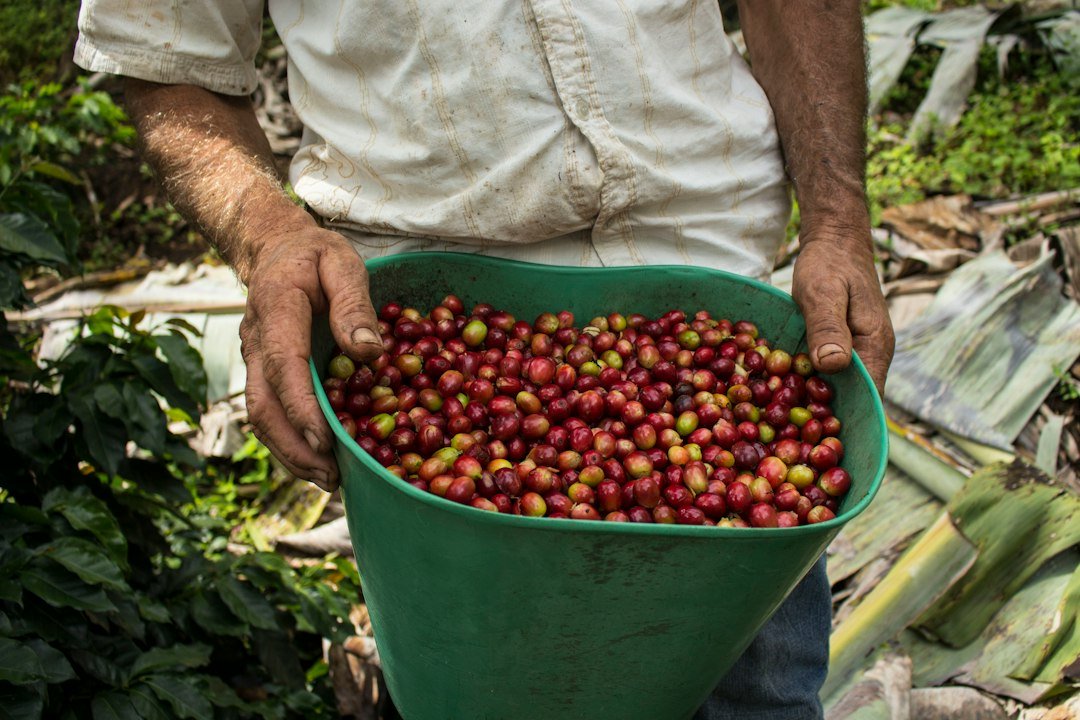
Costa Rica’s coffee growers are losing about 30,000 colones, roughly £44 or $59, per fanega of coffee. The cause is a strengthening currency, not weaker demand. Fernando Naranjo, president of the board of the Costa Rican Coffee Institute (ICAFE), put the figure to The Tico Times this week. Costa Rica’s central bank set its reference rate at 453 to 458 colones per US dollar on 7 October. In the 2021-22 harvest, the rate stood near 650.
Naranjo has already cut staff on his own farms in Los Santos. He has shifted some jobs to machinery instead. “It has been more catastrophic for us, the exchange rate, than Covid,” he said. ICAFE data already showed growers losing 19,306 colones per fanega between the 2021-22 and 2022-23 harvests. That shift affected 26,725 producers.
The squeeze reaches beyond coffee. Óscar Arias Moreira leads the National Chamber of Agriculture and Agroindustry. He says the strong colón has driven closures and falling output across export crops generally. His chamber estimates the sector has shed about 60,000 jobs since 2022. The government has not confirmed that figure. Official statistics tell a narrower but still clear story. The National Institute of Statistics and Census recorded 11,901 fewer agricultural jobs in June to August 2026. The comparison is against the same months of 2022.

Dairy and bananas feel it too
Costa Rica’s agriculture chamber says roughly 200 dairy businesses have closed. More than 1,200 hectares of banana production have stopped entirely. A cocoa market now facing its own climate-driven volatility shows a similar pattern elsewhere in the tropics. Smallholders are absorbing cost pressures that start far from their farms, whether in currency markets or in shifting rainfall.
Coffee still needs seasonal labour that a stronger currency cannot replace easily. About 14,400 migrant workers, mostly from Nicaragua and Panama, arrived to pick coffee during the 2025-26 harvest. ICAFE has already warned of a picker shortage, as younger Costa Ricans move away from farm work. The currency crisis is likely to speed up that shift rather than slow it.
No quick fix for the currency
The colón’s rise has structural roots. Costa Rica’s central bank has intervened to slow the appreciation. Exporters say the measures have not offset years of accumulated losses. Growers who locked in costs when a dollar bought nearly 650 colones are now selling into a market where it buys a third less. International coffee prices, meanwhile, have stayed broadly firm, which only sharpens the contrast.
Small tropical economies face similar exposure elsewhere. Caribbean exporters face a related mix of shipping costs and currency risk. The region’s trade chief warned of this just days ago. Both cases show how exposed smallholder agriculture remains to forces well beyond the farm gate, from Costa Rica’s highlands to the wider Caribbean basin.
ICAFE and the farming chambers are pressing the government for relief, including targeted credit lines and faster payouts under existing support schemes. No new package had been announced by early October. Growers quoted in local media say they need exchange-rate certainty more than one-off aid. Fertiliser and transport costs are priced in dollars. Coffee sales increasingly are not. Until the colón weakens or wages adjust, Costa Rica’s highland farms look set to keep shedding the labour that has defined their harvests for generations.