
THE TRUTH ABOUT HONEY: PART 1
When Honey Crystallizes,
So Does the Truth
Editor’s Note: When a panicked call came from a food scientist about his “spoiled” honey, it revealed a crisis of truth in our food industry. This two-part investigation begins with a single jar of crystallized honey and expands into an exposé of how big brands have trained us to mistrust nature’s processes. In Part 1, we explore the science behind crystallization and what it means for honest honey producers. Part 2 will reveal how major honey brands have shaped consumer perceptions, and what it takes to bring truth back to our food.

It started with a frantic call.
“Sir, it’s solidified…”
“Sir… jam gaya hai. aisa honey kaun kharidega?” (“Sir, it’s solidified. Who will buy this honey?”)
He blurted on the phone, panic dripping from every word. This wasn’t a random customer; this was my client – a food science post-grad who insisted on raw, unfiltered honey for his new brand.
We delivered exactly that: NMR-tested, unheated honey, moisture reduced gently via dehumidification, and not a hint of sugar syrup added. It was golden, thick, and beautiful, the kind of honey that sticks to your spoon with integrity. Yet two weeks later, here he was, voice shaking, as if our honey had betrayed him by turning into sugar.
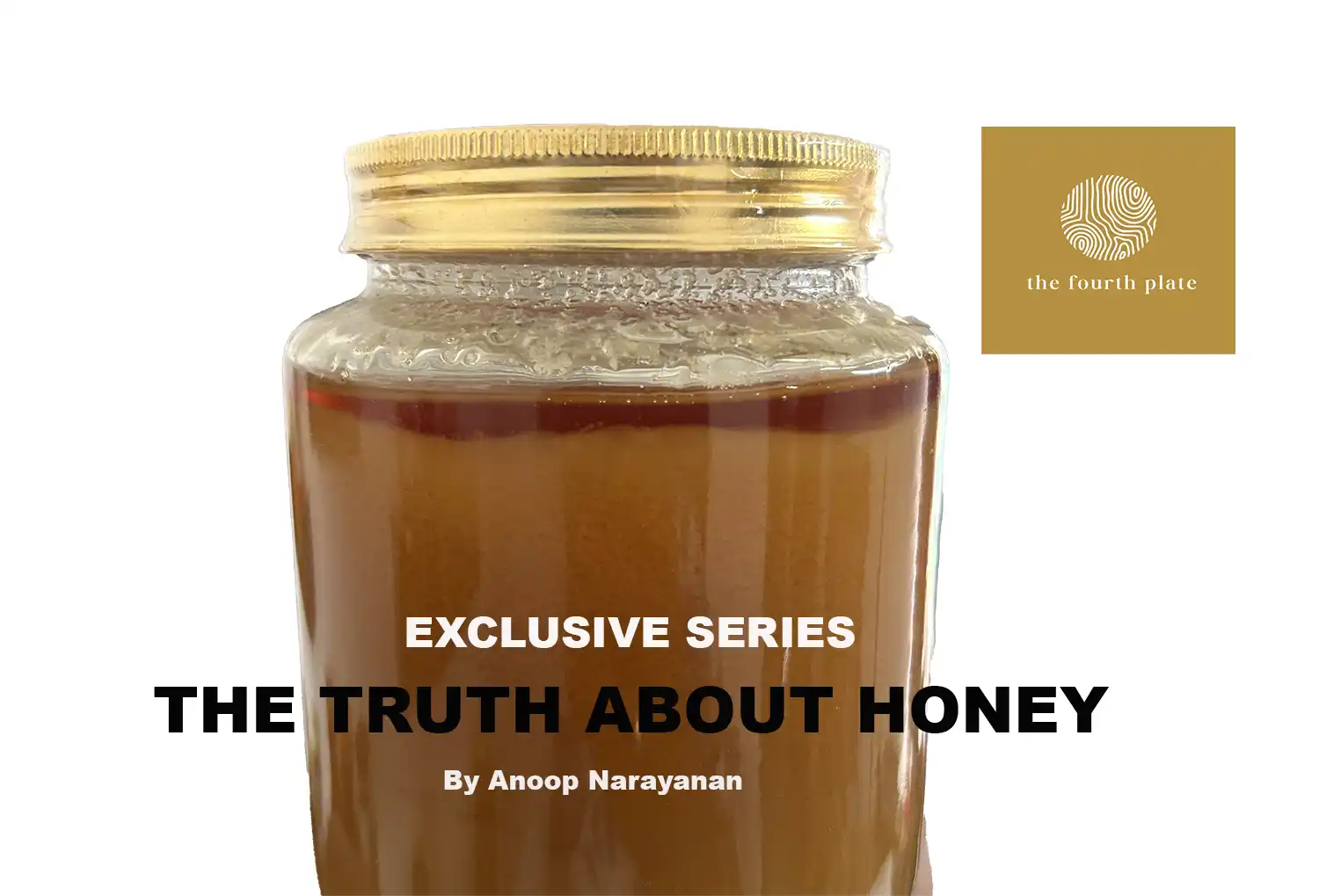
I took a breath and peered at the jar in my hand. Tiny crystals had begun to dance through the honey, forming a grainy haze. To me, it was a badge of honor – proof that this honey was truly raw and unadulterated. But to him, it was a disaster. “We’ll look fake, like cheap stuff solidifying on the shelf,” he said, imagining customers scoffing at his crystallized honey.
In that moment, science didn’t matter; perception did. This founder had spent years in labs, yet a few sugar crystals sent him spiraling into doubt. That’s when it hit me: Even the most educated entrepreneurs can’t escape the fear of perception. We fear having to explain what’s pure… because the market is so used to processed lies.
So here’s the truth I told him: Crystallization is not a defect. It’s not spoilage, it’s not adulteration. It’s a reflection of nature’s diversity and honesty in a jar. Some honeys crystallize in days, others in months, some hardly at all – it depends on the nectar source and natural sugar ratios. But if you’re selling real honey, you’re not just a seller… you’re a storyteller. And this little crisis was a chance to tell a better story.

The Science We Forget
Let’s step back from the drama and remember the science. Honey crystallizes. Period. In fact, given enough time all pure honey will crystallize naturally. Why? Because honey is a supersaturated sugar solution. It contains more sugar (mainly glucose and fructose) than water can permanently hold in solution.
Over time, the excess sugars look for a way out, binding together into solid crystal form. Glucose, which has lower solubility, is usually the culprit – when its ratio exceeds fructose or the honey cools down, glucose sugar crystallizes out, turning the honey solid or semi-solid. Fructose stays dissolved longer, which is why honeys high in fructose (like acacia or certain floral varieties) stay liquid, whereas those higher in glucose (like mustard or clover honey) crystallize faster.
Temperature plays a big role too: cold storage (anything below about 10°C/50°F) will kickstart crystallization quickly by helping those glucose crystals form. Even the container and a few pollen particles can influence the process by offering nucleation sites for crystals to grow.
But crucially, crystallization is a natural process – not a sign of your honey “going bad.” The Food Safety and Standards Authority of India (FSSAI) itself has busted this myth publicly: honey turning solid is normal, and not evidence of impurity or spoilage.
As per FSSAI standards, honey’s consistency “can be fluid, viscous or partly to entirely crystallized” and still be 100% genuine. In fact, some experts argue that crystallization is a mark of purity.
Adulterated or heavily processed honeys tend to stay syrupy forever; it’s the raw, unheated honeys that granulate over time. One study even stated that “crystallisation of honey is a guarantee that it is pure and natural”. Imagine – the very thing my client was terrified of is actually proof of honesty! And yes, pure honey is safe to eat even when crystallized.
Of course, not every jar will crystallize at the same pace. Floral sources differ – for example, sunflower or mustard honey might crystallize within weeks, whereas acacia or certain rainforest honeys stay liquid for years.
Climate matters – a chilly winter pantry will turn your honey solid faster than a warm kitchen shelf. Moisture content plays a role – well-ripened honey with low water content crystallizes finely (sometimes into a creamy texture), while higher moisture honey might separate into a layer of hardened glucose crystals at the bottom and liquid on top. These variables make honey wonderfully unique. But this very uniqueness is what our modern market has forgotten, to its own detriment.

| What is Crystallization? (For the Curious Consumer) – Crystallization is nature’s way of telling you your honey is real. Over time, honey’s sugars separate and form tiny crystals, turning the honey thick or even solid. This is completely normal and safe. If your honey turns solid or looks grainy, don’t panic. It’s a sign of purity — proof that your honey wasn’t overheated or filtered to “behave.” You can still enjoy it as is, or gently warm the jar in hot water to make it fluid again. This honey is raw. That’s why it’s solid. That’s the message we need to normalize. |
What We Did Next (Behind the Scenes)
After that panicked phone call, we had two choices: quietly process the honey to match mass-market expectations, or double down on the truth and take our consumers along for the ride. We chose the latter.
We implemented a simple educational insert with every jar and added a bold label note: “Unprocessed Honey – May Crystallize.” Far from scaring people off, this transparency attracted customers who value authenticity.
The real surprise came when I shared the story on LinkedIn. The response? Overwhelming. Dozens of founders messaged, saying, “I face this too!” One D2C entrepreneur confessed he was about to add fructose syrup to prevent crystallization – until he read my post and realized education was a better fix. A farmers’ collective (FPO) from Central India reached out, eager to adapt our insert idea for their village markets, where bottle returns in winter were a recurring headache.
That’s when it clicked: telling the truth isn’t just ethical – it’s good business. My client, who initially panicked, sold out his batch. Not in spite of crystallization, but because of it. Customers appreciated the honesty. Some even shared photos of their crystallized jars on social media, proudly calling it “real honey.” What began as a potential liability became a marketing asset.
This experience reshaped how I approach branding for natural products. Now, when a honey entrepreneur approaches me, the first thing we design is the story – the science, the quirks, and the truths that make the product real. Transparency converts. Maybe not every mass-market buyer, but it wins the hearts of those who care – and those people become loyal advocates. By owning crystallization upfront, we didn’t just prevent returns – we sparked conversations. We didn’t just save one founder’s confidence – we lit a fire among honey producers to wear crystallization as a badge of honor.

But this story doesn’t end here – it opens up a larger conversation about how the food industry has trained consumers to mistrust nature’s perfectly normal processes. In Part 2, we’ll explore how big brands have shaped consumer perceptions, and what it means for the future of honest food production.
That day’s call could have been just another customer query solved. But over the months, I realized it was part of a much bigger pattern – one I’d seen play out with jars across cities, seasons, and sellers. This isn’t only about one jar of honey. It’s about decades of conditioning that taught buyers to trust the smooth, shiny lie over the raw, honest truth.
And honey is just the first example.
In Part 2: “The Crystal Clear Truth About Big Honey” to learn how large-scale honey producers have shaped consumer expectations, and what it means for authentic honey producers.

Anoop is a decade-long honey consultant who has worked across the Indian honey value chain, from grassroots beekeepers and FPOs to exporters and international buyers. He specializes in honey exports, traceability systems, and building high-integrity supply chains that connect farmers to global markets.
Connect with Anoop on Linkedin: linkedin.com/in/anonaray
Email: n.anoop@globaljoby.com
Call: +91 8826 454 588