
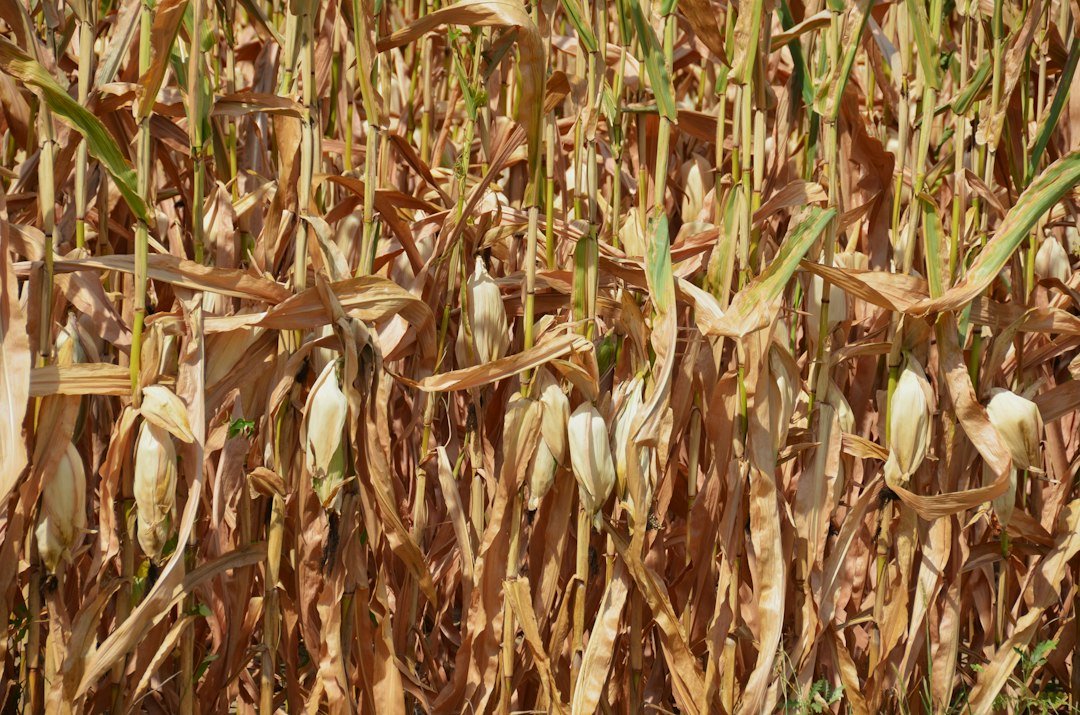
A joint survey by Oxfam and Acción contra el Hambre has documented severe maize crop damage across 36,431 households in Guatemala’s dry corridor, with roughly eight in ten of those households losing between three-quarters and the entirety of their harvest. The survey, covering 58 municipalities across Guatemala, Honduras and El Salvador, found that drought was the primary cause of maize losses in 315 of 354 communities surveyed, or 89 per cent, with a further 7,116 Guatemalan households reporting significant bean losses.
Guatemala’s national meteorological institute, Insivumeh, recorded a nationwide rainfall deficit of 33.33 per cent and described July 2026 as the driest month of the year. The shortfall was sharply uneven across regions: Chiquimula department recorded a 75 per cent precipitation shortfall, while rainfall over vulnerable areas of the Central American Pacific coast fell below 60 per cent of the historical average. Insivumeh has forecast that dry conditions will persist into 2027, offering little prospect of a quick recovery for farmers already counting this season’s losses.
The survey identifies 51,088 households across 157 municipalities in Alta Verapaz, Baja Verapaz, Chiquimula, Huehuetenango, Jalapa and Quiché as highly vulnerable to the continuing crisis. In Chiquimula and Jalapa, the hardest-hit departments, farmers recovered less than 3 per cent of what they had planted. The knock-on effect on local food prices has been sharp: national maize prices rose 11.9 per cent between July and August, with regional spikes of 95.84 per cent in Quiché, 91.87 per cent in Huehuetenango and 77.99 per cent in Chiquimula, pricing staple grain out of reach for many of the same households that lost their own harvest.

The drought’s reach extends well beyond the maize fields themselves. Day-labour income fell 54.2 per cent in Jalapa and 66.2 per cent in Chiquimula as farm work dried up alongside the fields, while the survey estimates around 37 per cent of regional poultry stocks were lost, affecting 65.9 per cent of households that keep birds. Reduced access to water was reported by 42.8 per cent of families overall, rising to 90.4 per cent in Huehuetenango. Asked how long their household maize reserves would last, 64.2 per cent of families that still held any stock estimated three weeks or less.
Using the Integrated Food Security Phase Classification, the report’s authors estimate that 3.1 million people across the affected region faced food insecurity as of September. Oxfam’s Iván Aguilar described the situation as leaving “a very limited window of time” to act before the postrera planting season, the second maize cycle that many dry-corridor households depend on to offset losses from the main harvest. Researchers link this year’s extended dry spell, locally known as the canícula, to El Niño conditions that lengthened the gap in rainfall precisely during maize flowering and grain filling, the crop’s most water-sensitive stage.
With a second planting window now narrowing and regional meteorologists forecasting continued dryness into next year, aid organisations working across the dry corridor say the coming weeks will determine whether affected households can recover any ground before the next main harvest or face a second consecutive season of losses.
The regional dimension of the survey, spanning Guatemala, Honduras and El Salvador, underlines that this year’s drought is not a localised event but a Central America-wide pattern affecting the same corredor seco communities that have faced repeated dry spells over the past decade. Humanitarian groups working across the three countries say funding appeals tied to earlier droughts in the region have often fallen short of targets, raising concern that this year’s response could again lag behind the scale of need documented in the new household survey.
Related reading: Wayanad paddy farmers face unprecedented monsoon failure as Pulpally fields run dry and Philippine typhoon season leaves farmers with final damage bill of 4.38 billion pesos, on two other smallholder farming regions contending with severe seasonal climate shocks this year.



