
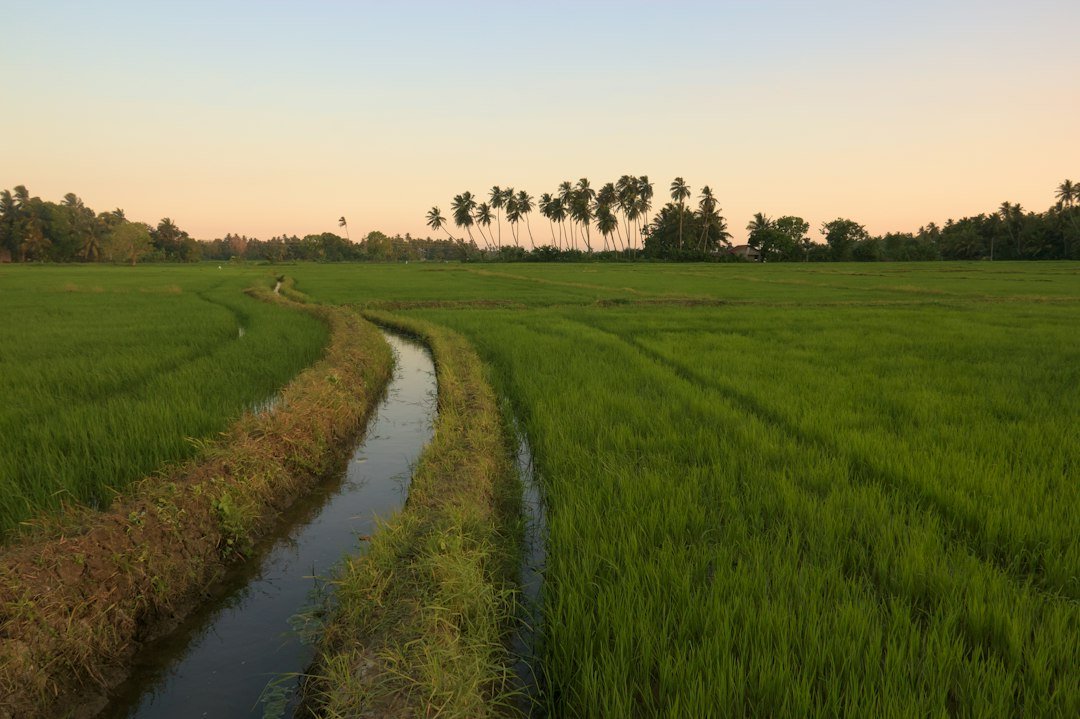
The Philippine Department of Agriculture has released its final tally of farm and fishery damage from a succession of typhoons that struck the northern and central Philippines this season, putting total losses at 4.38 billion pesos, equivalent to roughly 70 million US dollars at an exchange rate of about 62.7 pesos to the dollar in early October. The figure covers damage from typhoons Luis, Maymay, Neneng and Pilandok, along with an enhanced south-west monsoon that compounded the impact of the storms, and was announced by the department in early September as its final official reckoning for the season.
Rice absorbed the largest share of the losses, with damage estimated at 2.05 billion pesos across 73,409 hectares of farmland and 65,106 metric tonnes of lost production. Corn losses added a further 127.60 million pesos, covering 1,984 hectares and 4,707 metric tonnes of lost output. The department’s report does not itemise the remaining roughly 2.2 billion pesos in damage by individual crop, but the overall tally includes losses to cassava and other high-value crops, as well as fisheries, livestock, poultry, and agricultural infrastructure, machinery and equipment damaged directly by wind and flooding.
In total, the storms affected 99,663 farmers and fisherfolk across the Cordillera Administrative Region, Ilocos Region, Cagayan Valley, Central Luzon, Calabarzon, Mimaropa, Bicol Region and Western Visayas, a geographic spread covering much of the northern and central Philippines’ most productive farmland. Farmland damage across these regions totalled 81,511 hectares, with combined production losses of 102,791 metric tonnes across all affected crops and livestock.

The scale of rice losses in particular raises questions for the country’s food security planning, given that the Philippines has in recent years sought to maintain a national rice buffer stock sufficient to cover roughly 70 days of consumption as a hedge against exactly this kind of seasonal typhoon damage. Whether this season’s losses draw meaningfully on that buffer, or require additional imports to stabilise domestic rice prices in the coming months, will depend on how quickly affected farmers can resume planting and how the remaining harvest season develops across the rest of the country.
The back-to-back nature of this year’s typhoon sequence, four named storms in quick succession compounded by an enhanced monsoon, reflects a pattern Philippine disaster and agriculture officials have flagged repeatedly in recent seasons: storms arriving close enough together that farmers have little time to recover between one and the next before replanting damaged fields. For smallholder rice and corn farmers across the Cordillera and Ilocos regions in particular, where terrain already limits how much land can be brought back into production quickly, the compounding effect of multiple storms in a single season tends to push the real recovery timeline well beyond what a single damage figure captures.
The Department of Agriculture has not yet detailed what compensation or input-support schemes, such as seed or fertiliser assistance, will be made available to the affected farmers and fisherfolk, though such programmes have followed previous seasons of comparable storm damage.
Rice millers and traders in the affected provinces say the loss of 65,106 metric tonnes of production, concentrated in regions that normally supply both local consumption and onward distribution to Metro Manila markets, is more likely to show up as localised price pressure in the months immediately after harvest than as a nationwide shortage, given the cushion the national buffer stock is designed to provide. Even so, smallholder households that lost both their harvest and, in many cases, farm equipment and storage facilities face a recovery timeline measured in seasons rather than weeks.
Related reading: Guatemala’s dry corridor maize losses leave 3.1 million facing food insecurity, on another farming region where this year’s extreme weather has pushed millions toward food insecurity.



